
How to Play Chords on Bass (Everything You’ll Need In 15 Minutes!)
As a bass player, you're not going to be using chords in every song you play (and if you do, you might get the sack!)
But still, learning how to play chords on the bass is an absolute must if you want to develop your musicianship.
As bass players, we outline the chords using linear lines... but how the heck are you going to be able to outline the chords if you don't know what they sound like?!
That's how important this skill is.
In this lesson, you're going to learn all the bass chords you'll ever need... in less than 15 minutes!
And on top of that, to learn 'all the chords you'll ever need' you're only going to have to learn a handful of shapes!
Lesson Summary:
- Today I’m going to be talking about the five most important chord types that you can learn on the bass.
- We’re going to take a major scale and see how every note in that scale has a chord attached to it.
- We’re going to look at closed and open positions.
- And I’ll show you how to alter the chord type by changing just one note!
Originally published on 2018, this article was republished on August 18th, 2023.
The Five Most Important Chord Types
Let’s talk about chord types.
You're about to learn a simple sequence that lets you know exactly which chord type (or chord shape) to play for every note in a given key.
Why is this important? Because it will unlock endless chord possibilities for almost any song you hear on the radio if it's in a major key.
These are a little different than the guitar chords (which I cover in more depth below) -- these are bass chords that will sound epic for each corresponding note in the scale.
Let’s start by using the C major scale as an example (check out my beginner guide to major scales if you’re a bit unsure what I’m talking about).
Take a look at the notes of a C major scale and the accompanying bass chord for each note:
- C - Major 7
- D - Minor 7
- E - Minor 7
- F - Major 7
- G - Dominant 7
- A - Minor 7
- B - Minor 7 b5
This sequence of notes will stay the same for every major scale. But what’s important for this article are the five different types of chords that appear in every major scale:
- Major 7
- Minor 7
- Dominant 7
- Minor 7 b5
- Diminished chord
Bass Chords vs Guitar Chords
Now look, bass chords are different from guitar chords the same way the the bass is different from the guitar.
As bass players, we are at a disadvantage when it comes to chords because the bass guitar has a much lower register than a guitar. So in order to retain sound quality, we don’t play all notes in a chord. In fact, we actually get rid of some notes.
If you were to play a G chord like a guitarist would, you’ll quickly find that it simply doesn’t have the same crisp, beautiful sound. In fact, it sounds muddy and distorted!
To get around this, we play the chord at the bottom of the fretboard, and only the root, the 3rd, and the 7th notes – we get rid of the 5th note to clean up the chord and add more clarity.
You’ll see how this looks practically as we go through the closed and open chords in the examples below.
Close and Open Positions
Chord voicing is the term given to open and close positioning.
Close-voicing shapes – also known as close harmony – are chords whose notes all exist within a single octave. Chords with notes that span more than an octave are called open-voicing shapes – also known as open harmony, open position, and spread voicings.
Try both shapes and listen to the way the voicing changes the feel of the chord!
Now let’s take a look at the five most important chord types in both close and open positions, using the C chord to demonstrate the differences.
The cool thing about these chord types is that each of them requires just one note change to move from one to the other.
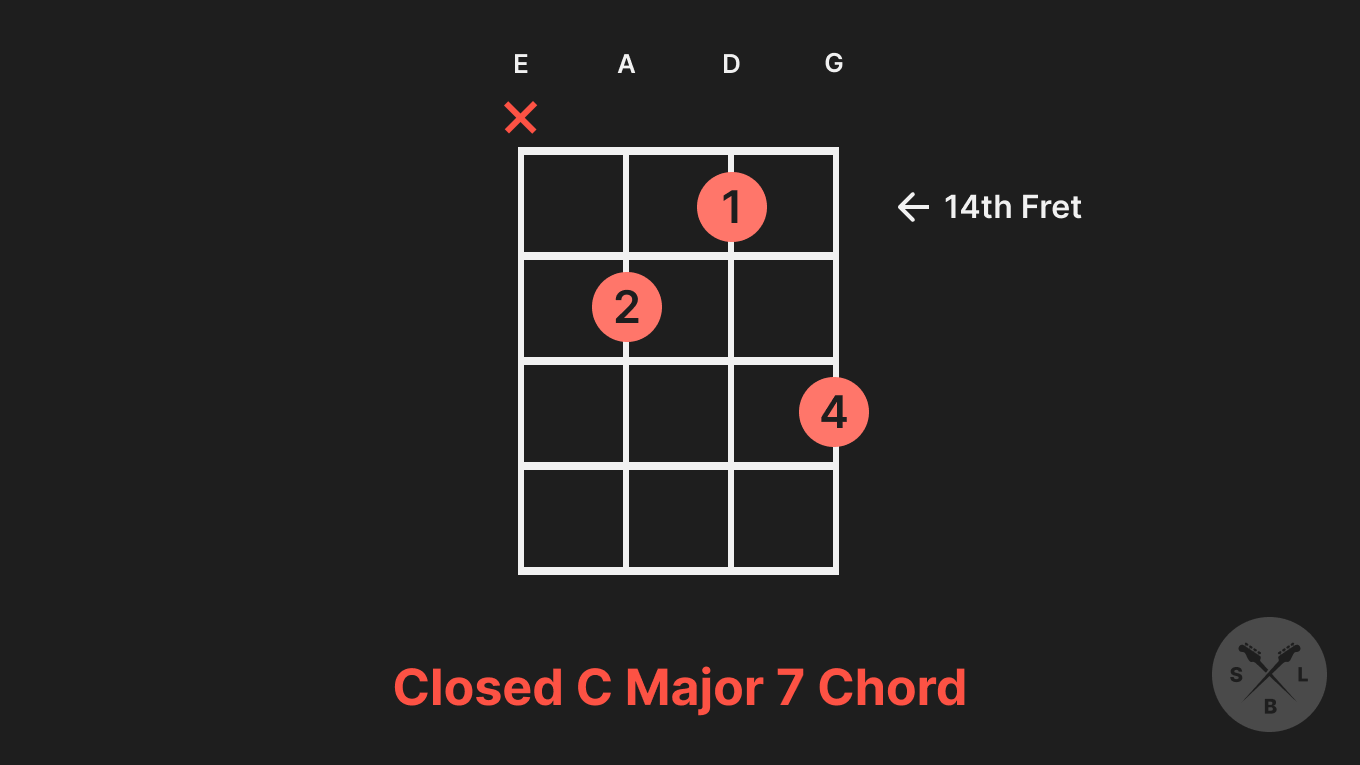
1. Major 7
To play the close C Major 7, we’ll play the notes C, E, and B (omitting the 5th note, the G).
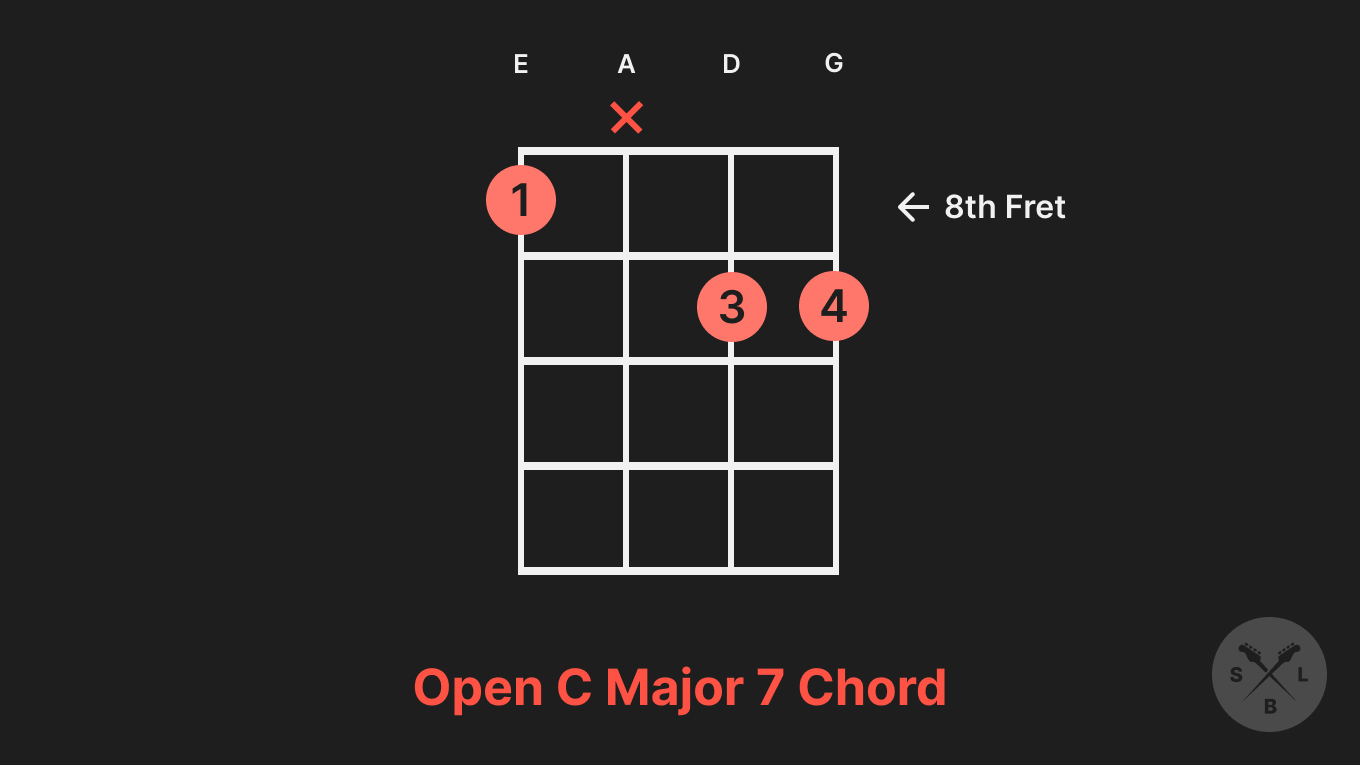
To play it open, we move the 3rd up an octave. So instead of C, E, and B, we have C, B, and E on top.
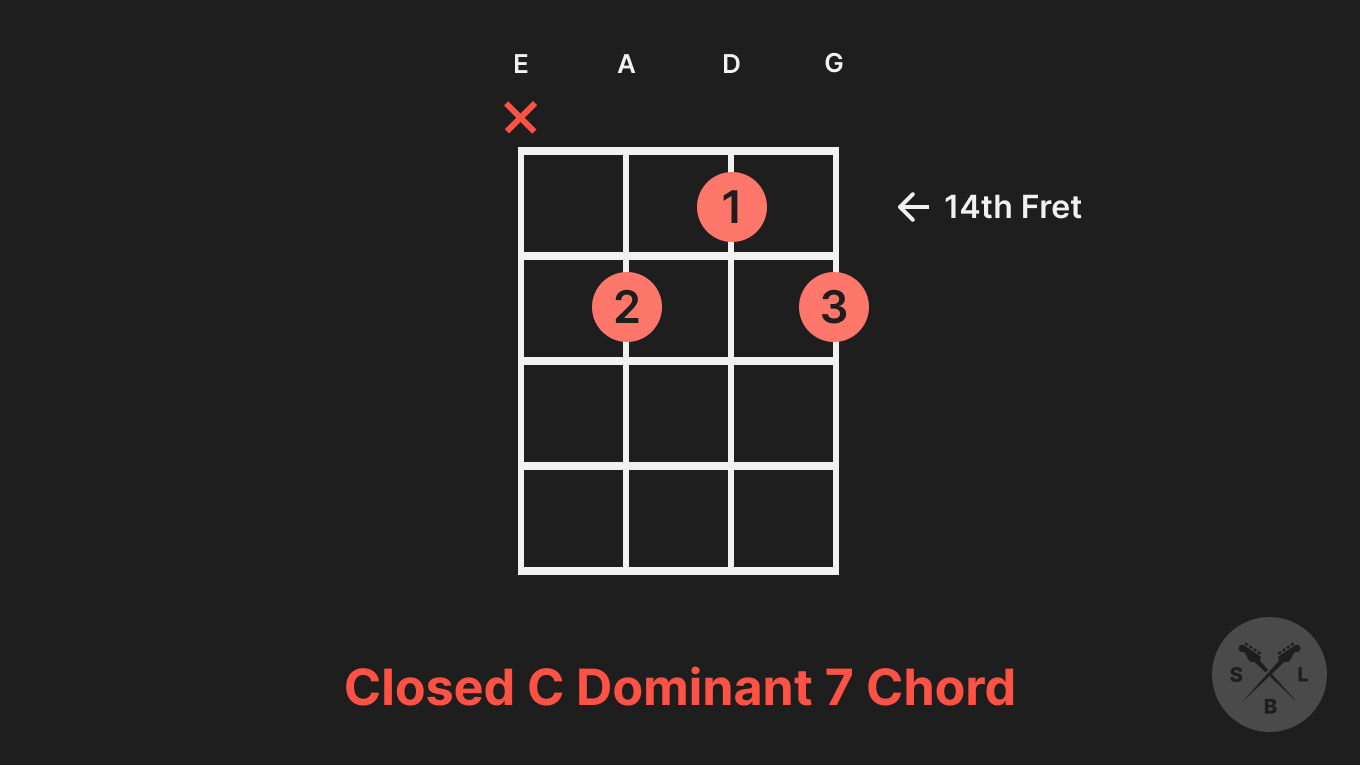
2. Dominant 7
To play the C dominant 7, we’ll play the notes C, E, and Bb (omitting the G). This means, we only have to change one note to switch from the major 7 to the dominant 7.
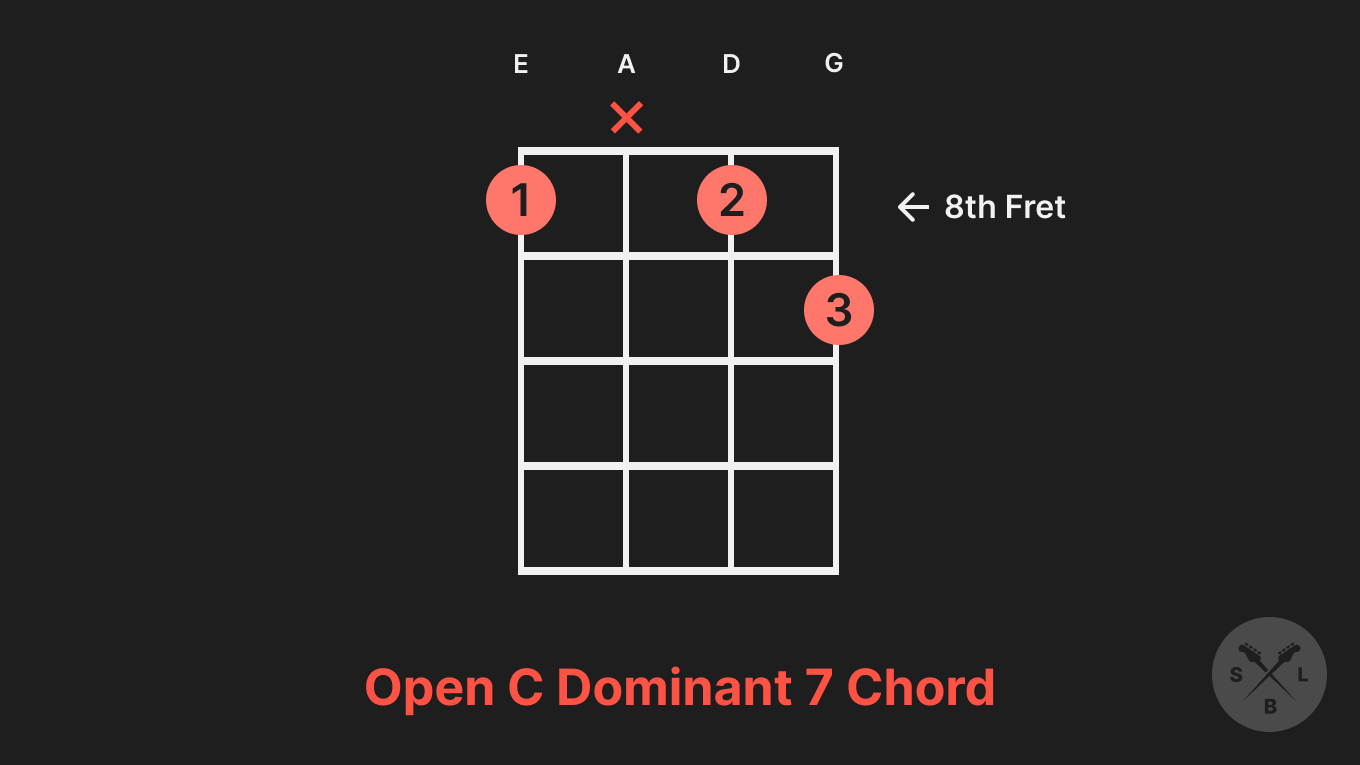
To play this open, we play C, Bb, and E on top. Similarly to the close position, only one note changes.
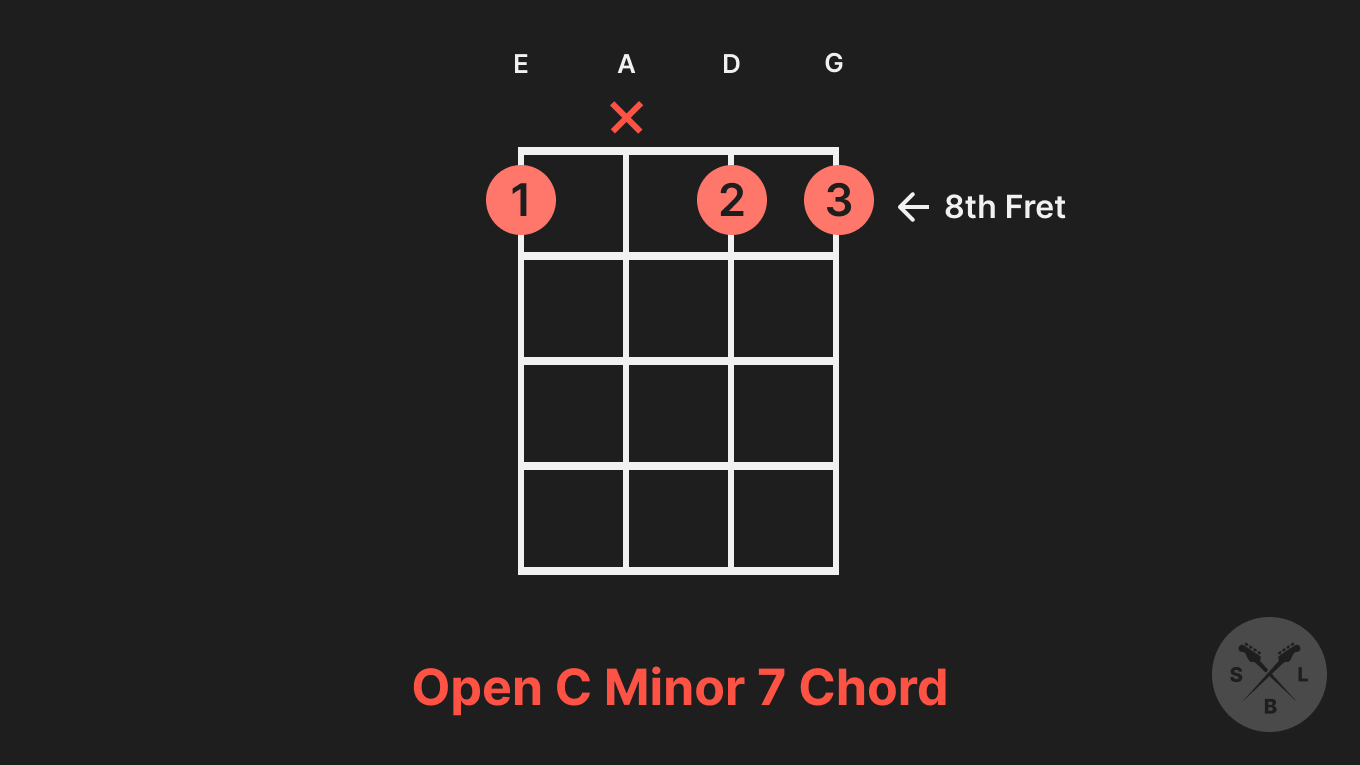
3. Minor 7
To play the C minor 7, we’ll play the notes C, Eb, and Bb (omitting the G). This also requires just one note change from the dominant 7 above.
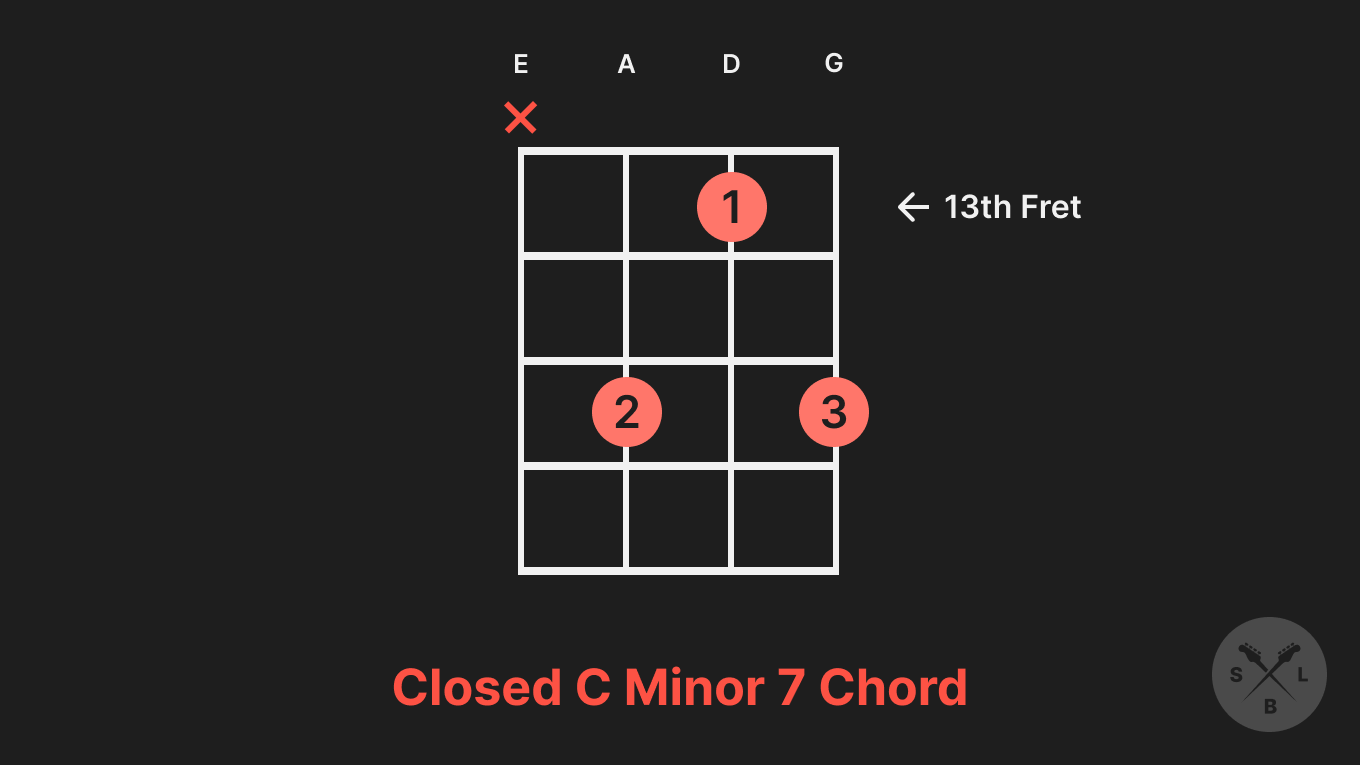
To play an open C minor 7, we play C, Bb, and Eb up top.
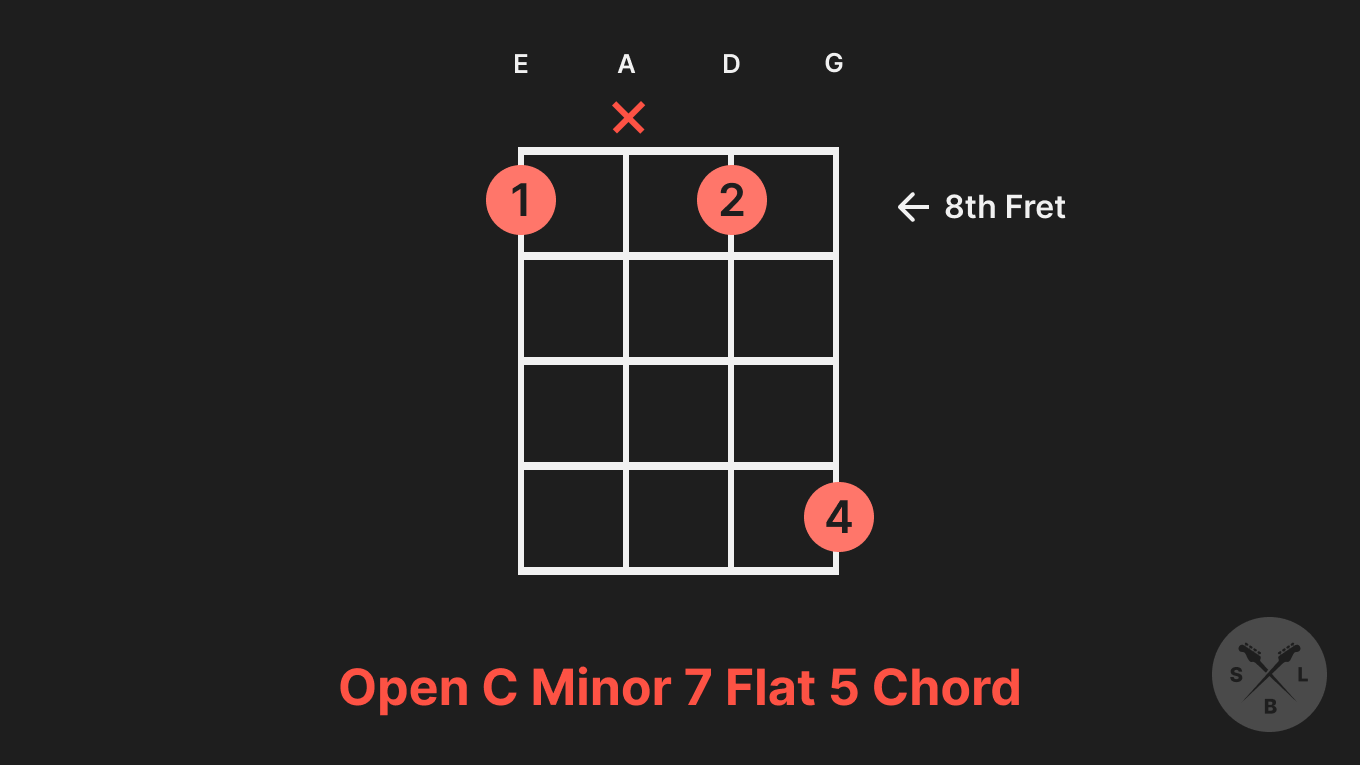
4. Minor 7 b5
To play a C minor 7 b5, we’ll take the notes C, Gb, and Bb. This time we’re omitting the 3rd, not the 5th as it sounds a lot better.
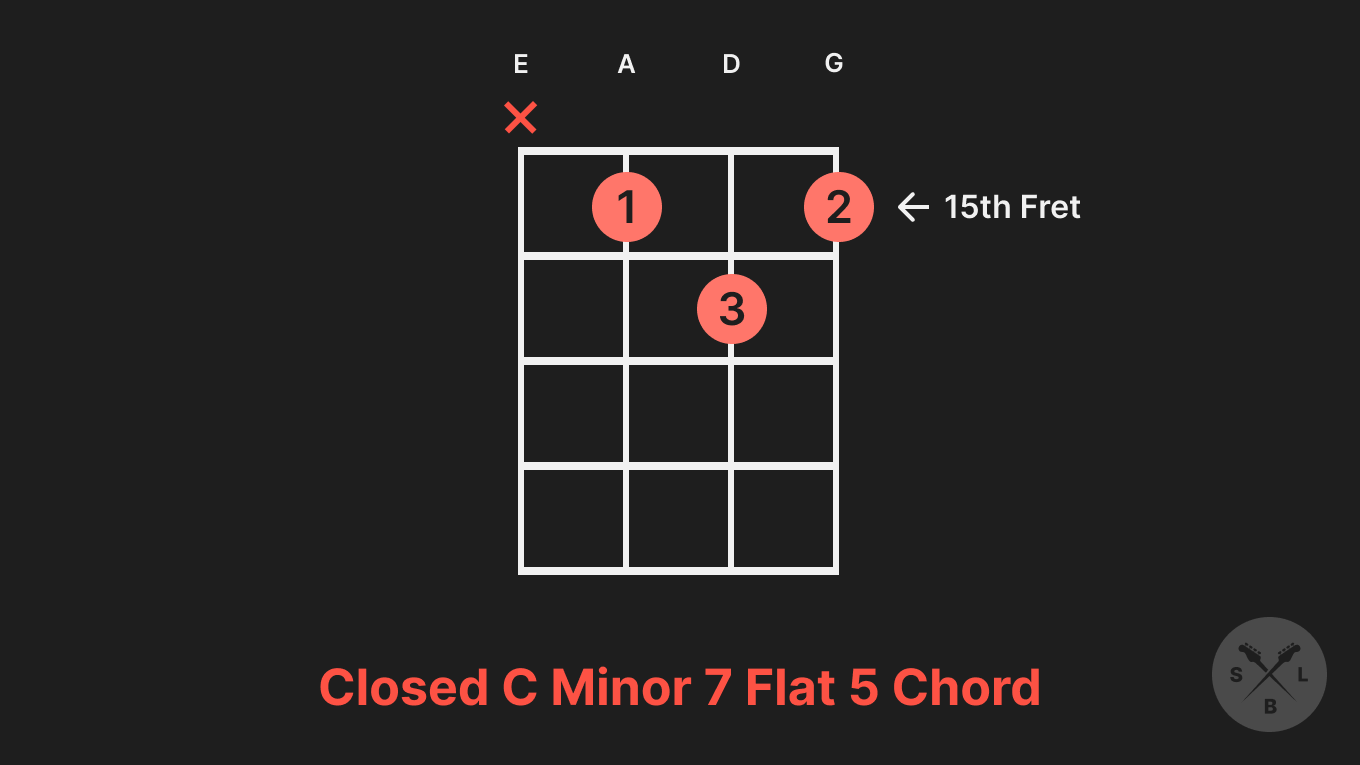
To play an open C minor 7 b5, we play C, Bb, and Gb up top.
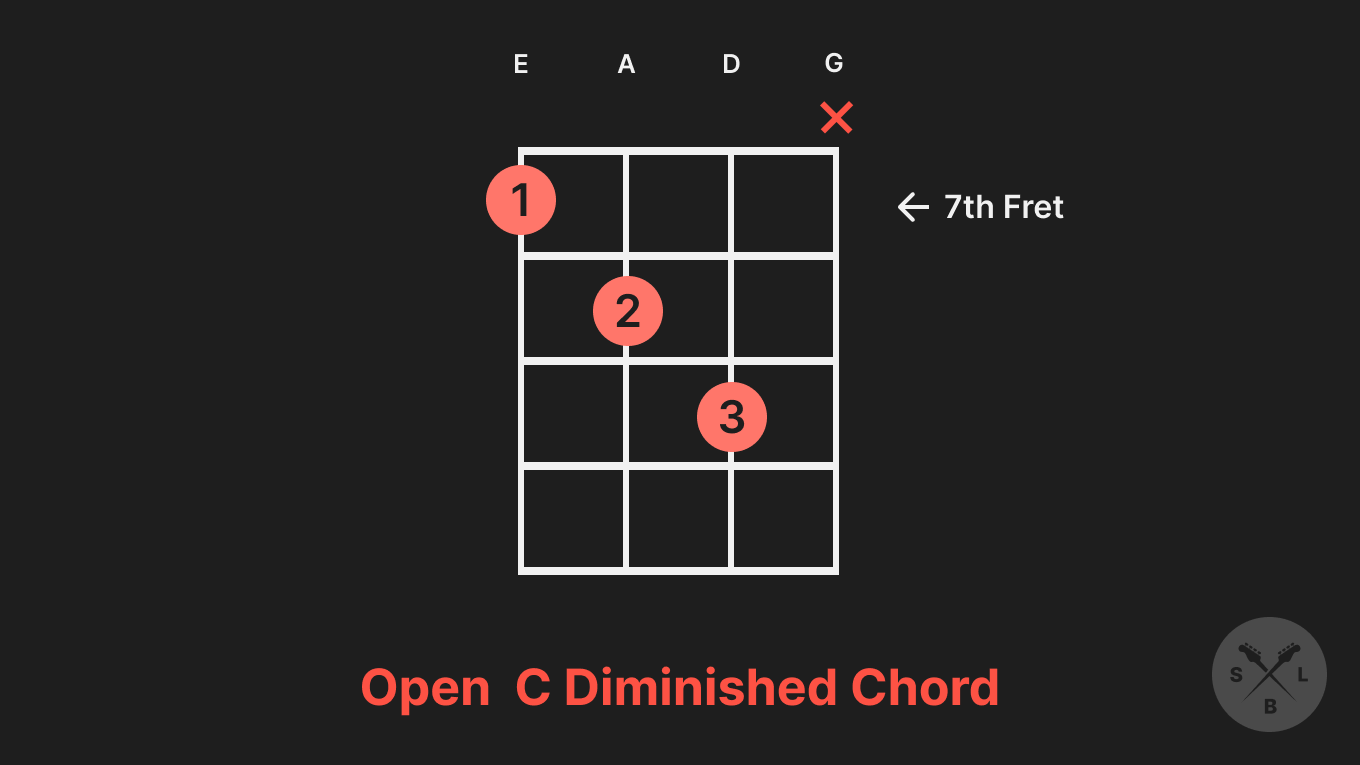
5. Diminished Chord
To play the C diminished chord, we’ll take the notes C, Gb, and A (also known as a double B flat).
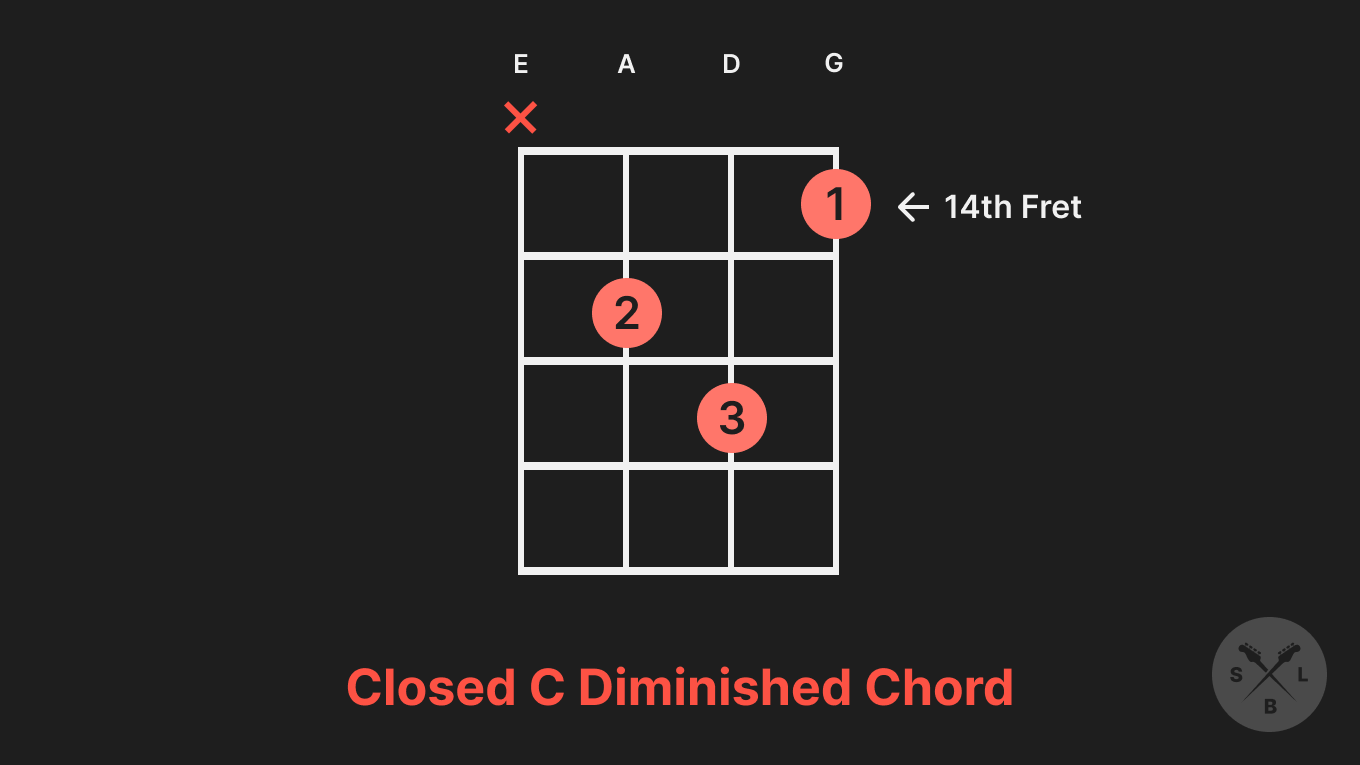
To play an open C diminished, we play C, A, and Gb.
And there you have it! You now know not only how to play chords on bass, but you’re equipped with all the chords you’ll ever need!
So what are you waiting for? Get out there and start grooving!
Ready to Move Beyond Chords?
Now that you know how to play chords on the bass, you might wonder where to go next.
If that’s the case, then download my free bass toolkit. It’s full of incredible resources that will give you direction and structure as you continue to progress with your bass-playing journey.
Don’t waste another day in the practice room without these resources. Get your free bass toolkit today!