NEW Program Alert: The Groove Accelerator is OPEN for enrollment! Limited Time Only —Join Now
The blues is a genre that’s had a massive impact on almost all modern music. From pop and rock to jazz and soul, the blues has influenced countless artists around the globe for generations. In this song-based learning pathway, Philip Mann goes deep into the essential elements of the blues, including its history, the players, chord progressions, classic songs, and techniques that you need to know to learn this important and influential style. Recommended for intermediate-level players and up.
It’s essential for any bass player interested in popular music to have a solid foundation in the blues and its many forms.
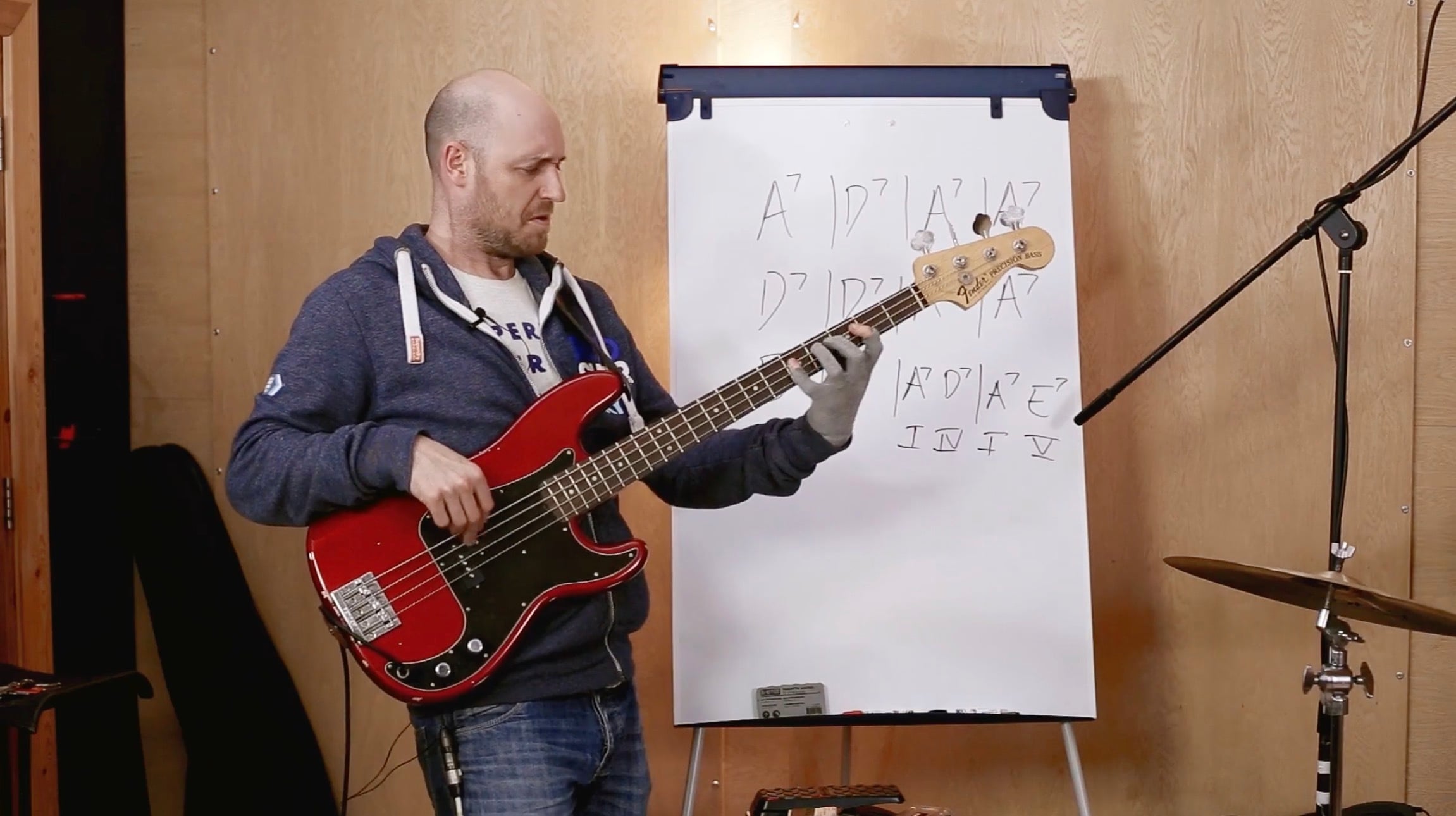
The song Basis is a fantastic song to learn because it’s an example of a 12-bar blues. And this type of tune is super important to know because you will almost certainly have to play one (most likely many!) along your bass playing journey. They pop up everywhere and across many styles of music. You may know of, or perhaps are a fan of musicians like Eric Clapton, Buddy Guy, Jimi Hendrix, or Joe Bonamassa. All of these artists have made the blues a cornerstone of their sound, but the blues influence is also found in rock music, with bands like Led Zeppelin, the Rolling Stones, and so many others using it as a vehicle for their songwriting. While working on this tune, you’ll learn things like quarter notes and rests, how to mute notes for rests, how to lock in with the band, what repeat signs are and how to follow them, and lots more!
The blues is an absolutely essential style of music to learn as a bass player because its influence can be found in so many other genres like jazz and rock, with bands like Led Zeppelin, the Rolling Stones, John Mayer, plus all of the jazz greats using the blues as a platform for their songwriting and improvisation. This tune is an 8-bar blues form in 12/8 time, which will stretch you in both a technical and rhythmic way. You’ll learn how to navigate a slow blues groove, count this very important meter, plus get inside how the bass line is constructed around the given chord structure. There’s so much to learn here, so grab your axe and dive in!