
NEW Program Alert: The Groove Accelerator is OPEN for enrollment! Limited Time Only —Join Now
Bass Arpeggios for Beginners: Everything You Need to Know
We've all been told how important it is to practice our arpeggios and scales on the bass, but what you might have yet to be told is that how you practice them is equally crucial.
Running arpeggios up and down the neck is fine, but this won’t have a great effect on your playing in the long run.
By practicing arpeggios using my continuous arpeggio exercises (which we’ll get to below), you’ll find that it’s chord tones that unlock the mysteries of the fretboard.
In fact, once you get into these exercises, you'll start 'seeing' the chord tones all over the neck. On top of that, these exercises are also an amazing ear-training tool.
How cool is that?
So if you’re ready to learn the best way to practice your arpeggios, let’s jump in.
Originally published on October 17th, 2011, this article was updated and republished on June 18th, 2024.
What Is a Bass Arpeggio?
Bass arpeggios are a series of notes played one after the other rather than simultaneously, and they form a chord.
Imagine playing the notes of a chord like a C major chord (C, E, G) but instead of playing them all at once, you play C, then E, then G, one by one.
This technique is used in many musical genres to create a flowing, melodic sound.
For bass players, arpeggios are essential because they help outline the harmony of the music and provide a solid foundation for the song.
Practicing arpeggios can improve your finger strength, agility, and familiarity with the fretboard. Plus, they make your playing sound more interesting and dynamic compared to just playing the root notes of chords.
Why Are Arpeggios Important?
Bass arpeggios are important because they provide a clear understanding of chord structures and harmony, which is essential for creating strong, supportive bass lines.
By playing the individual notes of a chord in sequence, bass players can highlight the chord's defining tones and give a more detailed harmonic foundation to the music.
On top of that, knowing arpeggios helps with composing bass lines and improvising.
When you understand how chords are built, you can create more interesting and varied bass lines that support the song’s harmony.
Finally, it also enhances your musicality, allowing you to connect different chords smoothly and add melodic elements to your playing.
How to Play the 7 Bass Arpeggios With C Major
Okay, we know why arpeggios are important, now let’s take a look at the seven you need to master on the bass.
These arpeggios correspond to the seven unique notes in a major scale. For the C major scale (which means this will be a C Major arpeggio), the notes are C, D, E, F, G, A, and B, and each of these notes is the root of one of the following chords:
1. C Major 7
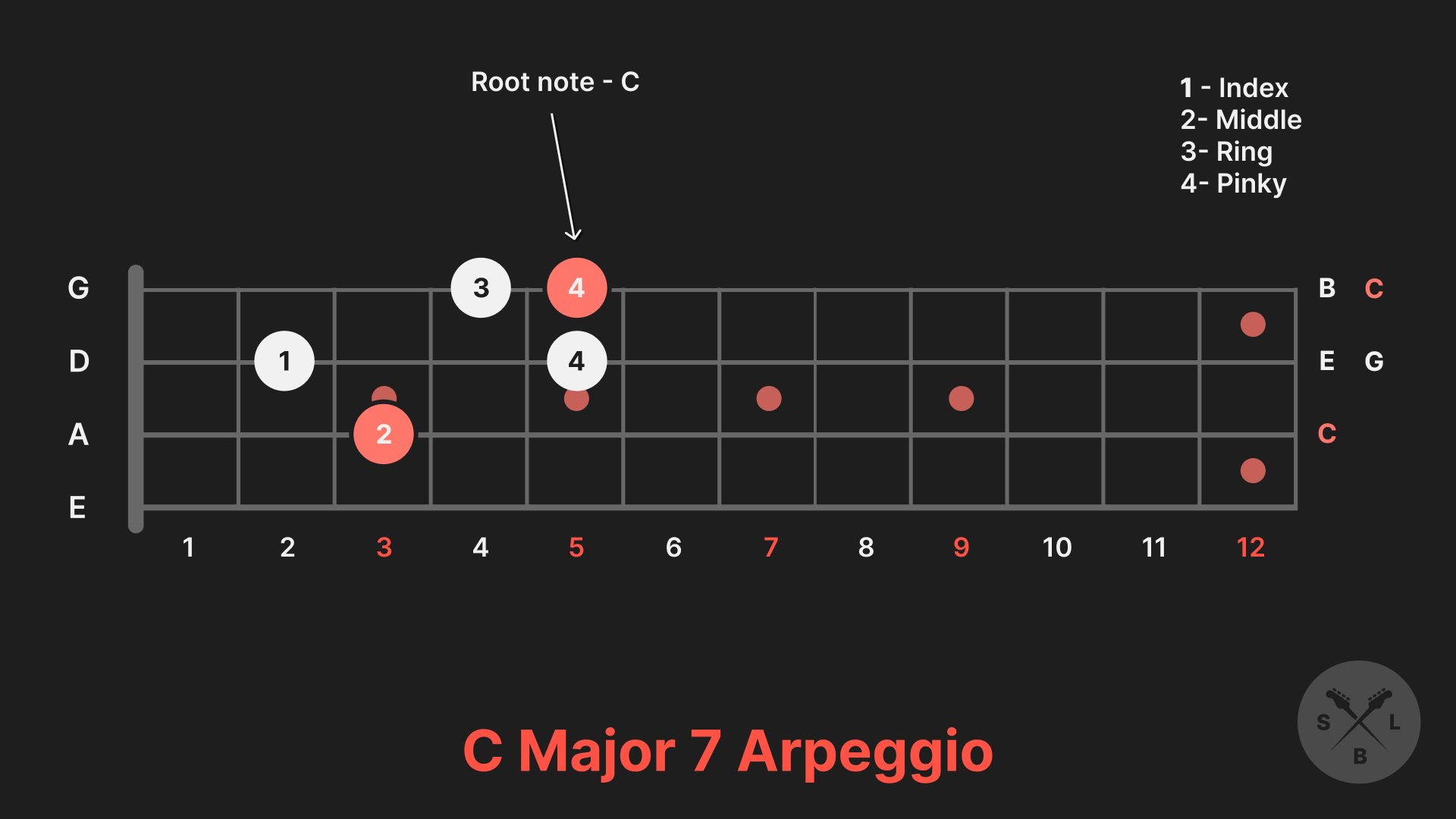
This chord is built from the 1st degree of the C major scale and includes the root (C), major third (E), perfect fifth (G), and major seventh (B).
2. D Minor 7
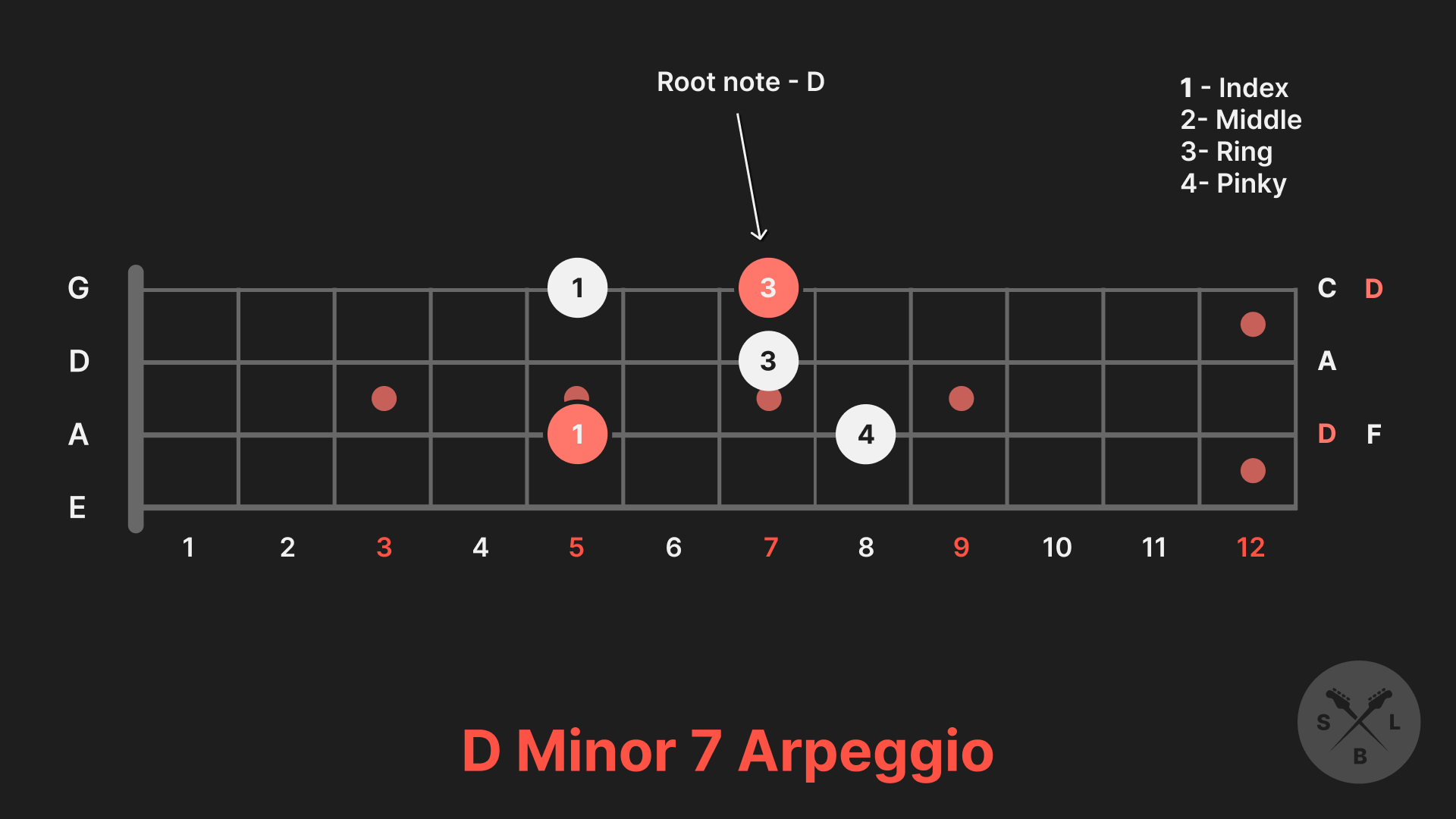
This chord is built from the 2nd degree of the C major scale and includes the root (D), minor third (F), perfect fifth (A), and minor seventh (C).
3. E Minor 7
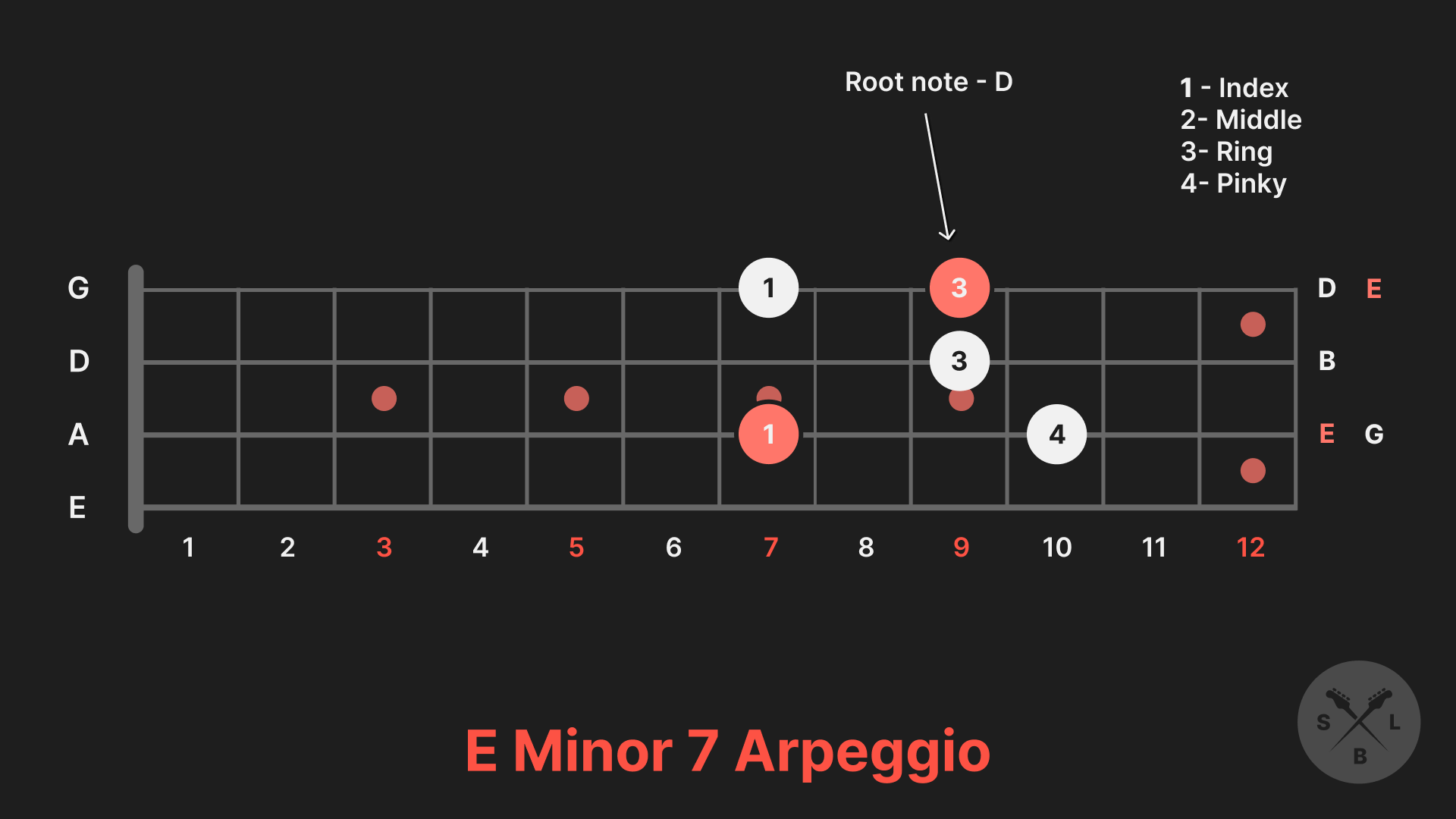
This chord is built from the 3rd degree of the C major scale and includes the root (E), minor third (G), perfect fifth (B), and minor seventh (D).
4. F Major 7
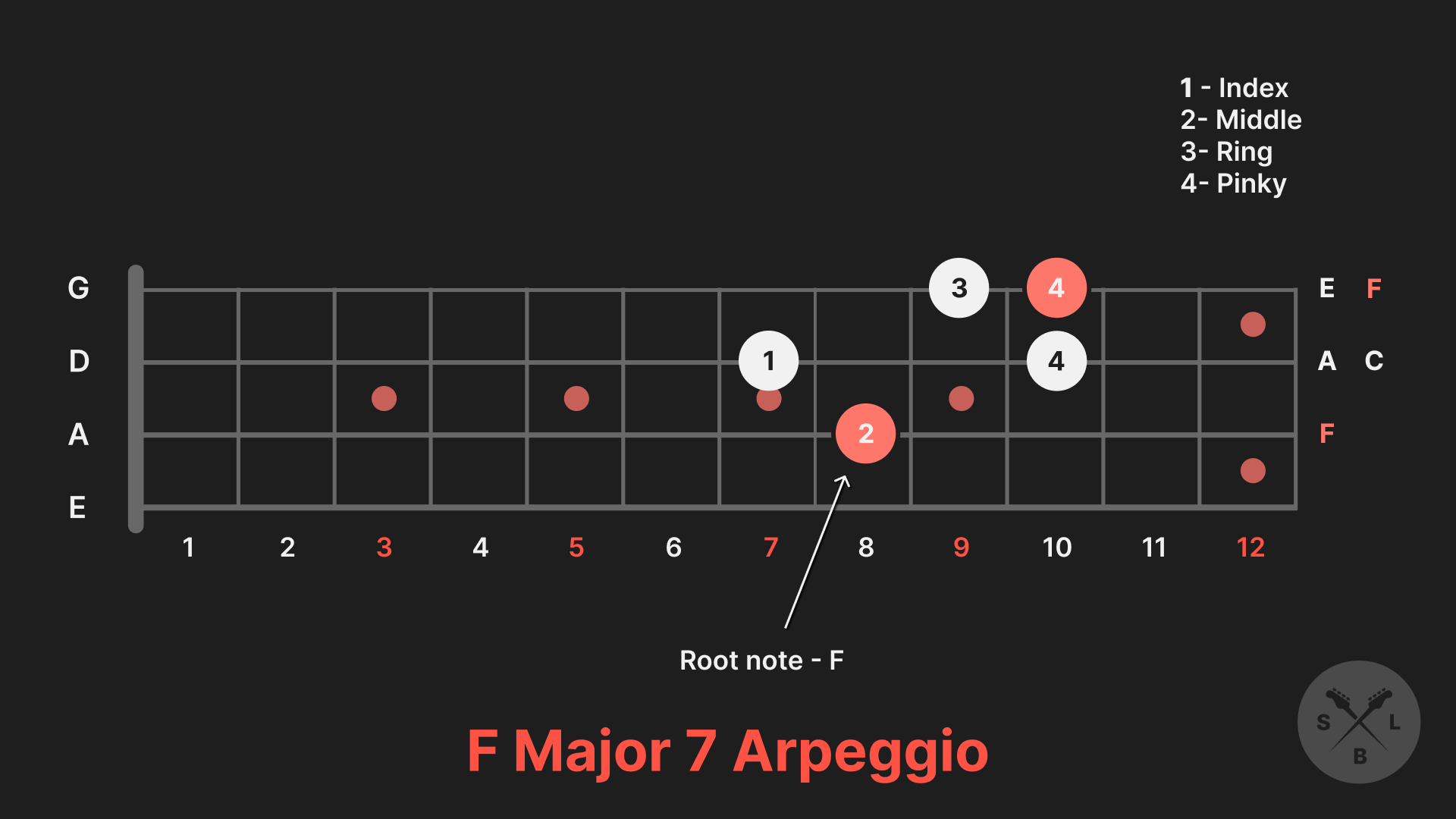
This chord is built from the 4th degree of the C major scale and includes the root (F), major third (A), perfect fifth (C), and major seventh (E).
5. G Dominant 7
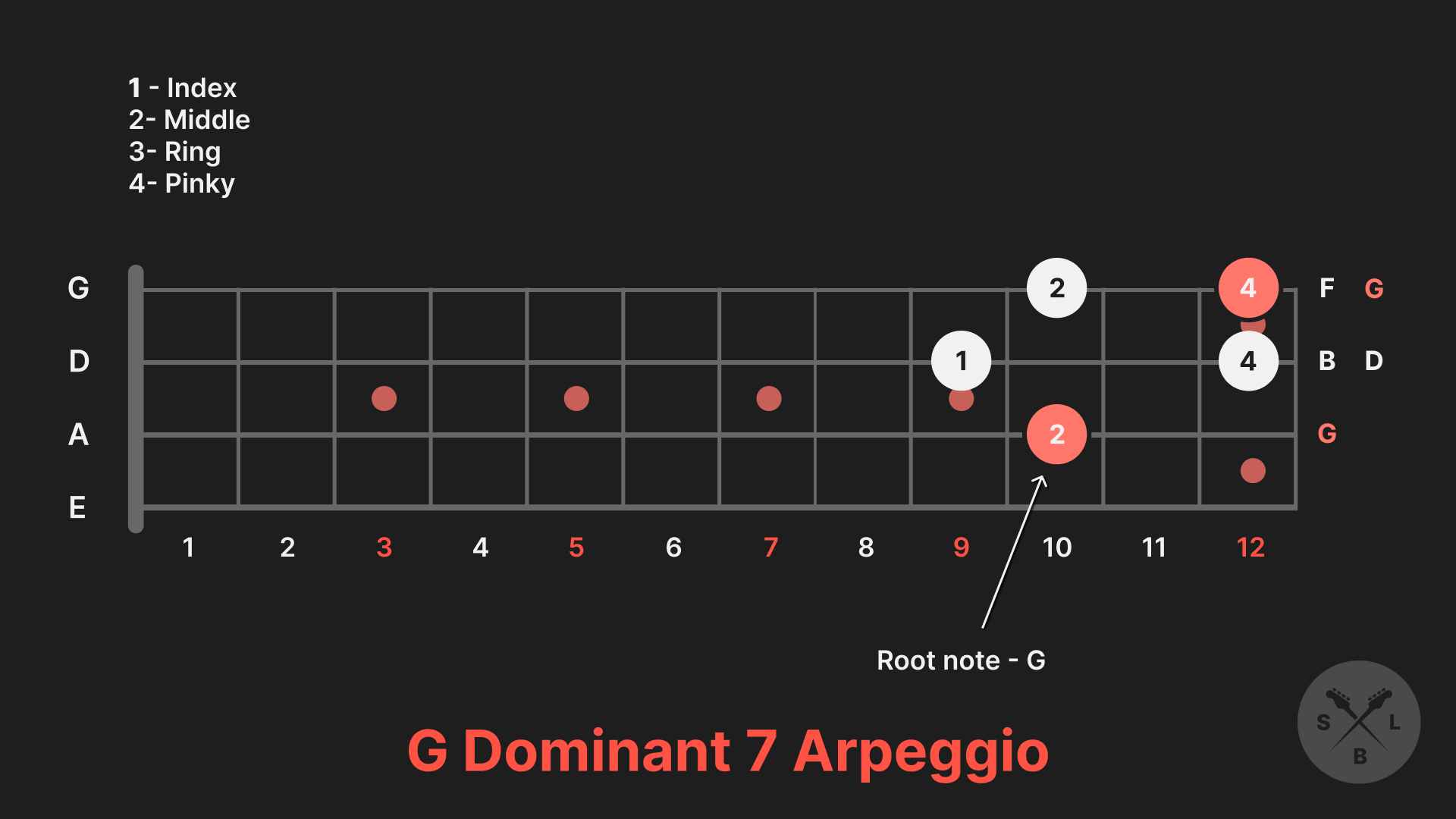
This chord is built from the 5th degree of the C major scale and includes the root (G), major third (B), perfect fifth (D), and minor seventh (F).
6. A Minor 7
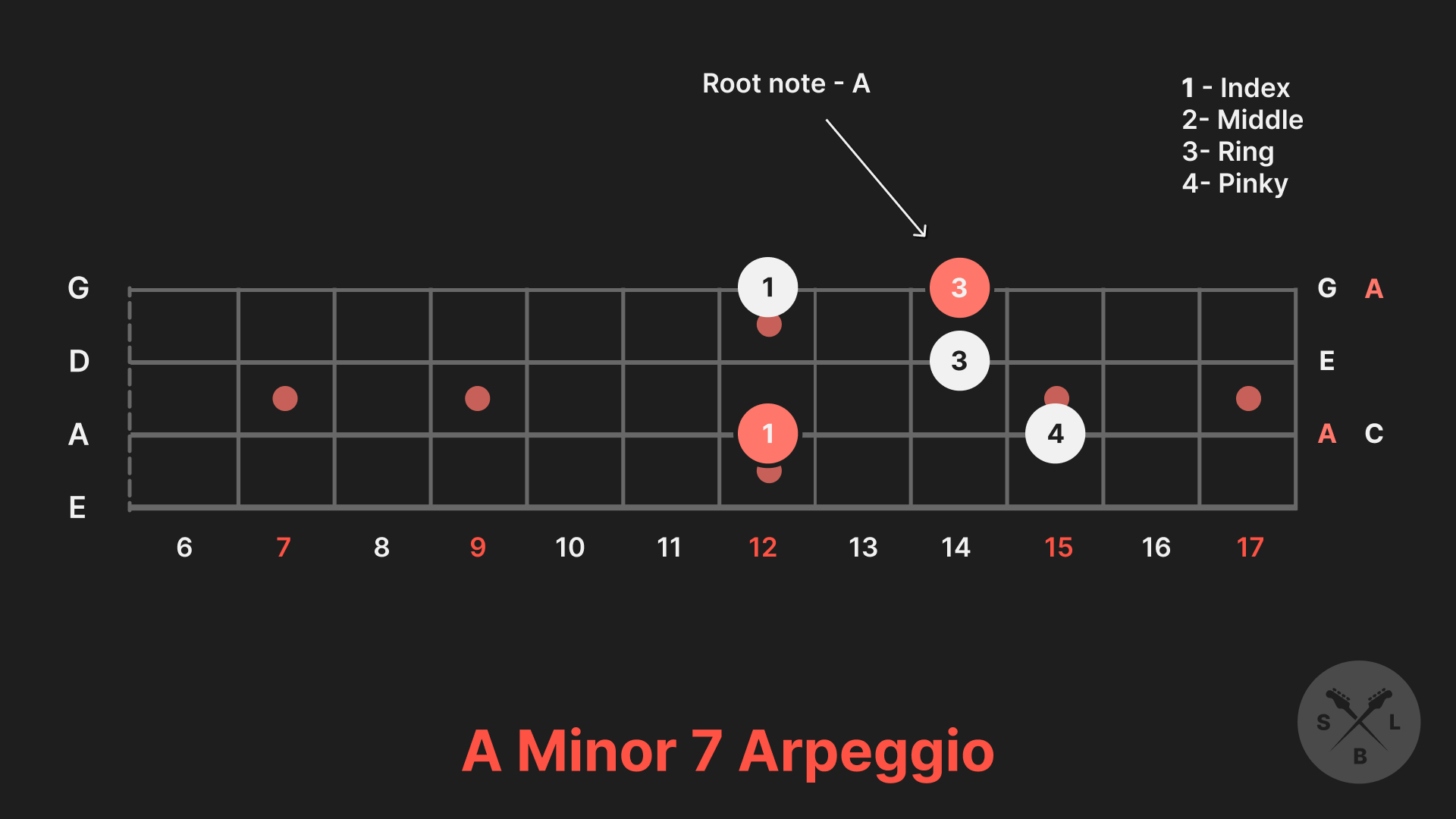
This chord is built from the 6th degree of the C major scale and includes the root (A), minor third (C), perfect fifth (E), and minor seventh (G).
7. B Minor 7 Flat 5
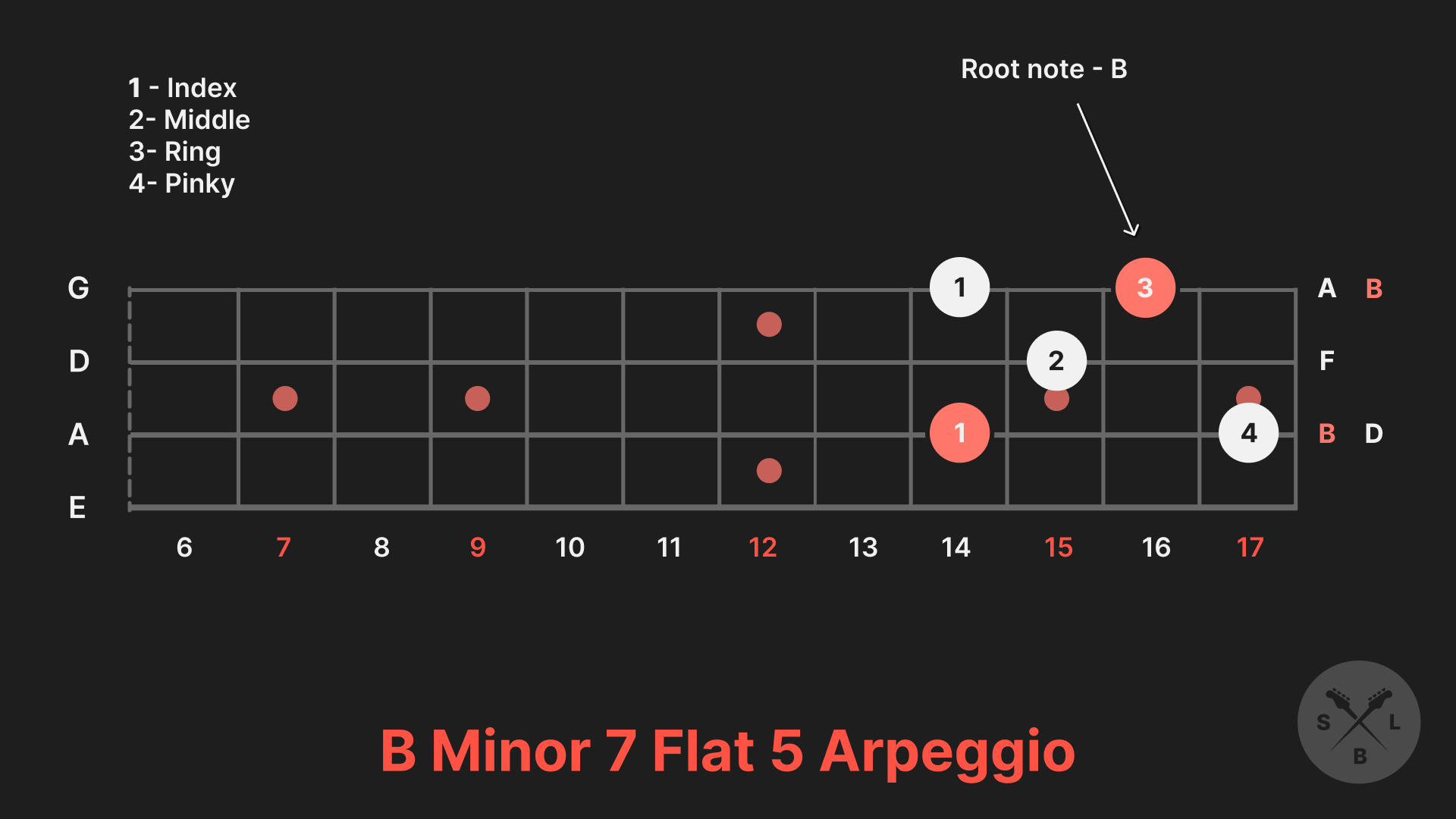
This chord is built from the 7th degree of the C major scale and includes the root (B), minor third (D), diminished fifth (F), and minor seventh (A).
Exercises to Help You Practice Arpeggios on Bass
Now that we’ve gone through each of the seven bass arpeggios, let me show you a few different exercises that you can use to really drive each of them home!
Exercise 1
In this first exercise, I show you how you can practice arpeggios using a 2-5-1 chord progression which includes the chords Dm, G7, and Cmaj7. You can download the workbook with the relevant tabs and notation here.
Exercise 2
The second exercise continues from the one above. In this video, I demonstrate how you can practice the Cmaj7 arpeggio. Just as before, you can download the workbook with the relevant tabs and notation here.
Exercise 3
The third exercise continues from the one above. In this video, I demonstrate how you can practice your arpeggios using standard songs. Just as before, you can download the workbook with the relevant tabs and notation here.
Today Arpeggios. Tomorrow Bass Mastery.
I know that these exercises can be a bit tough and require a lot of practice... but they really will transform your playing and your understanding of bass arpeggios and harmony.
Work them into your daily practice routine and I promise you’ll start to see benefits in no time at all!
And if you want to enhance your progress even further, then I highly recommend checking out the SBL Academy.
It contains countless hours of instructional videos from some of the best bass players in the world, covering almost every topic about the bass you can imagine.
When you sign up you’ll also get a personalized roadmap based on your skill level, so you know exactly where to start to improve your playing.
Sign up today and get a 14-day free trial!