
NEW Program Alert: The Groove Accelerator is OPEN for enrollment! Limited Time Only —Join Now
Sting - Bass Players You Should Know
In this video we’re going take a closer look at one of the most successful artists in popular music history. An Ivor Novello winner, a Kennedy Centre Honary, a Golden Globe and 17-time Grammy winner, a 3 time Oscar nominee. He even has a star on the Hollywood Walk of Fame, which you have to admit, is pretty rare for a bass player.
But we’re not talking about just any old bass player here. Having teamed up with Stewert Copeland and Andy Summers back in the mid-70s, his band, The Police, formed the most popular trio since the Jimi Hendrix Experience. Still, it wasn’t always plane sailing - on their early budget tours of the US, they once played to an audience of just 6 people in Poughkeepsie, upstate New York.
To date, he has sold over 100 million records, and has cemented his place as legendary singer, songwriter and bandleader - not to mention one hell of a bass player. I’m of course, talking about, Sting.
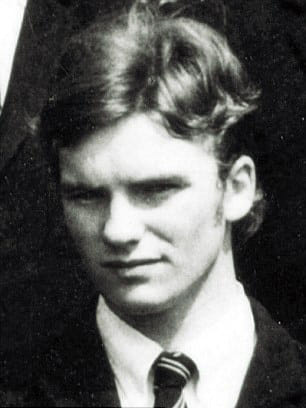
Born Gordan Sumner in Walls End, Northumberland in 1951, Sting got his nickname from the yellow and black striped sweater that he used to wear at gigs, which according to his band mates made him look like a wasp.
A milkman’s son, he was bitten by the musical bug at an early age. His mum played the piano and he was given a guitar at aged 8.
He worked as a bus conductor, a tax officer and a building labourer before becoming a teacher, performing with jazz fusion band Last Exit, most evenings.
Here’s a clip of Last Exit recorded at Newcastle’s Impulse Studios in 1974 with their take on Neil Young’s Don't Let It Bring You Down.
In 1977, at the behest of drummer Stuart Copeland, Sting, along with Last Exit keys player Gerry Richardson, moved to London in search of their big break. Richardson soon returned to Newcastle – though Sting did keep in touch. Richardson actually plays Hammond organ on his 1996 hit single, Let Your Soul Be Your Pilot.
The Police began life with guitarist Henri Padovani, but ex Soft Machine guitarist Andy Summers later came in to fill out the sound. They played as a quartet for almost a year before Padovani quit, cementing The Police’s trio status.
Their unique sound fused elements of reggae, punk, jazz and rock and their new trio format allowed them more room to capitalise on their individual strengths. Here they are making their first UK live TV performance in 1978.
The band was managed by Stewart Copeland’s brother, Miles Copeland, who seized the chance to launch the band in America. Here they are at Miami’s Gusman Theatre in 1979.
They eventually borrowed £1500 to record their debut album, Outlandos D’Amour, at Nigel Gray’s fledgling Surrey Sound studios. A&M Records picked it up for distribution and singles Can’t Stand Losing You and Roxanne set the band on their way to super stardom.
From 1978 to 1983 the trio had 5 chart topping albums, won 4 Grammys and 2 Brit Awards. They would re-unite for a hugely successful world tour in 2007.
By the early 80s, the band decided to go their separate ways and their split became the launch pad for Sting’s solo career, which got off to an auspicious start with 1985’s jazz tinged Dream of the Blue Turtles going triple platinum.
His band consisted of some of the biggest young jazz musicians of the time, including Branford Marsalis, Omar Hakim and Darryl Jones on bass with Kenny Kirkland adding the necessary weight on keyboards. Here’s a great clip from the documentary, Bring on the Night, which was released that same year.
Also in 1985 Sting played a solo set at Live Aid, which included Police hits Roxanne and Message in a Bottle – appearing onstage with just a Fender Strat (and with a little help from Phil Collins) he proved once again that a good song will always work on it’s own. Sting also wrote the stretched 9ths guitar part for this song as well.
Here he is performing in front of 72,000 people at Wembley Stadium.
1987’s Nothing Like the Sun spawned two instant classics in Fragile and Englishman in New York before he refocused on his Newcastle roots for the 1991 Soul Cages album, following the death of his father.
1993’s Ten Summoner’s Tales saw Sting return with the strongest, leanest band since his Police days, with Dominic Miller on guitar, Vinnie Colaiuta on drums and Kenny Kirkland on keys. Here they are on USTV. See if you can spot Branford Marsalis on sax as well.
Sting kept up a solid work rate well into the 21st century, with Sacred Love in 2003, Songs from the Labyrinth in 2006, Winter’s Night in 2009 and 2015’s 57th and 9th.
He also published his autobiography, Broken Music, toured alongside Paul Simon and with the Royal Philharmonic Concert Orchestra following 2010’s Symphonicities album. Here’s a great clip, live in Berlin.
His unlikely collaboration with Shaggy 2018 picked up a Grammy for best reggae album, while 2019 saw Every Breath You Take became the most performed piece in BMI’s catalogue of over 14 million works.
But what makes Sting such a great bassist?
His parts may be simple, often just following the root notes of the chords, but his basslines are, and have always been, the perfect compliment to the song. With the Police he’d often play softly to allow Andy Summer’s muted guitar parts to be heard, or he’d stick with syncopated root notes until there was space to add some kind of arpeggiated fill. He has come up with so many of what I call.. ‘why didn’t I think of that?’.. basslines, I’ve lost count.
And while he’s famous for incorporating such a variety of different styles in his music, he’ll never replace his beloved mid-50s P Bass. In fact, he hates new basses.
Despite memorable spells with a white Spector NS-2 and an Ibanez Musician bass, his constant use in recent times of a well-used ‘transition’ Fender Precision has given him the perfect tone for his Stax-influenced bass parts.
So there you have it. A worthy addition to our series of influential and iconic bass players, Sting has had an incredible career and we didn’t even touch on his stage musical, The Last Ship, or the fact that he’s dabbled in acting over the years, appearing in films like Dune.
As always, see you in the shed!