
NEW Program Alert: The Groove Accelerator is OPEN for enrollment! Limited Time Only —Join Now
Bass Strings 101: Everything You Need to Know
So you’re looking for a new set of bass strings? Excellent.
There are a ton of different options out there—and an equal number of opinions about which are best.
That’s a lot of overwhelm, so before deciding what strings you’re going to buy, you need to be well-equipped to know what you’re buying (and why.)
That’s where I come in!
Today, I’m walking you through everything you need to know about bass strings.
Let’s get into it.
Types of Bass Strings
Now as I mentioned, there are a few different types of bass strings out there, and this is important because the type of bass guitar string you choose affects the feel and sound of your bass. Between flatwounds, roundwounds, tapewounds, and everything in between, there’s a lot of variation in sound and construction.
All bass strings are made similarly. Each one is a piece of material (like nylon) wrapped around a metal core (usually stainless steel or nickel)—this differentiates bass strings and gives each a distinctive sound and feel.
Let me show you exactly what these look like.
1. Flatwounds
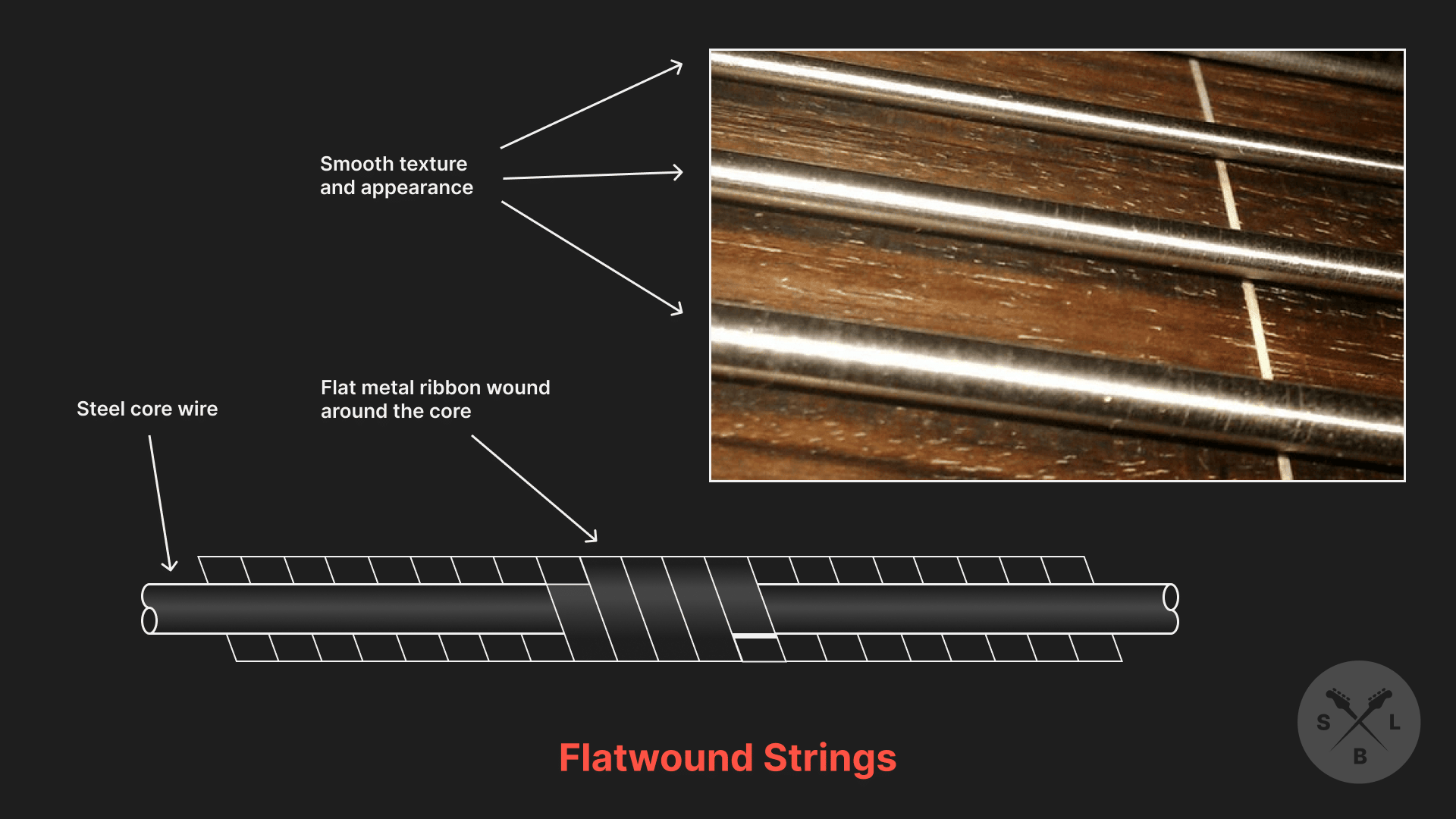
Flatwound strings are a type of string characterized by their smooth, flat outer surface.
This surface is made by wrapping a ribbon of metal, usually stainless steel or nickel, around a steel core in a flat, rather than rounded, shape.
These strings are popular among jazz and blues musicians because they produce a warm, mellow tone with less sustain and overtones than their roundwound counterparts.
Flatwounds are also easier on the fingers and frets, as their smoother surface reduces finger noise and fret wear.
This makes them ideal for bassists looking for a soft, smooth playing experience with a vintage sound.
2. Tapewounds
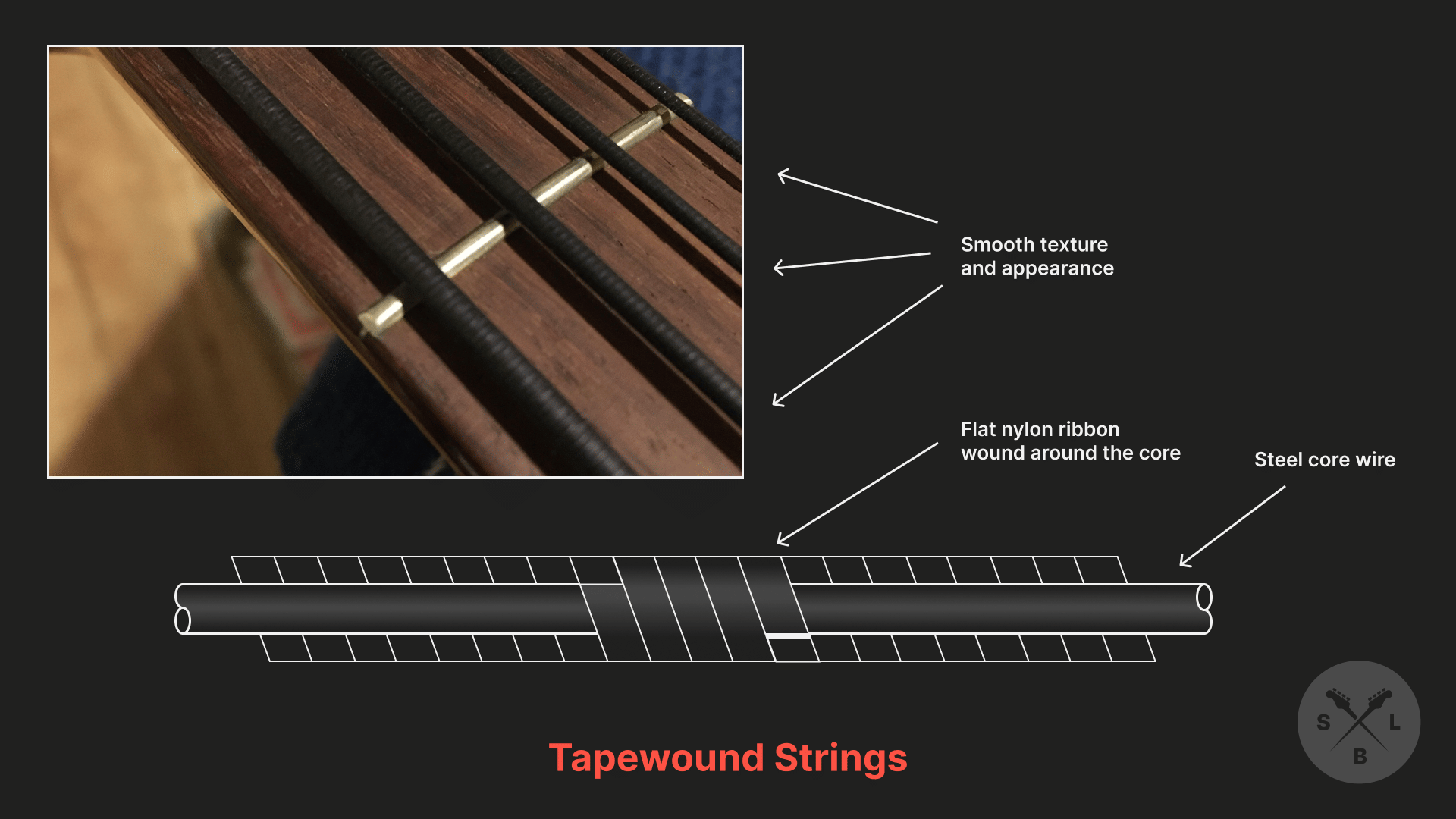
Now, let’s take a look at tapewounds.
They’re similar to flatwounds but with one distinctive difference—the core of these strings is wrapped with a nylon filament instead of a metal one.
This gives tapewound strings a very smooth and comfortable feel, as well as a distinctively warm, deep, and mellow tone.
Tapewounds are popular among bass players who prefer a softer, more rounded sound and you’ll find them used a lot in jazz, R&B, Motown, and reggae.
3. Roundwounds
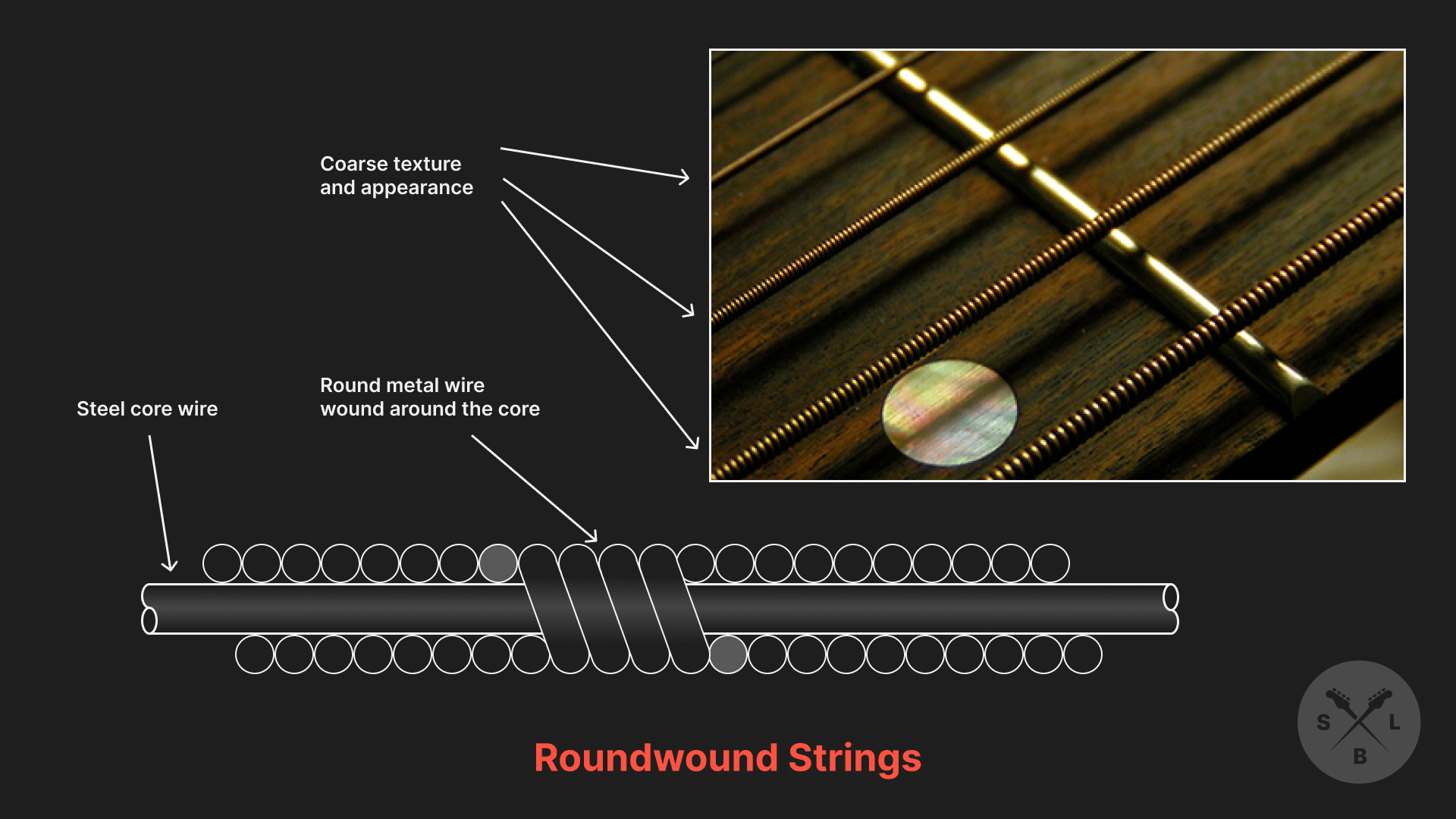
Roundwounds are a staple among bass guitar players.
They’re distinctive because of their construction—a round wire wrapped around a metal core, typically made of steel. This creates a textured surface along the string, contributing to their characteristic tone and feel.
These strings produce a crisp, bright sound with plenty of sustain and harmonic richness but also enhance the string's ability to cut through a mix, making them a favorite choice for rock, metal, funk, and pop musicians.
Because of their texture, they can produce some finger noise when shifting between notes, and they tend to wear out faster than flatwounds or tapewounds. That being said, they’re one of my favorites and an absolute banger to play with!
4. Half Rounds
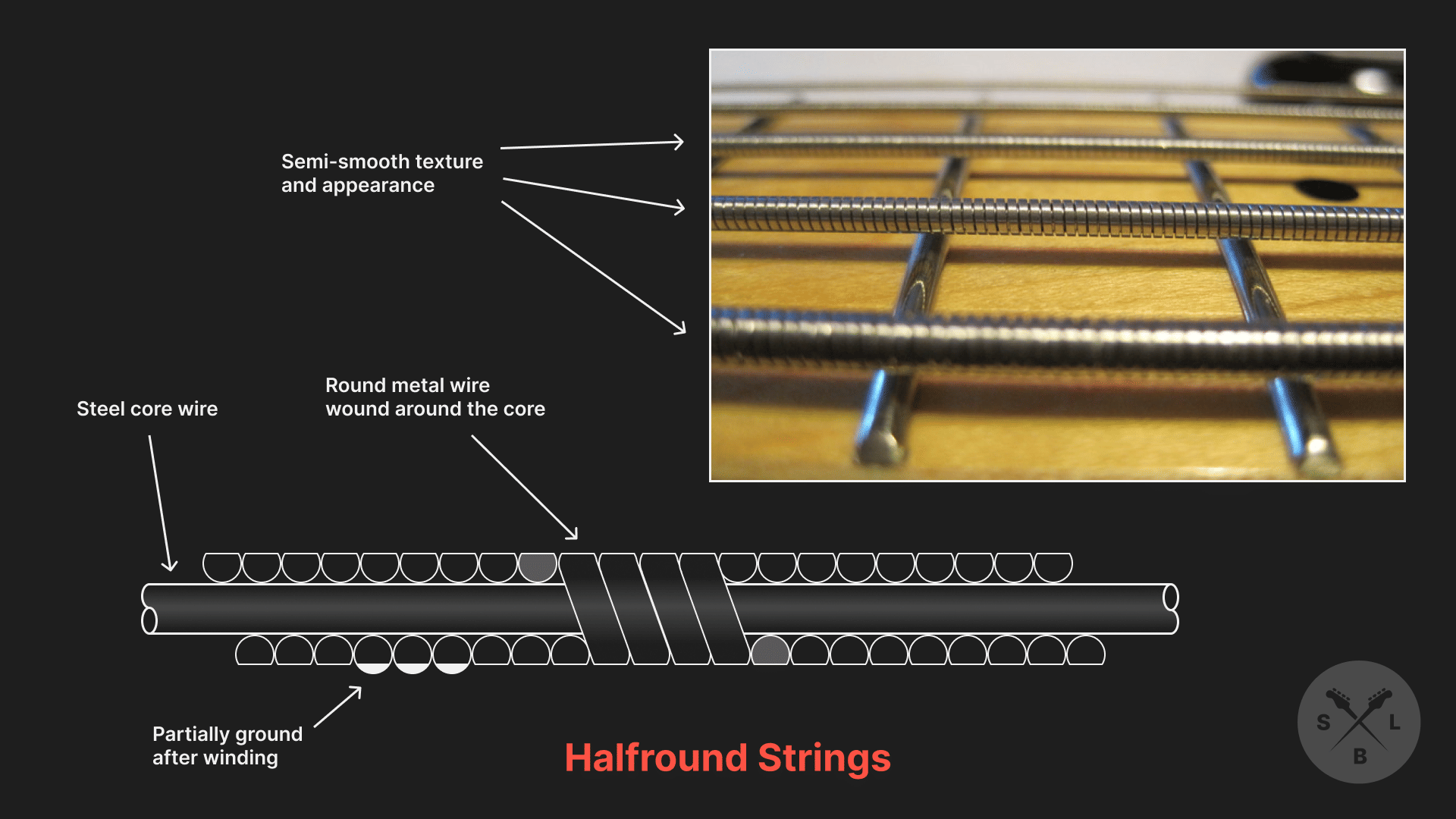
Half rounds are a hybrid of roundwound and flatwound strings.
They’re made by initially constructing the string as a roundwound—using a round wire wrapped around a metal core—but then partially grinding or polishing the string's exterior to smooth out the surface texture.
This type of construction gives you a string that feels smoother under the fingers but retains more of the bright tonal quality of roundwound strings (even if they aren’t quite as bright as roundwounds.)
While this smoother feel is versatile for various styles, they might not be the first choice for genres that demand extremely bright or very mellow tones.
What Are Bass Strings Made Of?
I mentioned it earlier, but the materials that a bass string is made from is a really important aspect to consider.
Just like how bass strings are made, the string material—nickel, steel, stainless steel, copper, and more—also affects how the bass sounds.
Let’s go over a couple of the most popular materials.
1. Stainless Steel
Stainless steel bass strings are known for their bright and clear tone, which comes from the stainless steel wrapped around a steel core.
These are a solid option if you’re looking for a string that packs enough punch to stand out in a mix, which makes them popular with rock and metal musicians.
As the brightest-sounding strings, they’re great to use for slap bass and fast-paced playing.
Stainless steel strings are also resistant to corrosion, making them extra durable.
2. Nickel-Plated Steel
Nickel-plated steel strings are just like the name—they fall between pure nickel and steel strings.
These strings are constructed from nickel-plated steel wrapped around a steel core.
While they’re not as durable as stainless steel strings, they’re still pretty durable and corrosion-resistant.
The nickel plating gives them a smooth feel and adds warmth to the sound, while the steel core keeps things bright.
This balance in sound makes them super versatile, which is why you’ll find them in genres ranging from jazz and blues to rock and pop.
3. Copper-Plated Steel
Like nickel-plated steel, copper-plated steel isn’t pure copper. It’s steel coated with a thin layer of copper and then wrapped around a steel core
Copper-plated steel strings have a warmer tone than the two materials I’ve talked about so far.
They’re able to produce a mellow and somewhat vintage sound, which is ideal if you’re playing jazz and blues.
4. Pure Nickel
Pure nickel strings are constructed with a steel core wrapped in a pure nickel wire.
They have a distinctly different tonal quality compared to stainless steel strings—warm, rich, and smooth, making them a popular choice among players seeking a vintage or classic tone.
They’re an incredible choice for playing blues, classic rock, and any song you want to have that vintage feel.
Best Bass Strings for Beginners
As a beginner, choosing the right bass strings is crucial at the start of your bass-playing journey.
Some people start at different places when playing the bass. But as a general answer, I suggest starting with nickel-plated roundwound strings.
These strings are durable, have a great tone, and will help you build finger strength without breaking the bank.
What Bass Strings Should I Get?
It depends on what you’re looking for. Bass strings, much like everything else bass-related, are personal.
However, I do want you to think about four factors while you make your decision:
- Durability
- Playability
- Tone
- String Gauge
Let me break down each below.
1. Durability
Think about how long you want your strings to last. If you want to avoid restringing your bass often, you’ll need a string that’s going to last.
How long your strings last depends on the type of strings you’re using and how often you play, but sooner or later you’re going to have to replace your strings. The reason is that worn-out strings sound dull and slip out of tune quite easily.
Picking strings with durability in mind can save you time and effort in the long run, ensuring your bass is always ready to go when you are.
2. Playability
Playability is all about feel and comfort. Finding the bass strings that feel right for you makes a difference when playing regularly.
Whether you prefer an effortless glide across the fretboard or a slightly textured feel for a better grip, figuring out your preference is key.
3. Tone
How do you want your bass to sound? This is one of the most crucial factors to consider when choosing strings.
Tone defines your bass’s sound. Do you prefer warmth or brightness in your bass? Thinking about tone early on can narrow down your options.
As I mentioned earlier, different bass strings and materials affect your tone.
Like how roundwounds give you a bright tone, while flatwounds get you something mellow. Or how nickel-plated steel is a nice balance between warmth and brightness, but pure nickel is warmer.
Think about what sounds best for the kind of music you want to play.
4. String Gauge
String gauge is how thick the string is. A lighter gauge (thinner string) is easier to play than a heavier gauge.
Four-string bass guitars' standard string gauge is 0.045 (inches thick) to 0.105. When you look at packs of strings, most packs drop the ‘0’, so it reads 45-105.
While lighter gauges are easier to play, heavier gauges give you that more robust sound. There is a tradeoff there, so it comes down to what you’re comfortable with.
Moving From Strings to Songs
It takes time to determine the best bass strings for you. Don’t be afraid to experiment with different types of bass guitar strings or materials.
Play around with them. Explore what’s out there.
Keep in mind that while you’re finding what’s best for you, figuring out what strings you’re into is just the beginning.
But there’s so much more to learn.
If you want to amp up your bass guitar skills, check out the SBL Academy. You’ll get access to step-by-step courses from some of the music industry’s best bass players.
If you’re into that, try the SBL Academy free for 14 days!