
Everything You Need to Know About Bass Scales (With Tabs and Patterns)
Have you ever found yourself wishing you could jam like a pro, or create unforgettable bass lines that make songs come alive?
From building up your finger strength to mastering the fretboard, scales are your roadmap to unlocking those skills.
But let’s face it – it's easy to feel overwhelmed and downright confused with how scales fit into your musical journey.
So today I’ll show you the most important scales you should be practicing as a beginner.
I’ll start with what scales are, and why they make you a better bass player. Then I’ll jump into a breakdown of each scale and how to play it. You’ll also get patterns and tabs that you can use to play each scale anywhere on the neck.
Let’s jump in!
What Are Bass Scales?
A scale is a sequence of 7 notes played up and down.
Every scale starts and ends on a root note – this means the root is played twice. The distance between the root notes is called an octave.
The scale outlines the key that a song is written in.
This means that those notes are usually the only ones that get played throughout the song. They’re the notes that make the chords and solos sound in tune.
Each key (or scale) has a unique sound quality and vibe. You can think of a scale as a set of “note guidelines” the band can use.
For example, the G major scale (or the key of G) has the notes:
G, A, B, C, D, F#.
Those notes will make up the chords, melodies, harmonies, and walking bass lines in a song.
Basically, they give it a theme, specific sound vibe, and mood.
Why Should You Care?
Knowing which notes to use, and where they are on the fretboard, empowers you to play a riff that’s in key and sounds good with the song.
Playing notes from within a scale prevents awkward note combinations that don’t sound great together.
So practicing scales is the musical equivalent of doing push-ups. They help you develop your ear, and improve your ability to create riffs that make people’s feet start tappin’.
Avoid This Common Mistake
Scales are more like guidelines than they are rules.
Many great songs use more than one scale, as well as notes that don’t belong in the scale.
It’s not wrong to play notes outside of a scale, so don’t let scales get in the way of your creativity!
But if you’re a beginner (and just starting out), sticking to the scale makes sounding good, easier.
The Major Scale
The major scale is the poster child of scales. It might sound familiar because it forms the basis for countless epic bass lines you know.
Songs with major scales tend to sound more uplifting, and cheerful. Just think of a classic melody like “Happy Birthday”.
While this is an understatement, the easiest way to think of a major scale is that it sounds happy.
Because it’s the most common type of scale and so many songs are written in a major key, it’s the best place to start.
Once you know what the major scale sounds like, and how to play it, it makes learning the other scales easier. Because they can all be seen as a variation of the major scale.
So, how do you play it?
Formula and Intervals
Whether you’re playing a C major scale or an E major scale, all major scales use the same formula of intervals in their construction.
Intervals are the “steps” between each note. And they can either be a whole step or half step.
So if there are eight notes in an octave scale. That means there are seven steps in between each of those notes.
The major scale formula is:
- Whole step
- Whole step
- Half step
- Whole step
- Whole step
- Whole step
- Half step
A whole step is two frets. A half step is one fret.
If you’re confused, don’t worry it will make sense in just a second.
The easiest way to visualize these intervals is by playing the major scale on one string. So go ahead and play the E major scale on your open E string.
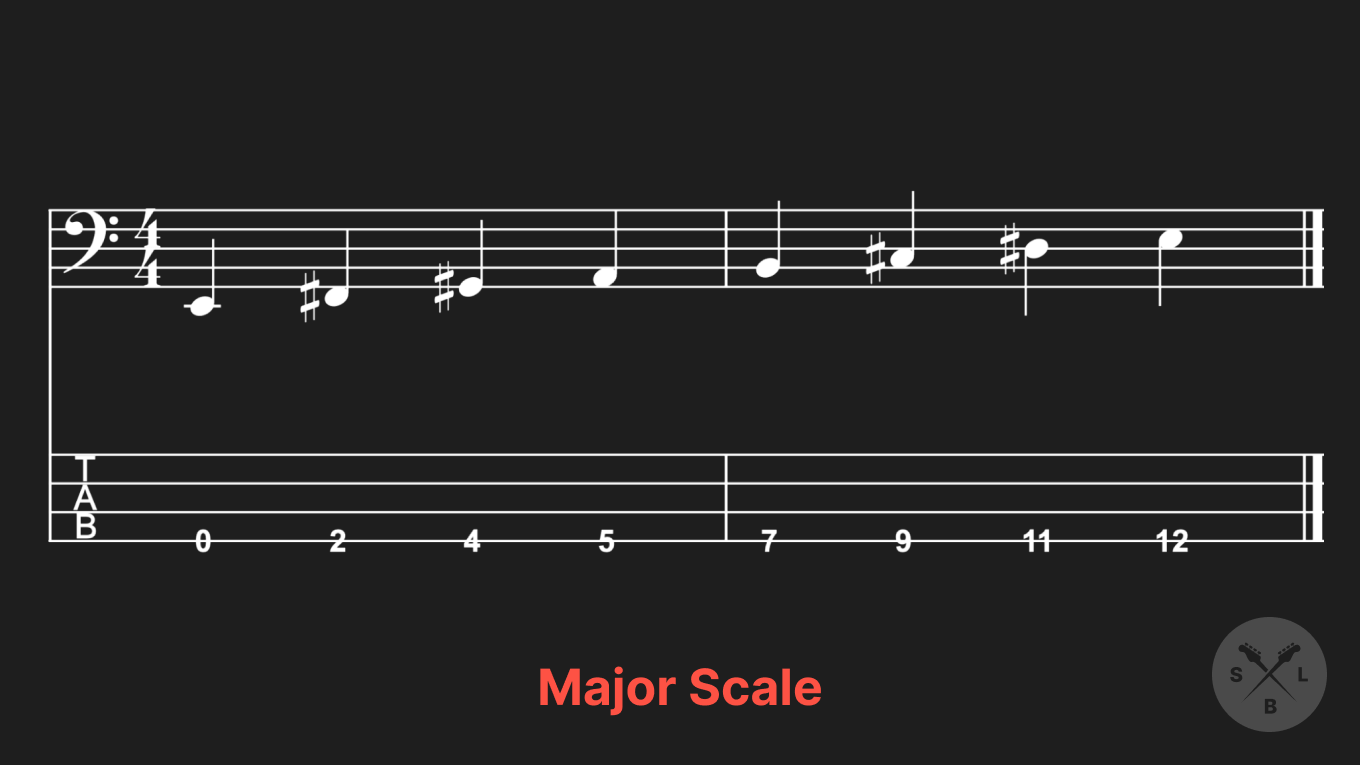
The distance between the notes gives the scale a certain sound.
You can also play the same frets on each of your open strings to play the major scale on them. Notice how they sound a little different even though they’re still major scales.
The Pattern With Tabs to Practice
The good news is that you can play an easy-to-remember pattern anywhere on your fretboard to play a major scale.
This is the major scale pattern:
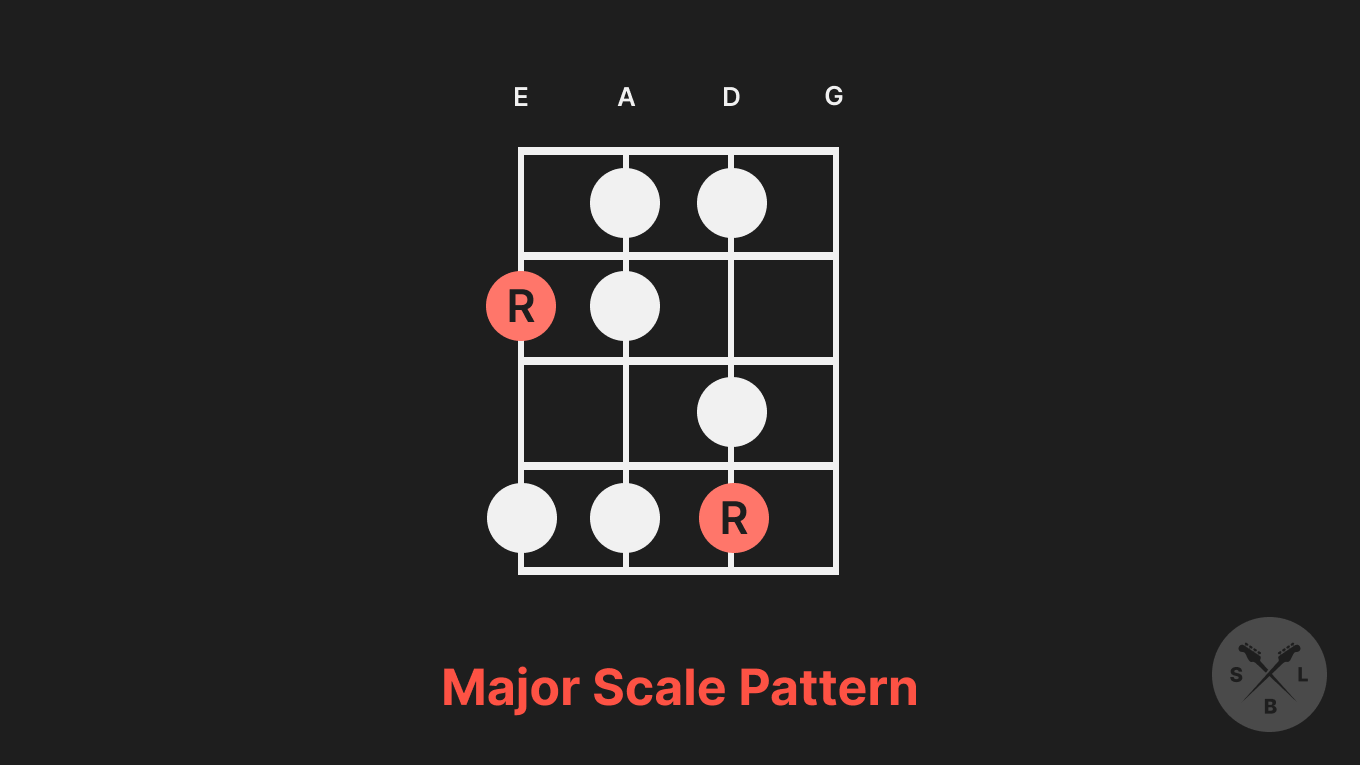
The “R” is the root note. It's the first and last note of the scale. Sounding the octave.
Whatever note you start the pattern on, is the major scale you will play.
Let's use this pattern to play a C major scale.
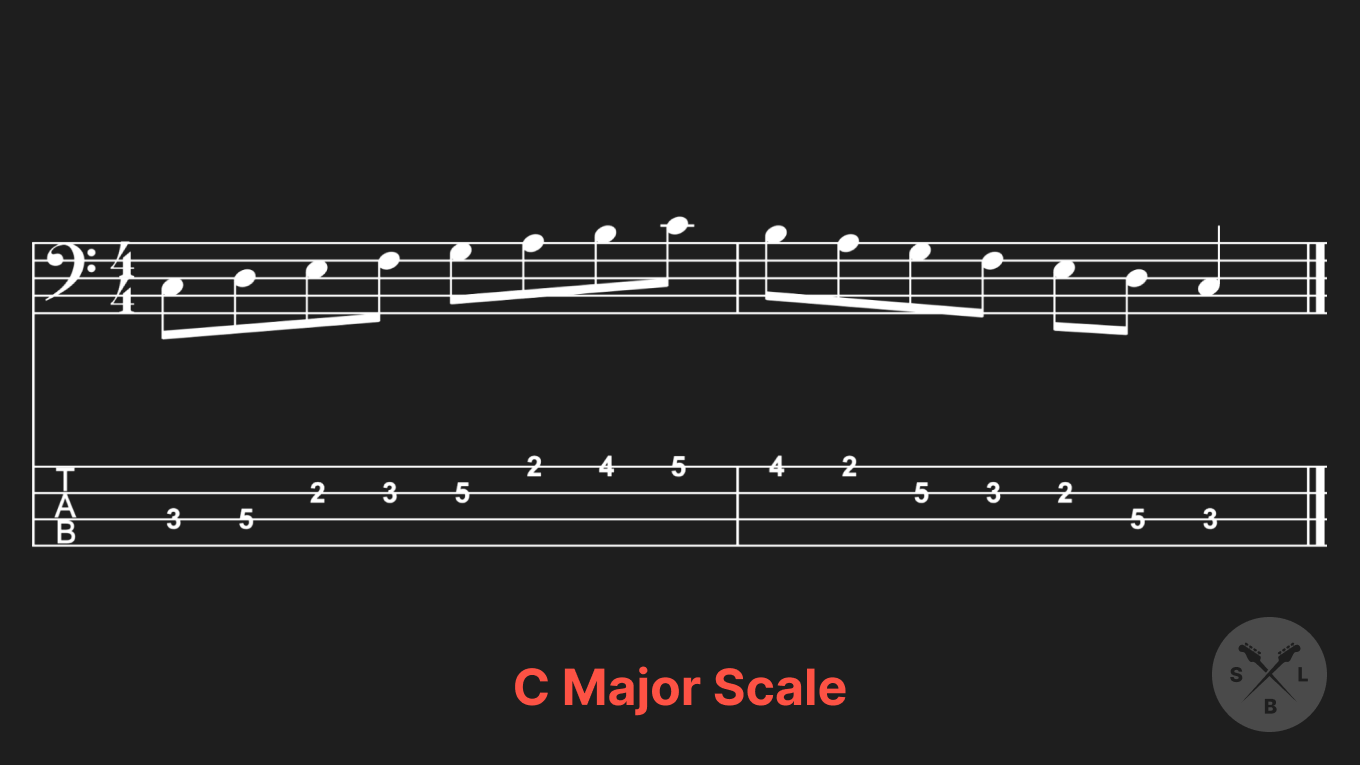
You can also use this pattern to quickly identify and play all the notes on a scale. So if you want to know the notes in an F major scale, just start the pattern on F.
The Major Pentatonic Scale
Pentatonic scales get their name from the Greek word “penta,” which means “five”.
So naturally, a pentatonic scale only has 5 notes in it.
This scale has a unique superpower – it sounds great in almost any musical context and produces a clear, and open sound.
This means that it’s a great scale to play if you’re just beginning to solo and improvise.
Formula and Intervals
All major pentatonic scales follow the same sequence.
Instead of thinking about intervals, it’s easier to compare it to the major scale you already learned.
Just remove the 4th and 7th notes from the major scale formula.
So on your open E string, this is the E major pentatonic scale:
- Root note: E
- 2nd note: F#
- 3rd note: G#
- 4th note: A (Skip)
- 5th note: B
- 6th note: C#
- 7th note: D# (Skip)
- Root note: E
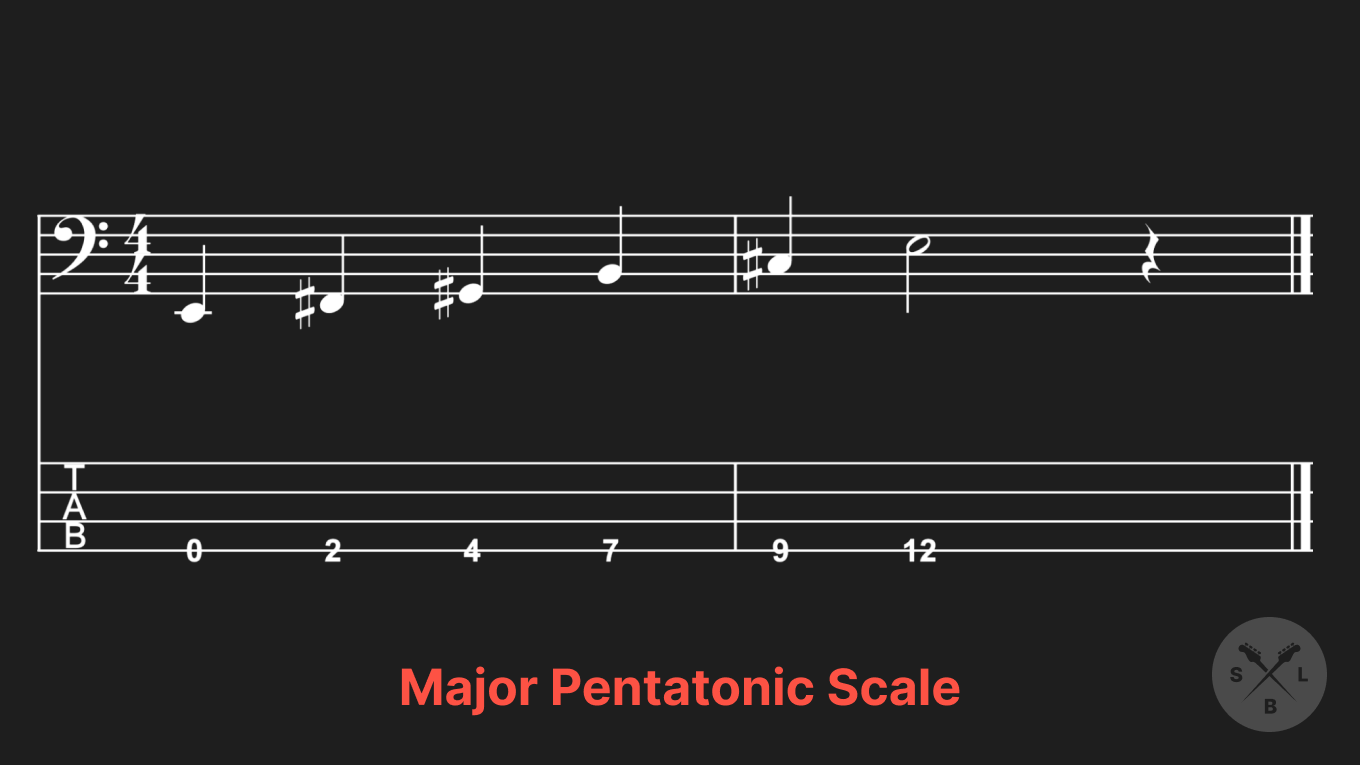
Notice the difference in the sound between this and the major scale.
The Pattern With Tabs to Practice
Playing the scale on one string is great for helping you visualize the intervals and practicing your slides. But here’s a pattern you can use to play a major pentatonic scale anywhere on the neck.
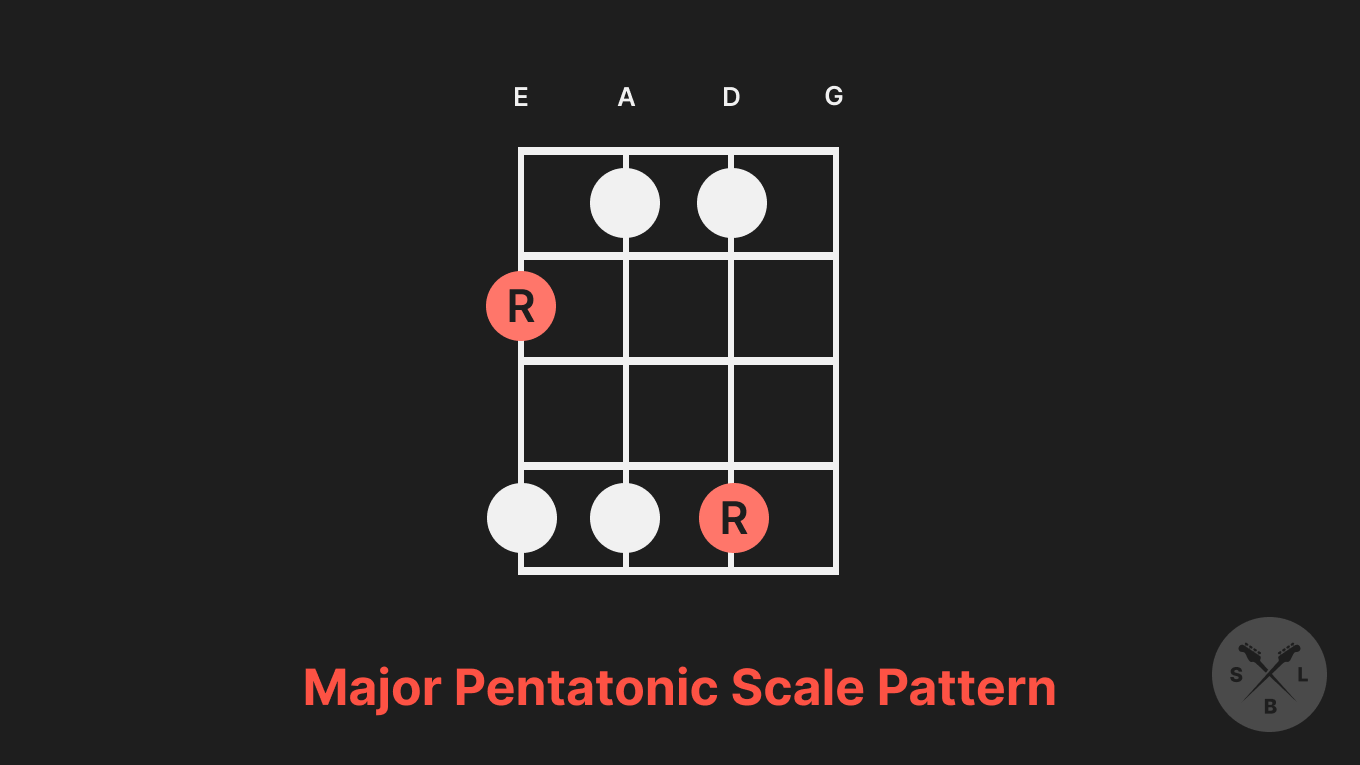
Let's use this pattern and play a C major pentatonic scale.
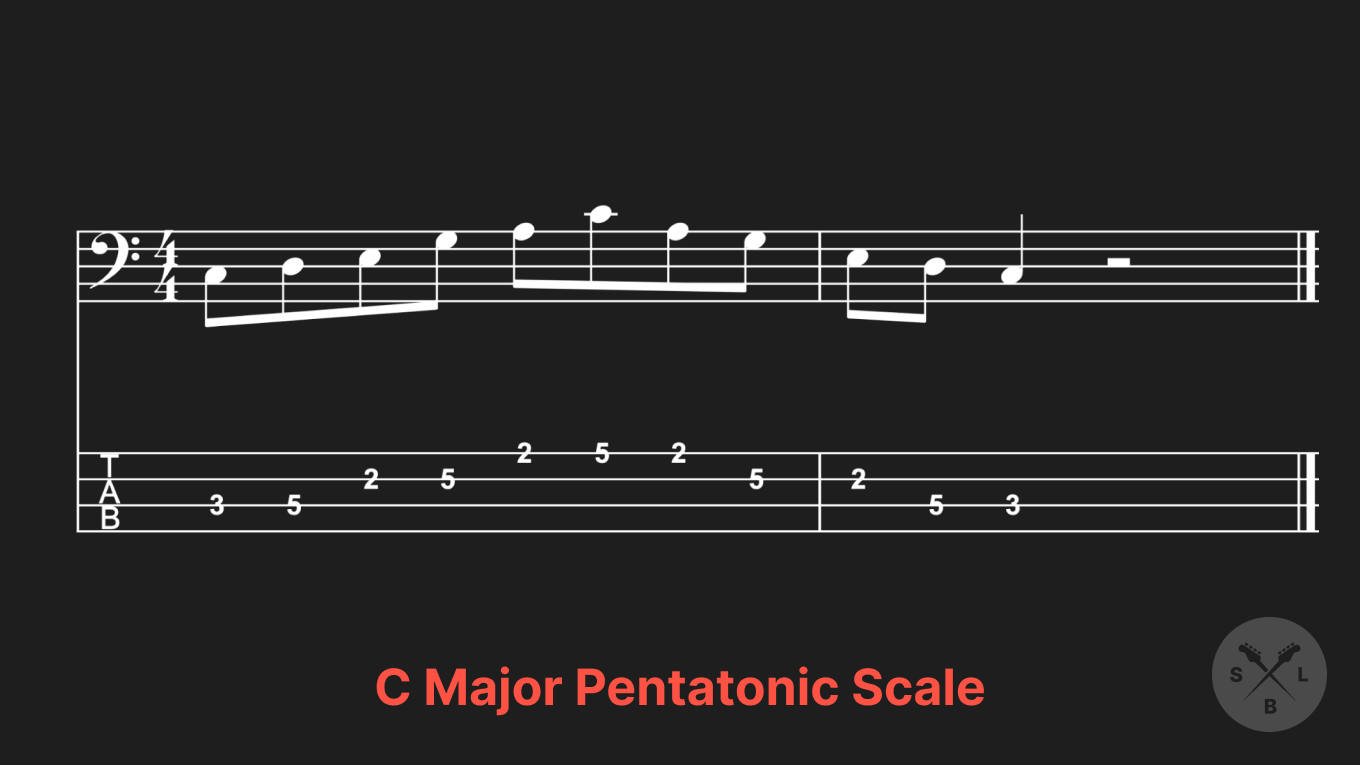
Just like before, whatever note you start the pattern on will decide the scale.
The Minor Scale
If the major scale is your sunny day, then the minor scale is your stairway to heaven.
When you hear the minor scale it sounds dark, moody, and expressive. It’s a favorite among songwriters for conveying deep emotions. You can find the minor scale in rock, pop, and metal music.
An easy way to think about the minor scale is that it sounds sad.
It’s another very important scale that you should get familiar with because it can help you create music that has a greater range of emotions.
Keep it Simple
I’ll show you the “Natural Minor Scale”—what you should learn as a beginner.
If you hear the term “Harmonic Minor”, or “Melodic Minor”, just know they’re slight variations of this one. They raise the 6th and 7th notes to create more harmonic tension in the song.
Formula and Intervals
Just like the major scale, it has 7 notes and plays the root on the octave. It has its own formula for intervals that all natural minor scales use.
Here’s the minor scale formula:
- Whole step
- Half step
- Whole step
- Whole step
- Half step
- Whole step
- Whole step
Remember that a whole step is two frets, and a half step is one fret.
To visualize this, play the E minor scale on your open E string.
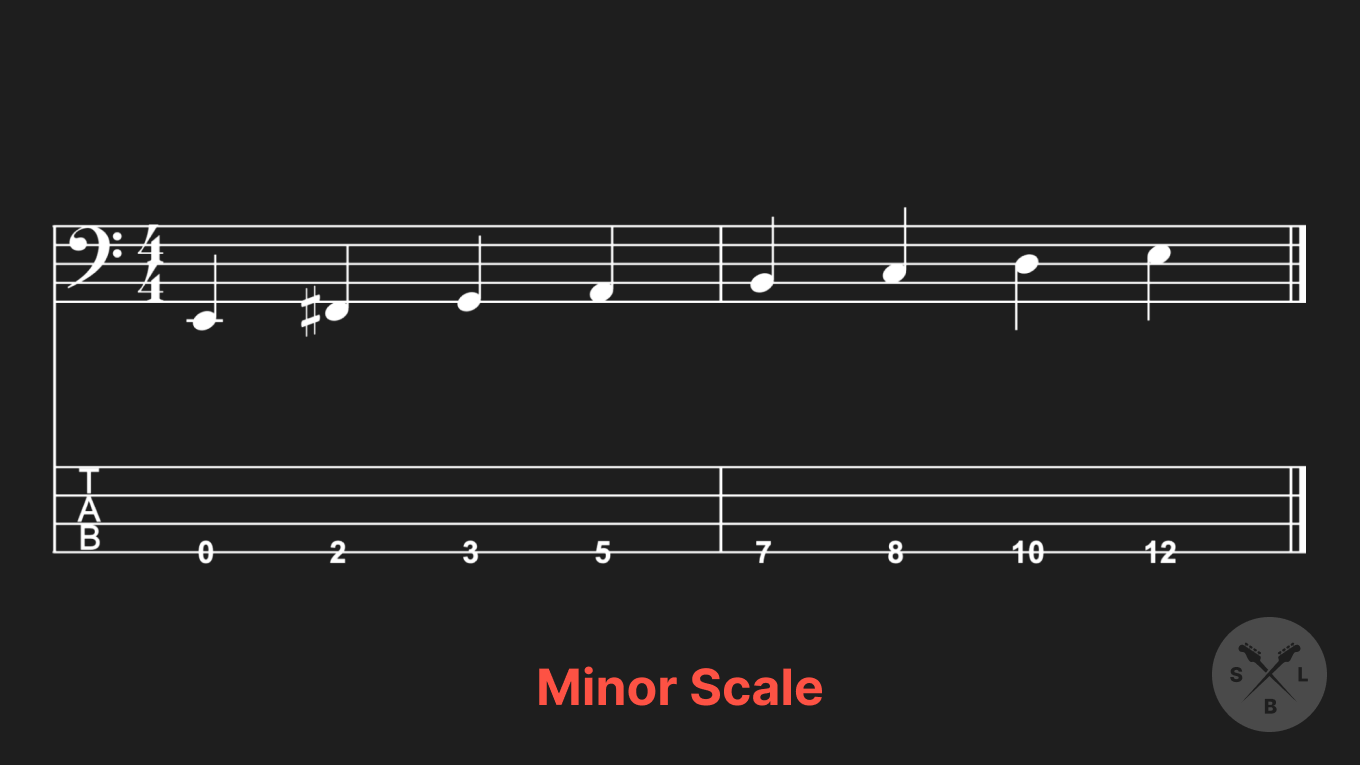
Listen to the vibe and sound quality it has. Notice how the minor scale sounds different from the major scales you just learned.
The Pattern With Tabs to Practice
Here’s the pattern for playing a minor scale anywhere on the neck.
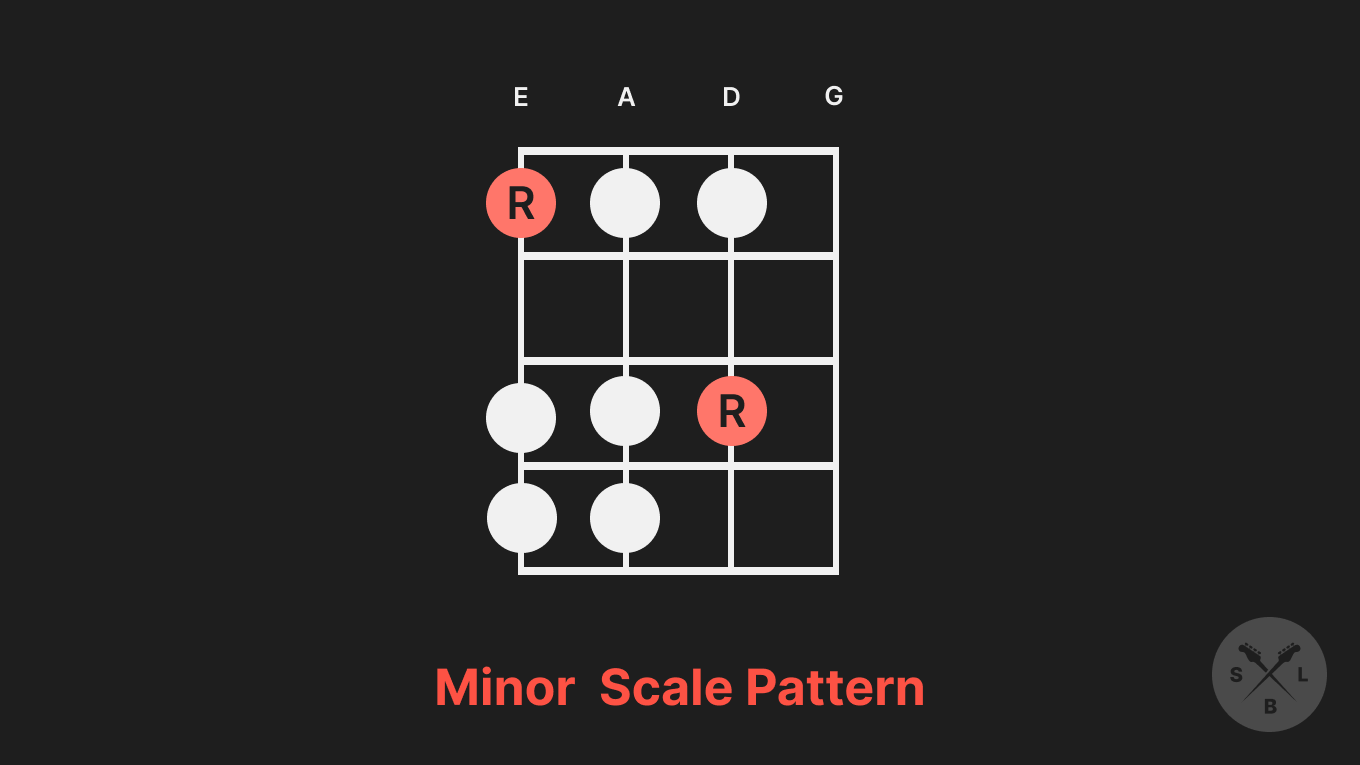
Let’s play our C minor scale for practice and consistency.
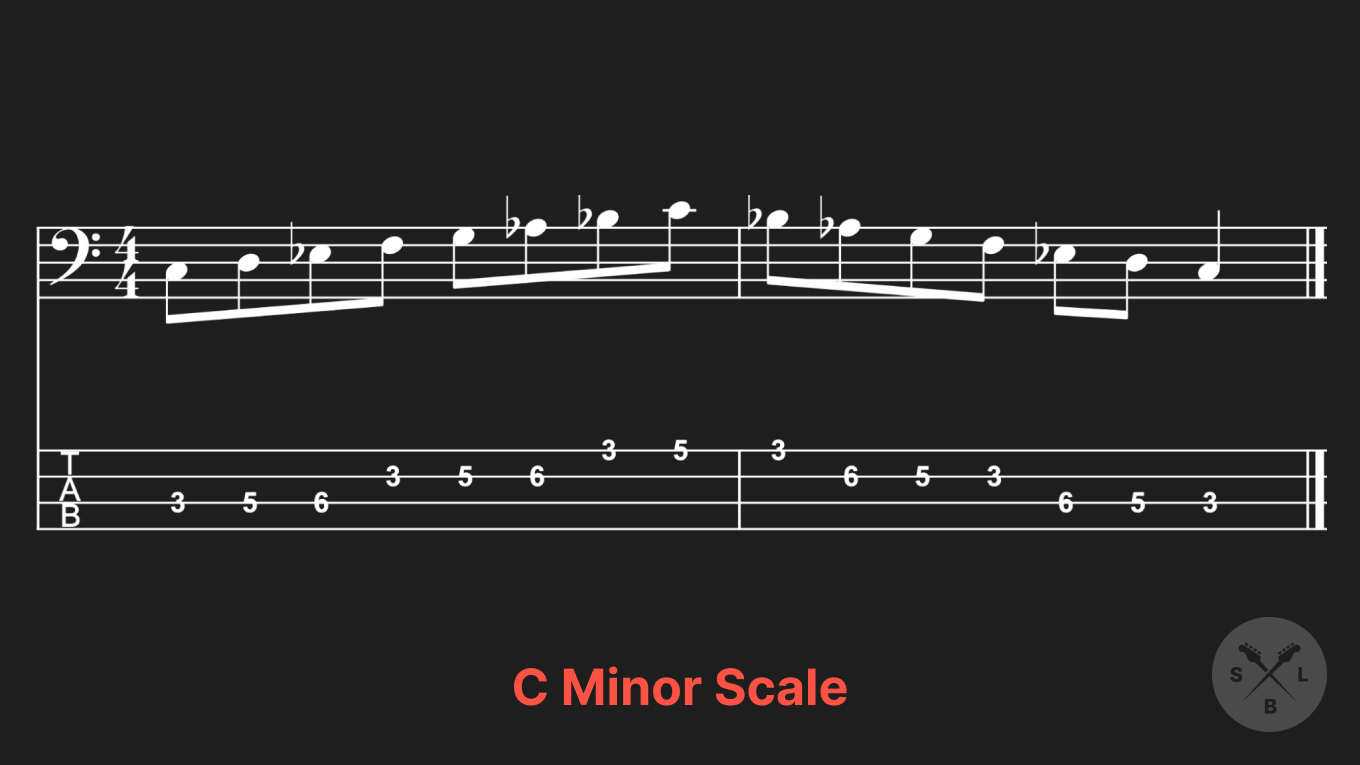
Once you get comfortable with the pattern, practice playing with a metronome to challenge yourself and improve your timing.
The Minor Pentatonic Scale
This one's a favorite among rock, blues, and jazz bassists for its ability to inject raw emotion into your playing.
Just like the major pentatonic scale, the minor pentatonic scale is made up of five notes.
You can use this scale to solo over a minor chord progression, or in a minor key without running the risk of hitting notes that might clash.
Formula and Intervals
Once again, it’s easier to compare the E minor pentatonic scale to the E minor scale.
Think of it as an adaptation of the minor scale, so it doesn’t feel like you’re learning a whole new scale.
The minor pentatonic scale removes the 2nd and 6th notes. Play it on your open E string to visualize the intervals.
The E minor pentatonic scale:
- Root note: E
- 2nd note: F# (Skip)
- 3rd note: G
- 4th note: A
- 5th note: B
- 6th note: C (Skip)
- 7th note: D
- Root note: E
This leaves you with a 5-note scale that looks like this if you play it on your open E string.
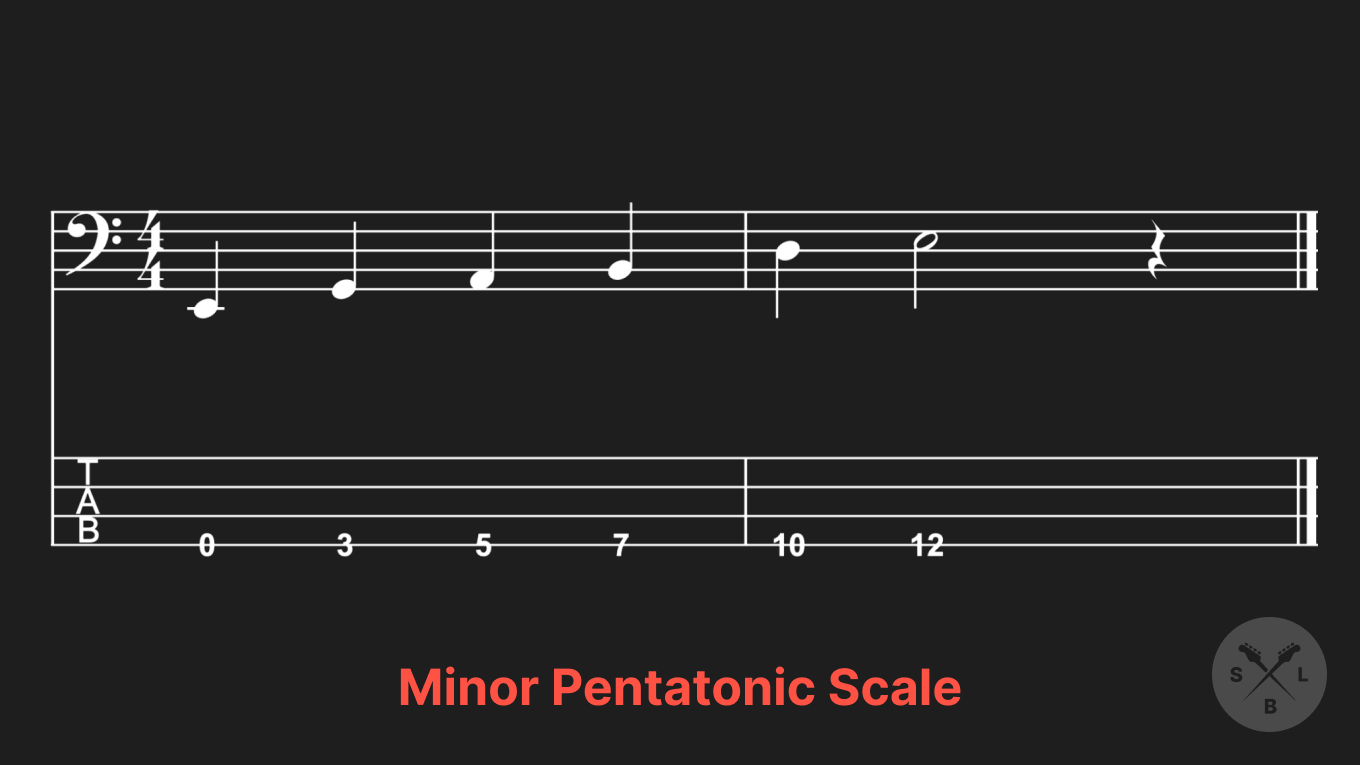
Notice how it sounds different from the minor scale.
The Pattern With Tabs to Practice
When you’re ready to start soloing and improvising, use the following pattern to play the minor pentatonic scale anywhere on the neck.
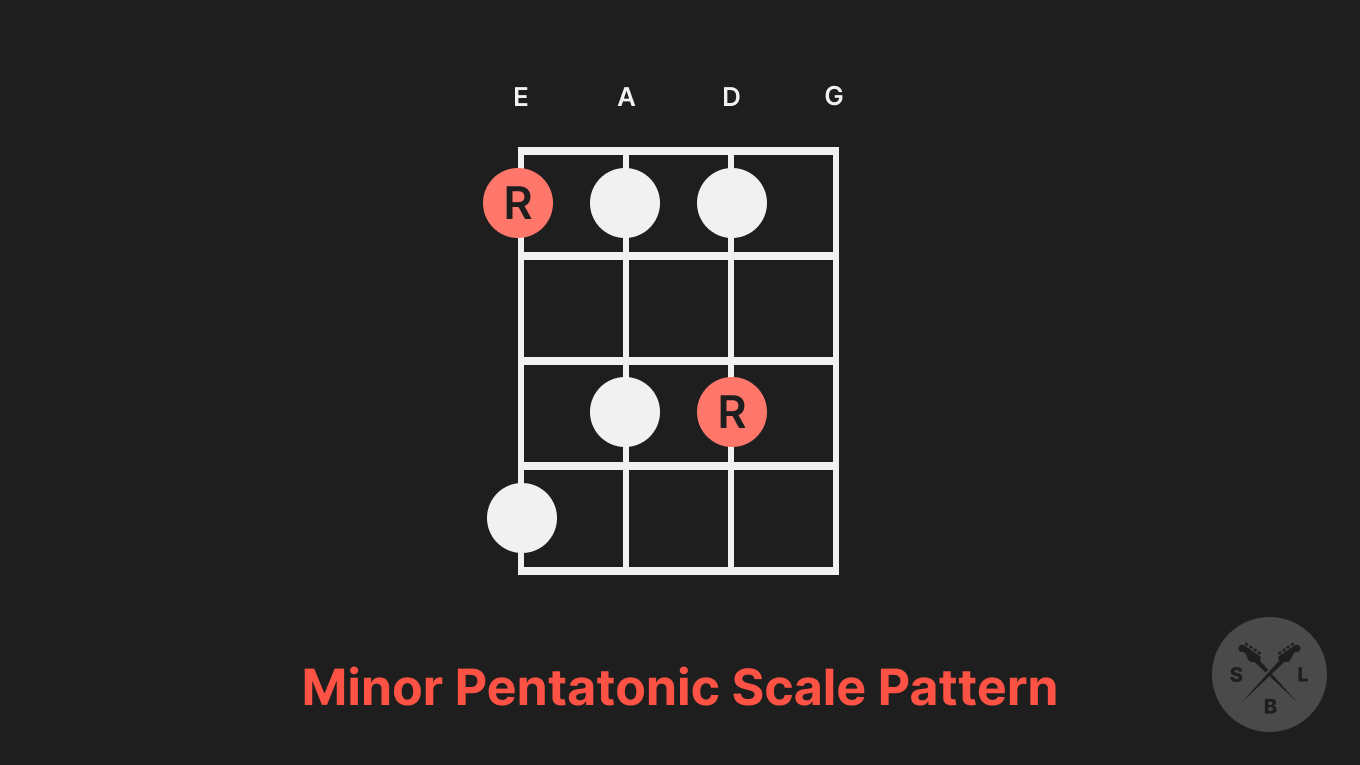
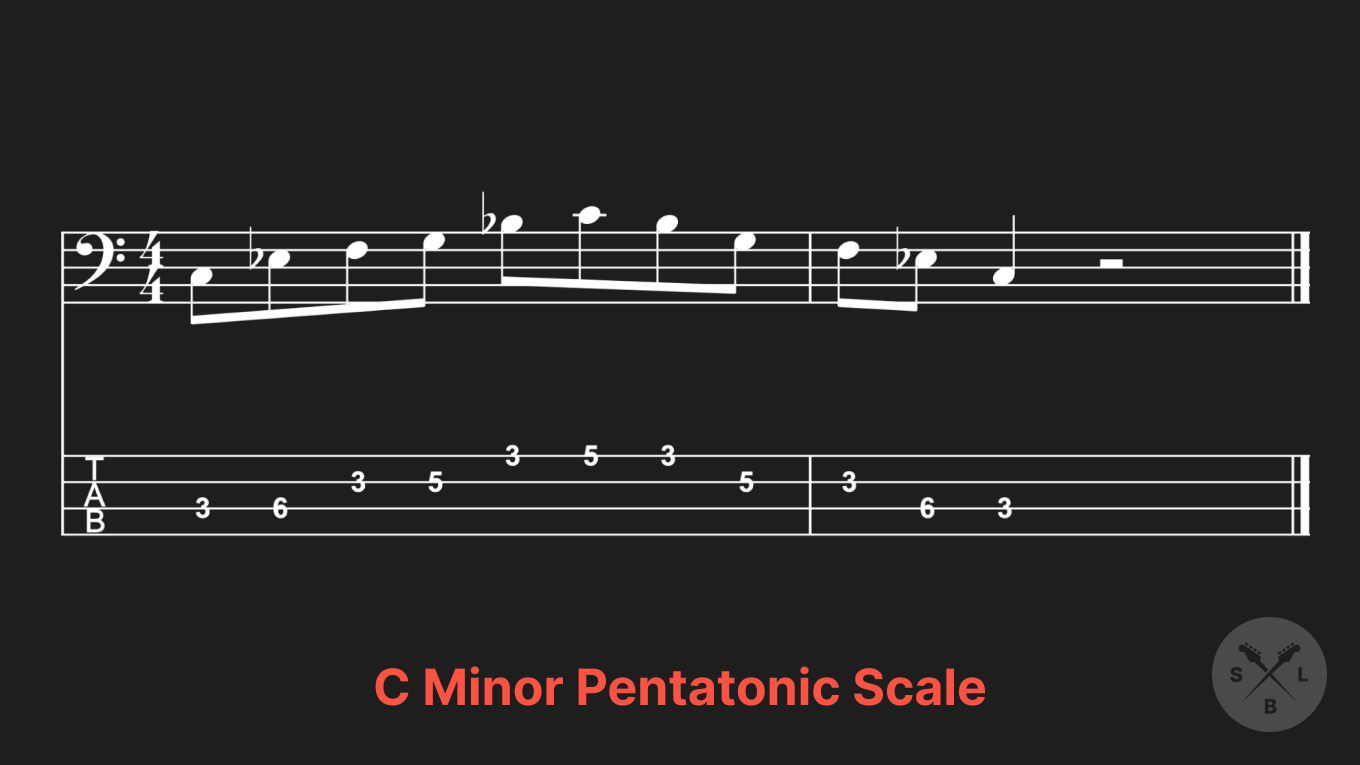
Here’s a tab for playing the C minor pentatonic scale.
Blues Bass Scales
Let's talk about a genre that practically breathes bass – the blues.
Blues bass scales are your ticket to this soulful, expressive world. Knowing the blues scale can help you to create bass lines that have a bluesy, low-end grit, type of feel to them.
This scale is seen as sort of a “one size fits all” for soloing over a blues progression.
What makes the Blues Scale different is that it adds one extra note to the pentatonic minor scale you just learned.
It’s called “the blue note.”
This extra chromatic note (an augmented 4th) creates harmonic tension that gives it that unmistakably soulful vibe.
It’s a great example of how even though a note is out of the key, it can still work!
Formula and Intervals
Let’s use the open E string to understand the blues scale formula. Remember it just adds an extra chromatic note to the pentatonic minor scale.
E Minor blues scale:
- Root note: E
- 2nd note: G
- 3rd note: A
- 4th note: A# (The Blue Note)
- 5th note: B
- 6th note: D
- Root note: E
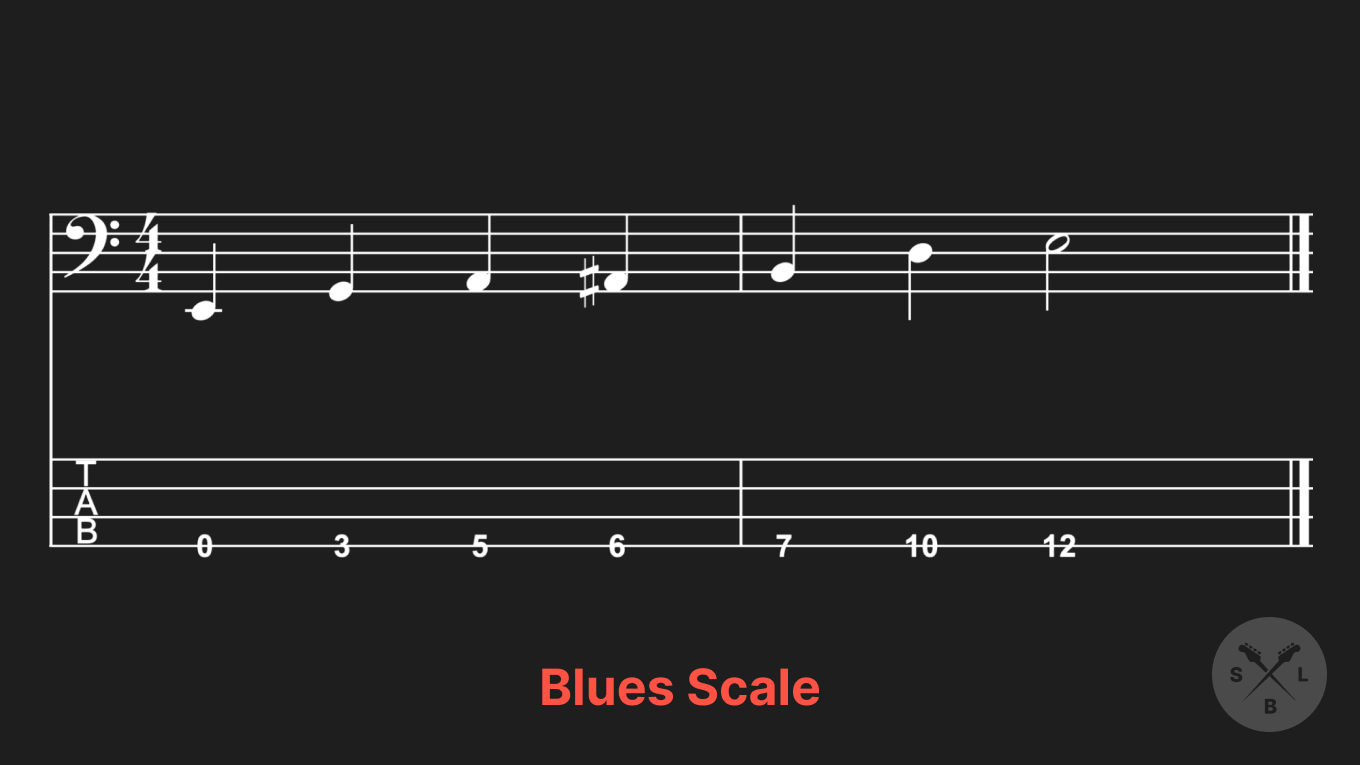
Notice how that one note adds so much soul to the previous minor pentatonic scale!
The Pattern With Tabs to Practice
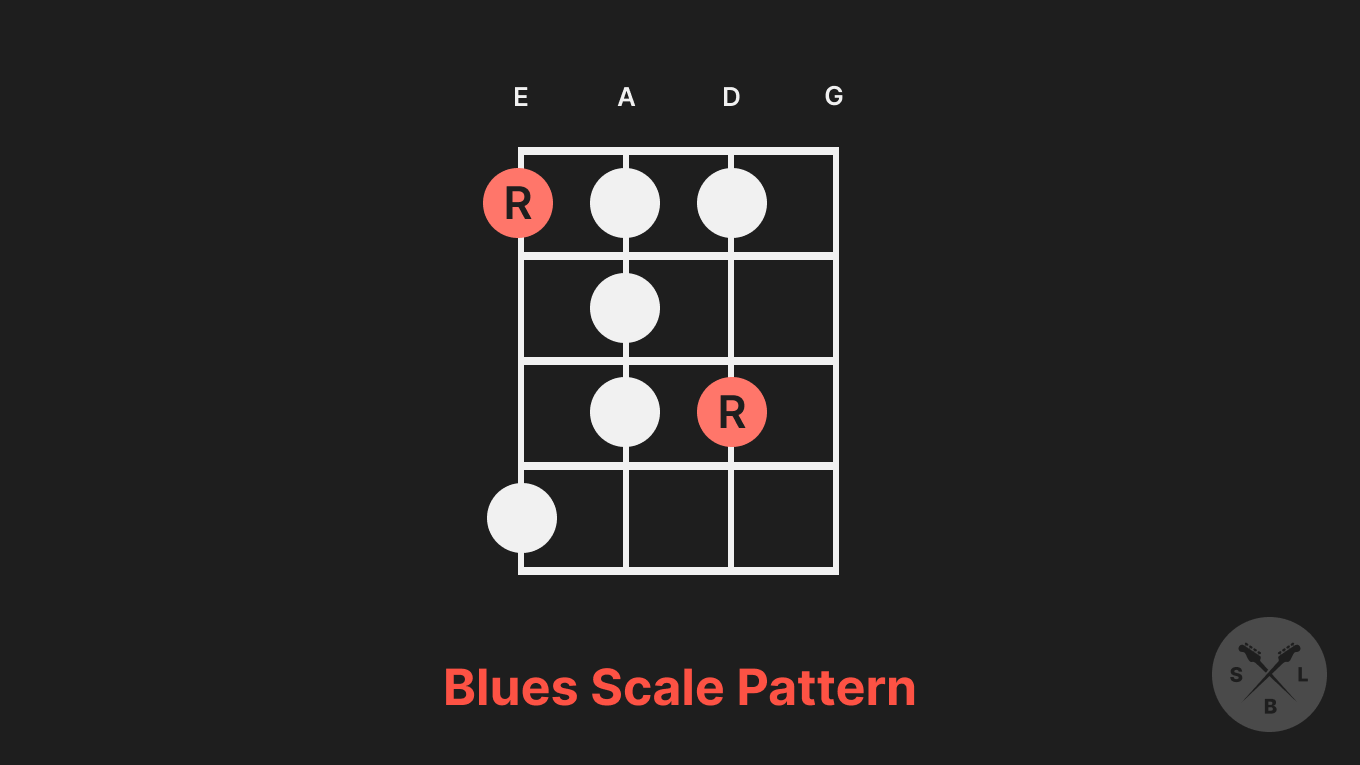
And here’s a tab for playing the C minor blues scale.
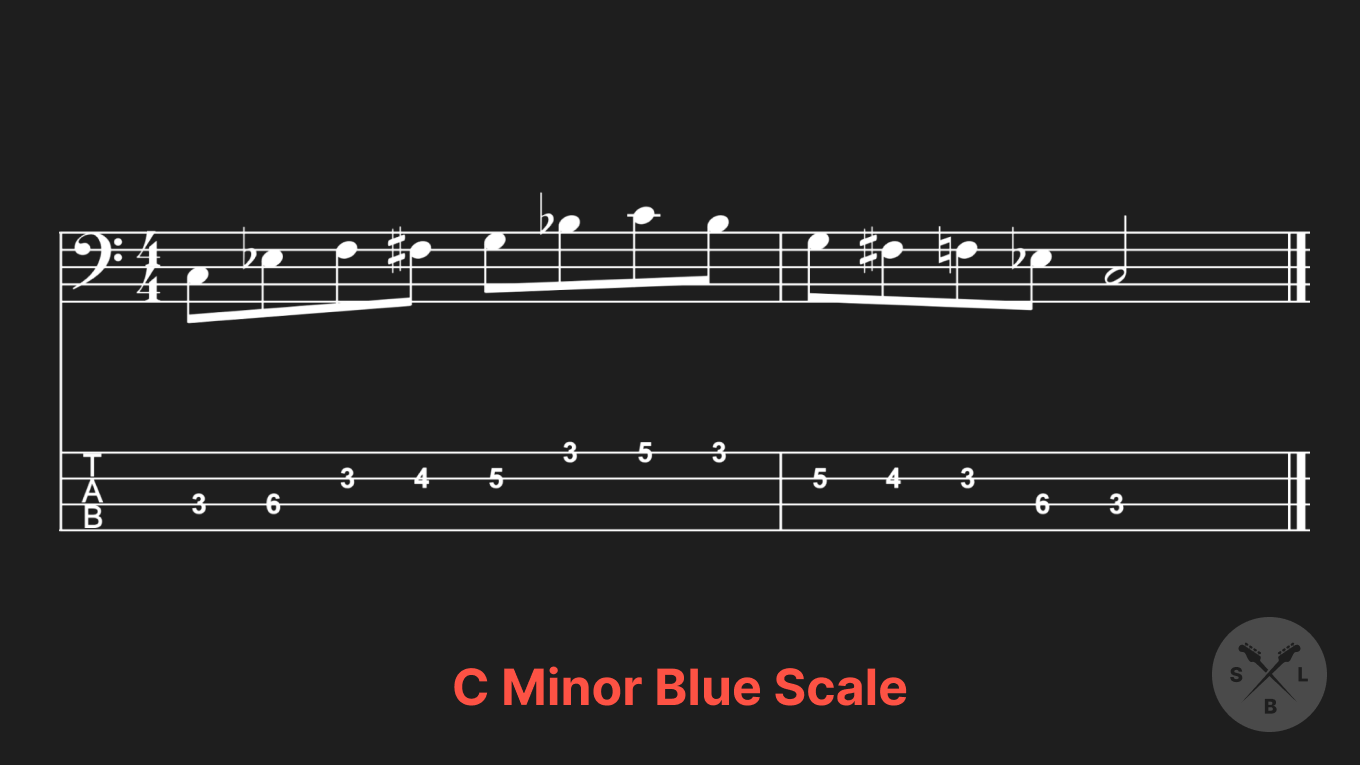
Chromatic Scale
Last but not least, let's dive into the chromatic scale. This one's a bit like musical alphabet soup—it has all the notes!
It won’t have a unique sound like the major or minor scales because it’s just a stepwise movement from root to root. It’s like saying all the letters in the alphabet instead of spelling out a word.
Think of the chromatic scale as a palette of notes you can infuse your bass lines with to make them sound unexpected, surprising, and unique.
It’s also a great warm-up exercise for your practicing sessions!
Formula and Intervals
From the root to the octave there are 12 tones between them. Let’s use our open E string to visualize it.
From plucking it open, you would play every fret until you reach the next E, which is on the 12th fret.
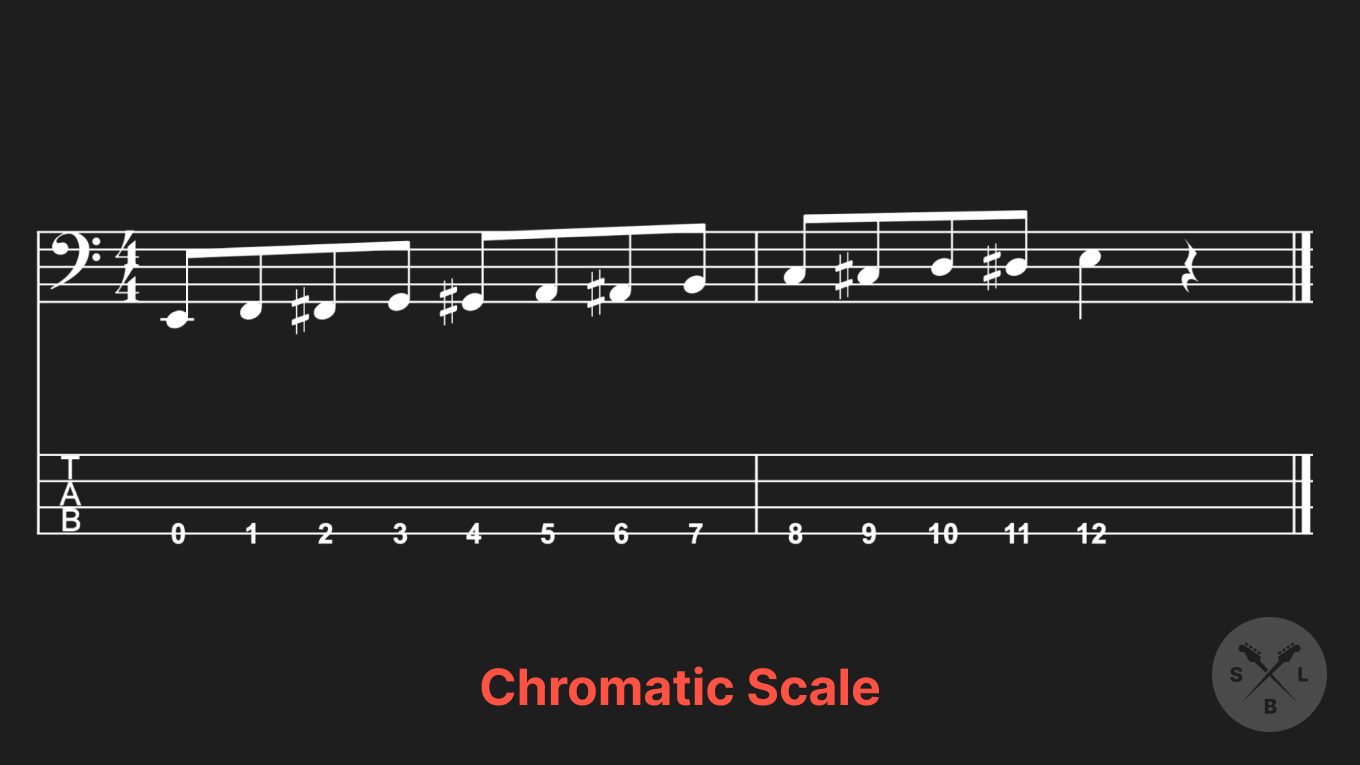
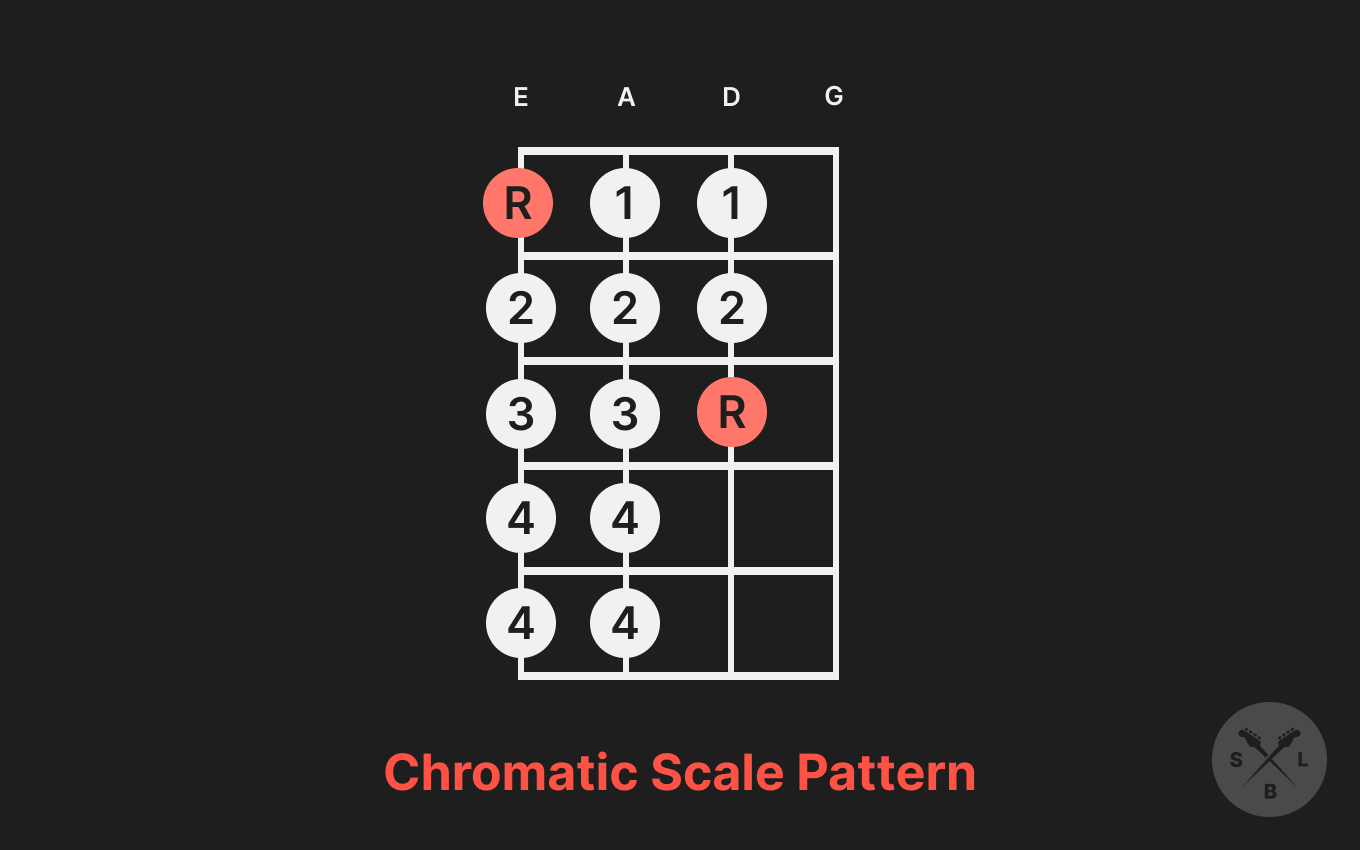
The Pattern With Tabs to Practice
In the pattern below, use the 4th finger of the fretting hand to play two notes on each string.
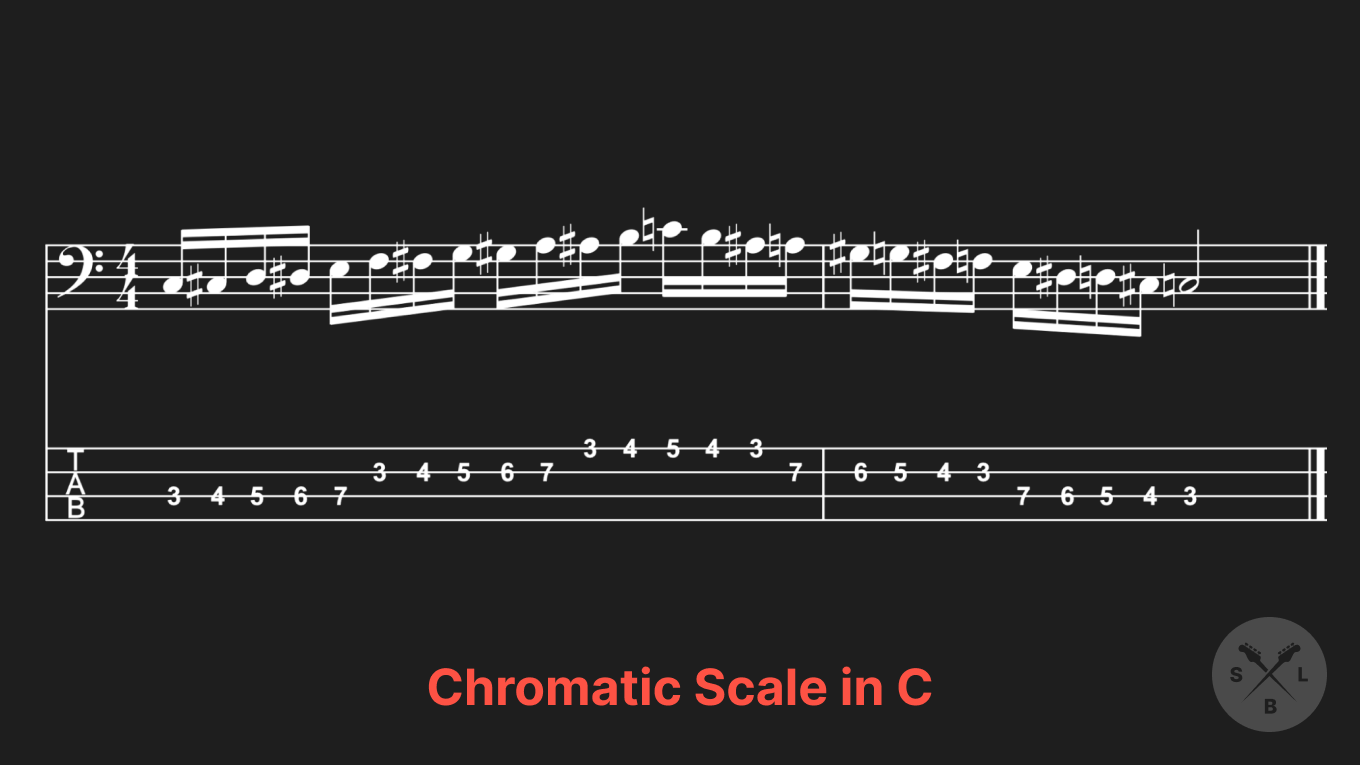
And here’s the chromatic scale if we start on C:
Are You Ready to Move Beyond Scales?
If you’re trying to get your bass playing to the next level, then you’ll need all the help you can get! I’ve put together some FREE resources all in one place for you to ramp up your skills.
There’s a step-by-step bass line creation guide. It’s a 30-minute video where I show you how to use scales to create bass lines!
Plus you’ll get access to a backing track library for you to jam along with and create some grooves.
So don’t waste another day in the practice room without these resources. Get your free bass toolkit today!