
NEW Program Alert: The Groove Accelerator is OPEN for enrollment! Limited Time Only —Join Now
Bass or Guitar: Which is Right For You?
There’s no doubt about it—both the bass and guitar are seriously rewarding instruments to learn to play. The question, however, is which one should you learn?
Now I know guitar players get a lot of glory, but there's an equal number of incredible bass players contributing to the music you love in almost any genre.
With each instrument, there are a few things to consider. They both have unique traits and offer ample opportunities for creativity and jamming out.
The bass is ideal for those who love to groove and provides the rhythm foundation and harmonic base of the band. Guitar, on the other hand, gives you ample opportunities for crafting beautiful melodies and solos.
Below, I’ll guide you through some of the main differences between the bass and guitar, and help you decide which one is ultimately right for you.
Is Bass Easier Than Guitar?
Both bass and guitar are great instruments, but they come with their own sets of challenges and rewards.
Bass gives you that rhythmic footing. It creates the groove that drives the music forward.
Guitar, on the other hand, takes on a more melodic role. It often establishes the chord structure and weaves intricate solos into the music.
But is one easier to learn than the other?
It’s hard to say.
It’s easy to think that the bass would be the easier choice, especially since it only has four strings.
And in some sense, this is true. It’s easier to learn the basics of the bass than the guitar. With fewer strings and a more straightforward role in most music, beginners can start playing simple bass lines relatively quickly.
However, this initial simplicity doesn’t mean that getting good at the bass is easier than guitar. Mastering the bass takes the same amount of effort as learning the guitar. While the basics may be easier to grasp, becoming a truly skilled bassist requires a lot of time and dedication.
Bass players need to develop a strong sense of timing and groove. Not only that, but they need to have a strong working knowledge of music theory. This helps to write bass lines that work with the chord progressions and melodies of the song.
On top of that, bass techniques such as slapping, popping, and tapping can be just as challenging to master as intricate guitar solos.
The Difference Between Bass and Electric Guitar
Let’s approach this from a different angle. Instead of asking which instrument is easier, we can look at some major differences between the two instruments.
1. Size and Construction
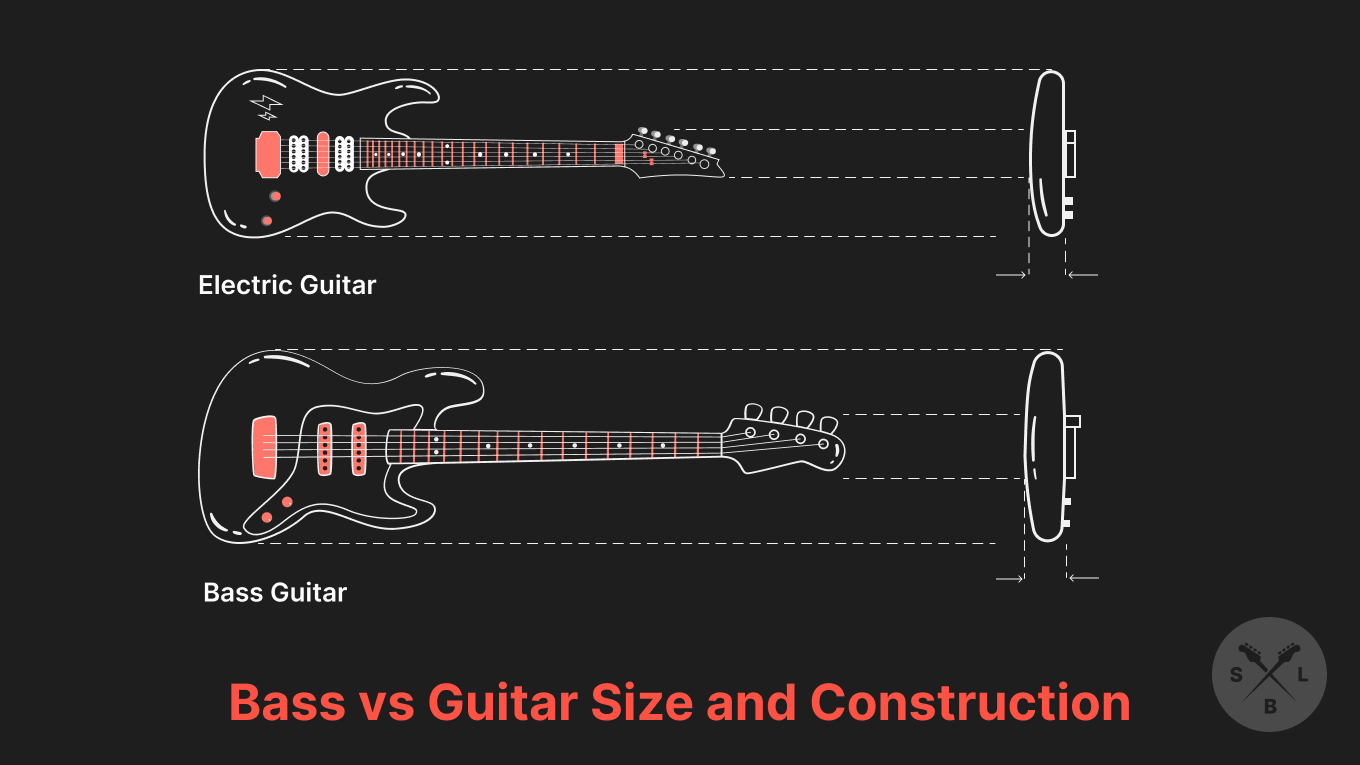
Bass guitars usually have a larger overall build than electric guitars. The difference in size is due mainly to the bass's longer scale length. The longer scale length produces lower frequencies on the bass, resulting in those rich, rumbling sounds.
A common scale length for a bass guitar is around 34 inches, compared to the 24.75 or 25.5 inches found on most electric guitars (more on this later).
The body of a bass guitar is also often thicker. The thicker the body, the more room there is for bigger pickups and hardware needed to amplify those deep bass tones. The bigger body mass also contributes to the instrument's sustain and resonance.
In contrast, electric guitars usually have a pretty slim body. This makes them lighter and easier to handle and allows for greater speed and agility when playing. The smaller body size also influences the guitar’s tone, resulting in a brighter, more cutting sound compared to the bass.
Both bass guitars and electric guitars are often made from similar materials. These include solid wood bodies (like ash or mahogany) and maple or rosewood fingerboards. Some basses may be built from denser woods to enhance the sound.
For example, a bass made from a dense hardwood like ebony can create a tighter, more focused, low-end sound.
2. Strings
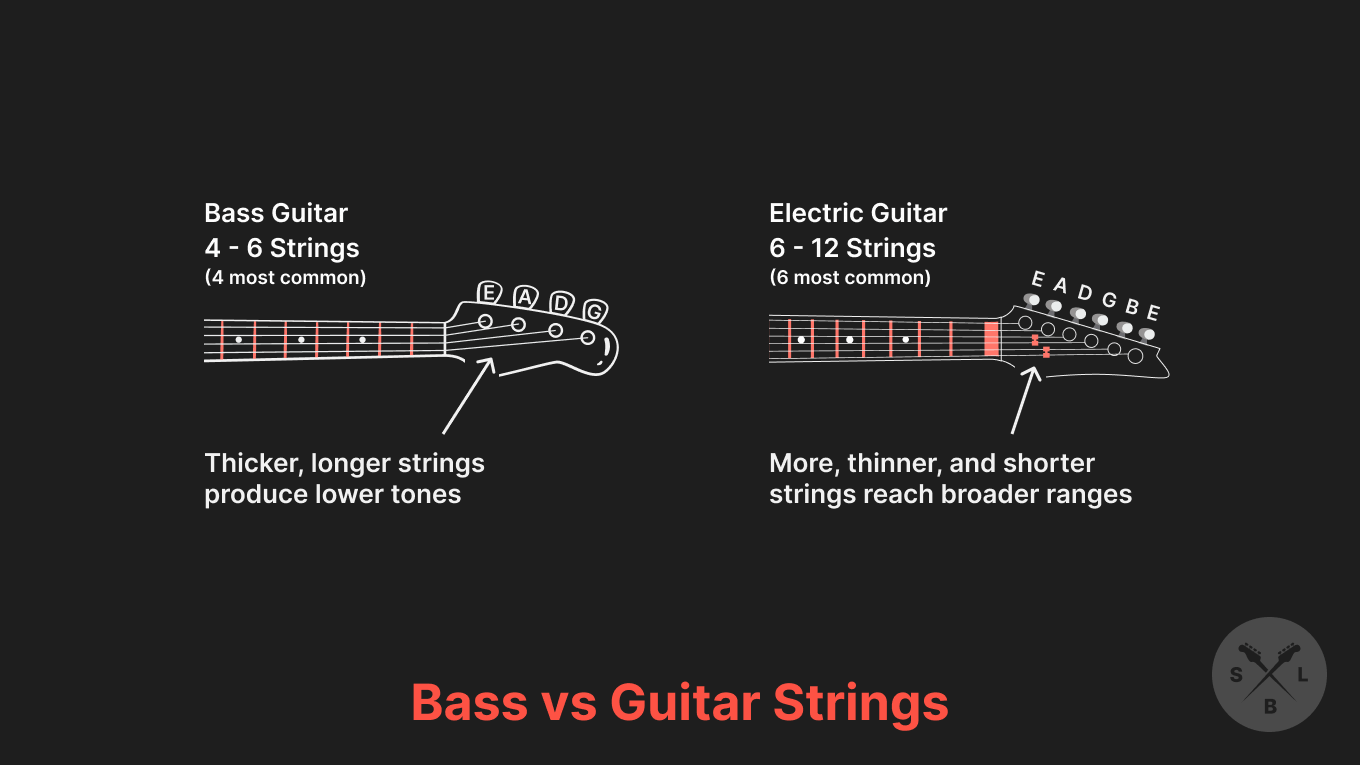
Bass guitars often have four strings, although five- and six-string basses are also common. On the other hand, electric guitars usually have six strings, although they can go up to twelve.
The strings themselves are also different. Bass strings are thicker and longer than electric guitar strings. The thickness of the bass strings helps give that signature bassy sound.
But sound isn’t the only thing affected when it comes to string size.
The difference in string thickness affects the feel and playability of each instrument. Bass strings require more finger strength to play effectively. Electric guitar strings, on the other hand, require more dexterity.
If you want a closer look, check out this deep dive into the different kinds of bass strings.
3. Scale Length
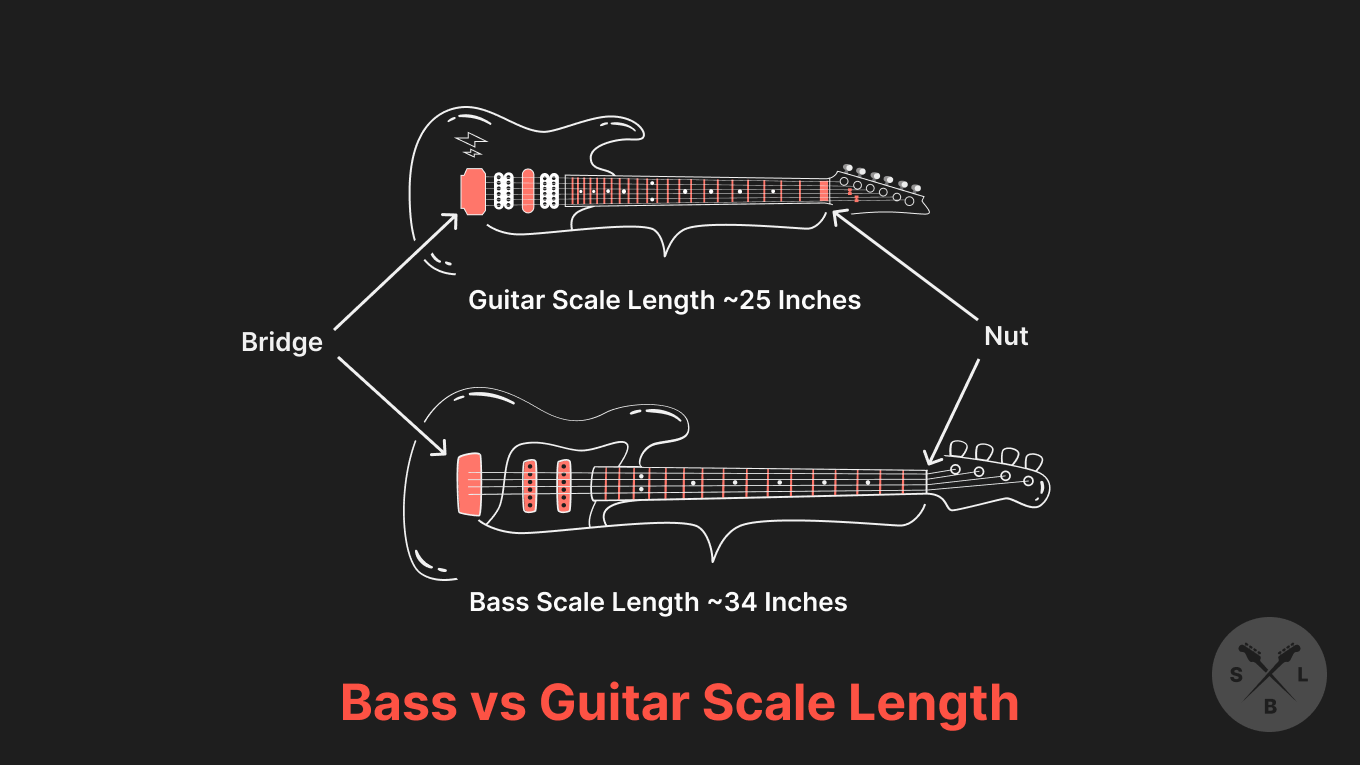
Scale length refers to the distance between the nut and the bridge of bass and electric guitars.
The nut is a little piece of material that keeps the strings in place just below the headstock. The bridge is the piece at the bottom of the instrument that anchors the strings to the body.
Bass guitars have a longer scale length than electric guitars. Like string thickness, the longer scale length helps the strings reach lower frequencies.
A longer scale length means deeper, more resonant bass tones.
Electric guitars have a shorter scale length. While they can’t hit those super deep bass tones, the shorter scale length makes it easier to bend and manipulate the strings, which comes in handy for nailing solos.
4. Sound Differences
While both instruments sound awesome, the sound difference between bass and electric guitars is pretty stark.
Remember, the strings and scale length affect how bass and electric guitars sound.
Bass guitars give those deep, low-end tones that drive the rhythm and groove of a song.
In contrast, electric guitars give those higher-pitched tones, dancing along the melody.
5. Versatility
When it comes to versatility, both the bass and guitar have it in droves.
With multiple pickups, tone controls, and effects pedals, electric guitars can easily dial in everything from distortion to reverb.
Plus, you’ve got so many different kinds of picking and strumming styles to choose from.
Bass guitars are just as versatile. They’re often viewed as a way to build a solid foundation for music, but there are countless ways to go about that.
For example, bassists can slap. This technique involves slapping the strings with your thumb and popping them with your index finger to create a percussive sound.
Another technique is tapping. This is when bassists use both hands to hammer on and pull off the strings. Tapping lets you nail those lightning-fast runs and intricate melodies.
And don’t even get me started on the kinds of pedals you can pick up to change your bass sound!
From playing funk to metal to jazz to reggae and everything in between, the bass is adaptable to a vast range of different styles.
Should I Learn Bass or Guitar First?
To answer this question, think about what you want from playing music.
Do you find yourself drawn to funk, rock, or jazz? Do you like the idea of laying the groove foundation for all the other players and driving that rhythm forward? Then, the bass might be a natural fit.
Or maybe you feel inspired by watching rockstars tease out melodic leads and intricate solos from their Fender Stratocaster. If that’s the case, then the electric guitar might be your calling.
Look, I’ll be the first to admit—I’m biased! I love the bass. It’s something I can’t get enough of.
So, of course, I’m going to lean toward learning the bass first.
The thing is, though, is that it all comes down to personal choice. There is no right or wrong answer.
It’s about what resonates with you. It’s about what gets you excited to play.
(But if it’s the bass, you won’t see me complaining.)
Discover the Power of Bass
Deciding whether to learn the bass or electric guitar first is a personal choice, and largely depends on the music you love and like to make.
If you feel the bass calling your name then I can show you a path that will teach you everything you need to know.
The SBL Academy is filled to the brim with video lessons from some of the best bass players and teachers on the planet!
Once you’ve signed up, you’ll get a personalized roadmap based on your specific skill level—so you know exactly what to focus on to make the fastest progress.
Sound good?
Then get started with a 14-day free trial!