
NEW Program Alert: The Groove Accelerator is OPEN for enrollment! Limited Time Only —Join Now
11 Essential Bass Techniques to Transform Your Playing
Do you feel like your bass playing is stuck in a predictable loop, just thumping along to the same old rhythms?
While many beginner bassists feel this way, I want to let you in on a little secret…
This is actually a good sign!
It means you’re ready to unlock the next level in your bass playing.
And here's the thing—getting there doesn't have to be such a mystery.
The answer isn't just in practicing more—it's about practicing smarter.
Today I’ll share 11 essential bass techniques that are absolute game-changers for your practice routine. These techniques can transform good bass lines into unforgettable ones, and give you the confidence to push your creative boundaries.
Let’s dive in!
1. Fingerstyle Playing
You've probably seen bassists whose fingers seem to dance across the strings, right?
Well, getting to that level is just like any sport. Good bass playing comes from having a good understanding of the fundamentals.
And as a bassist, that means sharpening your plucking hand skills.
Fingerstyle (also called finger picking) comes down to doing three things really well:
- Anchoring your thumb onto your pickup
- Rolling across the top of the string with your fingertips
- Resting your finger on (and muting) the lower string
The key to getting better is to practice alternate picking.
Alternate Picking
This is the ability to switch between your index and middle finger as you pluck strings.
The best way to practice is by playing with an online metronome and incrementally challenging yourself to get faster and faster.
Try spending a minute or two at the start of your practice sessions developing your alternate picking.
It’ll boost your playing speed and efficiency, which leads to cleaner-sounding bass lines.
One of the best parts of fingerstyle is the amount of control it gives you over the strings. It allows you to decide which strings are ringing out.
Which brings us to the next technique.
2. Muting
One of the hallmark signs of a beginner bassist is that too many strings are ringing out at the same time.
The goal when plucking is to have one string ringing at a time.
Otherwise, you’ll get a sound that’s muddy and all jumbled up—which your bandmates won’t appreciate!
Honing your ability to mute strings will clean up your sound and make you that much more of a seasoned pro.
The good news is that practicing proper plucking technique naturally improves your muting technique.
It means you develop a habit (with both your left and right hand) that stops strings from ringing out unintentionally.
To stop a string from sounding, all you have to do is lightly touch it.
But there’s also another type of muting.
Palm Muting
This type of muting serves a different purpose. Think of it as your way of whispering.
It's not about being flashy. It's about creating space and texture in the music.
Palm muting gives you a certain type of sound that can add some grit to your bass line.
How to Do It
Rest the palm of your plucking hand on the strings right in front of the bridge.
Then, using your thumb, pluck the strings.
This creates a softer, and more controlled tone. It's perfect for when you need to play in the background, supporting the band without overpowering them.
3. Plectrum Playing (Using a Pick)
On the other side of the spectrum is plectrum playing. If you want a more aggressive and punchy sound, then it might be time to pick up, well… a pick.
Not sure if that’s your vibe?
Just check out Bobby Vega’s style if you need some convincing!
It’s mostly used in funk, rock, and heavy metal, but it can really give your bass playing an edge. It produces a sharper, more pronounced sound compared to fingerstyle.
The technique is similar to how guitarists strum—not something we do often. So it can take some getting used to.
Here’s the basic rundown.
How to Use a Pick
For starters, you’ll want to use a slightly thicker pick because the strings on a bass are much thicker than on a guitar.
Once you’ve got your pick in hand:
- Hold it between your index and thumb (in your plucking hand)
- Pluck a string in a downward (or upward) motion to play it
Pretty simple right?
If you want to get better at playing with a pick, spend the first two to three minutes of your jam sesh using one.
4. Walking Bass Lines
Walking bass lines are the heartbeat of jazz and blues.
It's a steady, continuous flow of notes that 'walks' through scales and arpeggios, connecting chord progressions with smooth elegance.
I always recommend my students learn this technique as soon as possible because it helps them understand how chords are built.
It gets you playing chord tones in a practical way, and not just running scales up and down the neck!
Plus, it helps you understand the fretboard—giving you an internal map to guide your playing from one chord to the next.
Whenever students get comfortable with this technique, I see them start to navigate the neck more confidently.
To play walking bass lines, you'll typically start on the root note of a chord and then step your way to the next chord in the progression, using scale notes, chromatic runs, or arpeggios.
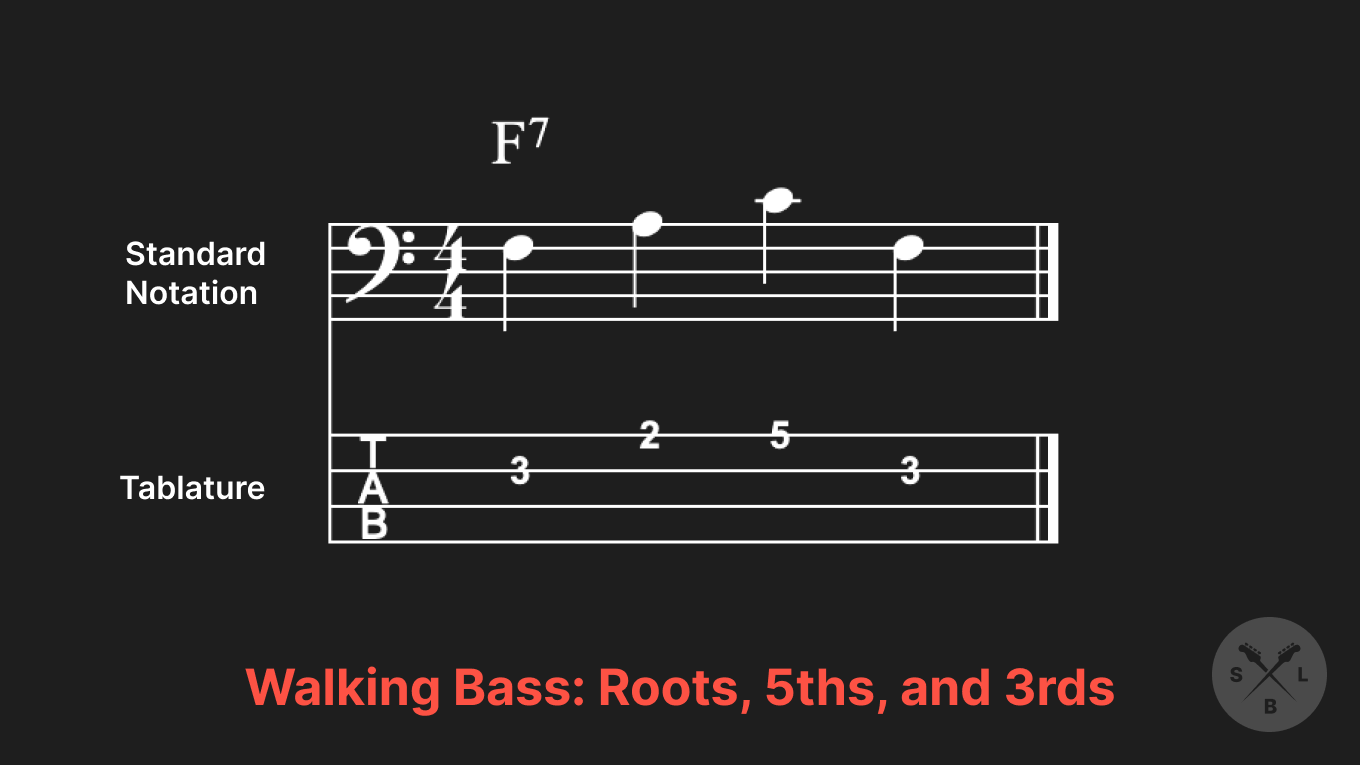
The beauty of it lies in its blend of predictability and surprise.
You're following a pattern, but you also have the freedom to throw in unexpected turns and twists. This could be a chromatic note that adds a bit of tension, or a quick jump to an octave for emphasis.
5. Hammer-Ons and Pull-Offs
Imagine playing a scale.Only, instead of plucking each note, you pluck the first one and let your fret fingers do the walking, smoothly ascending the fretboard.That’s a hammer-on.
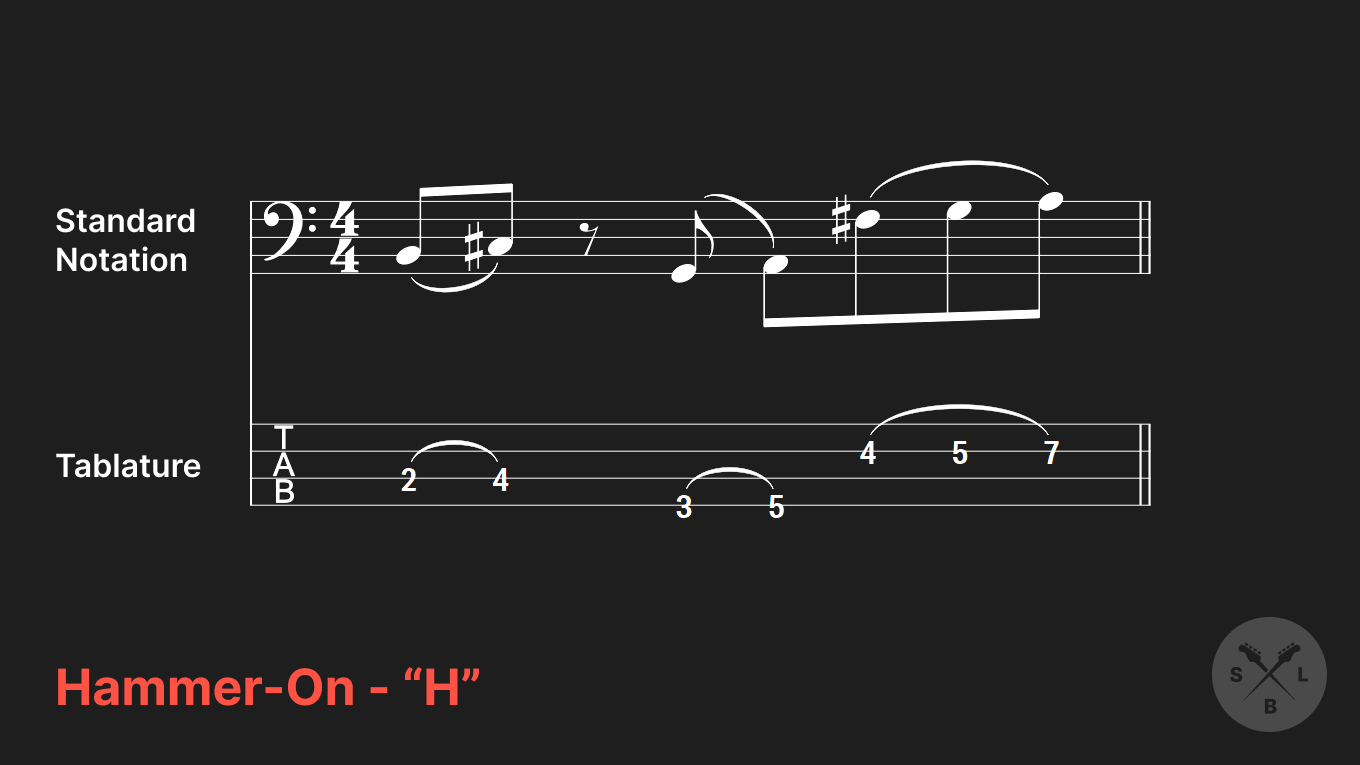
Pull-offs are the opposite.
You start with a higher note and 'pull' your finger off the string to let a lower note ring out.
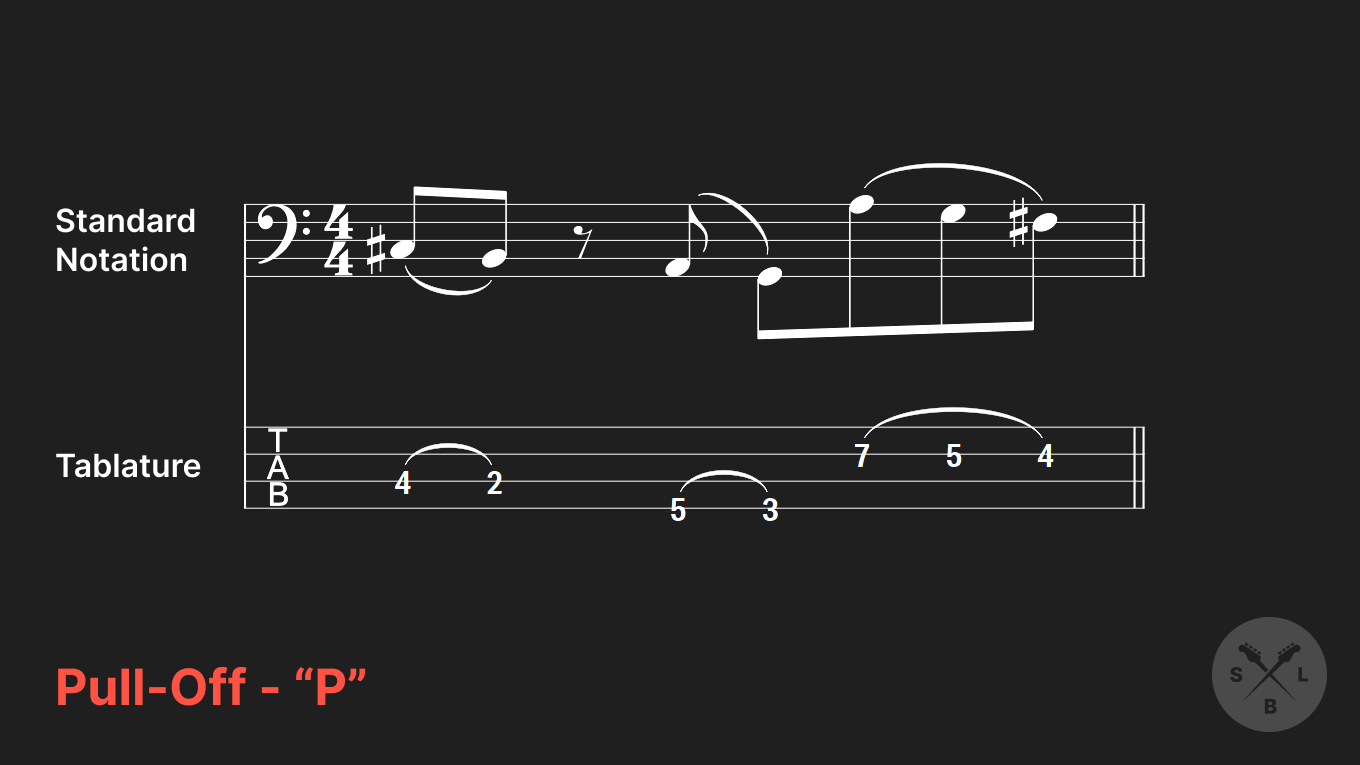
“Why does this matter?” you ask.
Well, hammer-ons and pull-offs allow you to play faster and more fluidly than if you plucked every note.
But more importantly, they’re an easy way to level up your playing without having to master something super complicated.
There’s no new theory here. Learning hammer-ons is about practicing finesse and control with your fingers.
It’s fun to do and once you start getting the hang of it—you’ll be doing it everywhere!
You’ll add a subtle sophistication to your playing, and this technique is definitely one you want in your toolkit!
6. Staccato and Legato
Staccato and Legato are like the yin and yang of bass playing.
The main difference comes down to the duration and connection of notes.
Staccato: Sharp and detached.
Legato: Smooth and connected.
By switching between the two, you can add rich textures to your bass lines. It’s the type of skill that makes people love listening to you play.
Let's look at staccato.
Picture each note as a quick, sharp burst, like a raindrop hitting a windowpane. In staccato, you play notes in a detached, punchy way. It's about making each note short and snappy.
To play staccato on your bass you need to pluck the string and quickly release the finger. This creates a short, percussive sound. It's like tapping a drum - brief and crisp.
Now, flip the script and think legato.
It's the complete opposite of staccato. The focus is on smoothness and continuity.
When you play legato, you let each note blend into the next, creating a fluid stream of notes.
It's like drawing a long, unbroken line with your music, where each note gently passes the baton to the next.
Practice legato by smoothly connecting the notes you’re playing. To do that, use hammer-ons and pull-offs.
7. Slap Bass
If you really want to make heads bob and feet tap, then you need to learn how to play slap bass.
Slap style started in the late 60s and by the 80’s we were getting epic riffs like this one by Louis Johnson!
The best way to get good at slap bass is to listen to slap bass songs and study the masters. Listen to their music, and watch them play. Here are three slap bass pioneers you should know:
Marcus Miller
Louis Johnson
Les Claypool
The most important part of slap bass is your thumb.
You need to master what I call the “Doorknob” rotation. It’s where you use your thumb to 'slap' the strings onto the fretboard and your fingers to 'pop' the strings.
Imagine grabbing a doorknob and rotating it open.
Now, stick out your thumb, (like you’re giving a thumbs up) and repeat the doorknob motion back and forth.
That’s the movement you’re making when you slap bass.
It’s a rotation of the forearm. You’re NOT actually moving the arm up and down.
You can practice this movement by flipping your bass around (so the strings face you) and doing the doorknob motion on the backside of your bass.
8. Playing Chords
When you think about bass, you might not think of chords. And rightly so. Because it’s not usually our job to play them.
As bassists, our job is to outline the chords being played by the band.
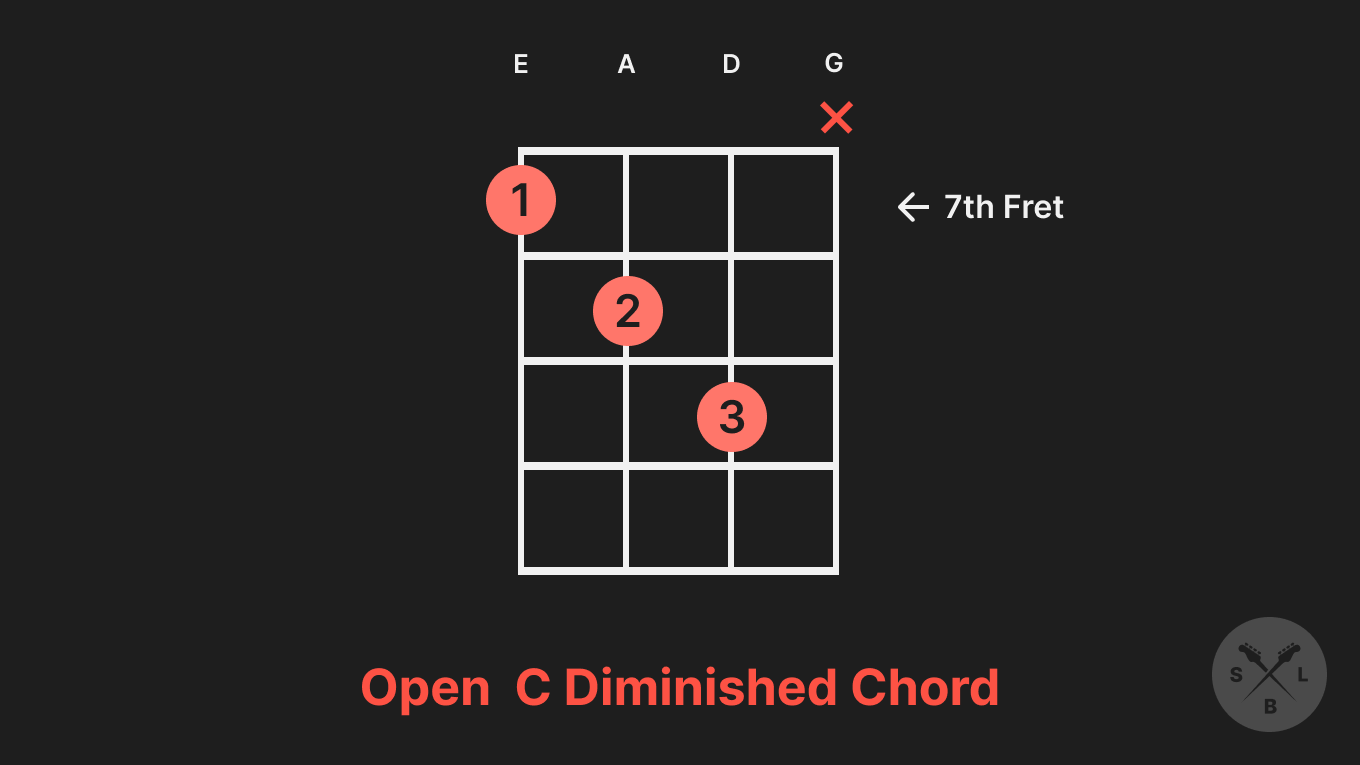
However, learning how to play chords on a bass is a different story than it is on a guitar. It's not about strumming all the strings wildly.
It’s more about choosing two or three notes that create a sweet spot, a harmony that complements the melody.
And if you’re serious about becoming a better bassist, it’s an absolute must! Playing chords on the bass can add a rich, harmonic depth to a song.
Imagine, for example, you're playing a simple progression.
Say, C to G.
Instead of just hitting the root notes, you strum a chord that blends the root with a third or seventh.
The result? A fuller, more textured sound that elevates the entire track.
It’s a practical way to add variety to your playing.
When used sparingly and thoughtfully, it can turn a good bass line into a great one.
9. Harmonics
Harmonics are like the hidden treasure of the bass guitar. It's a technique that adds a sparkle, a kind of mystical quality to your playing.
They’re a set of overtones that can be created by lightly touching specific points on your bass strings.
Unlike fretted notes, harmonics produce an ethereal, bell-like sound that adds a unique dimension to your playing.
These points are located at precise locations on your fretboard.
Specifically, at the 12th, 9th, 7th, 5th, and 4th frets.
To play them, lightly press the string at those points and pluck. The harmonic will ring out.
Go ahead and try it.
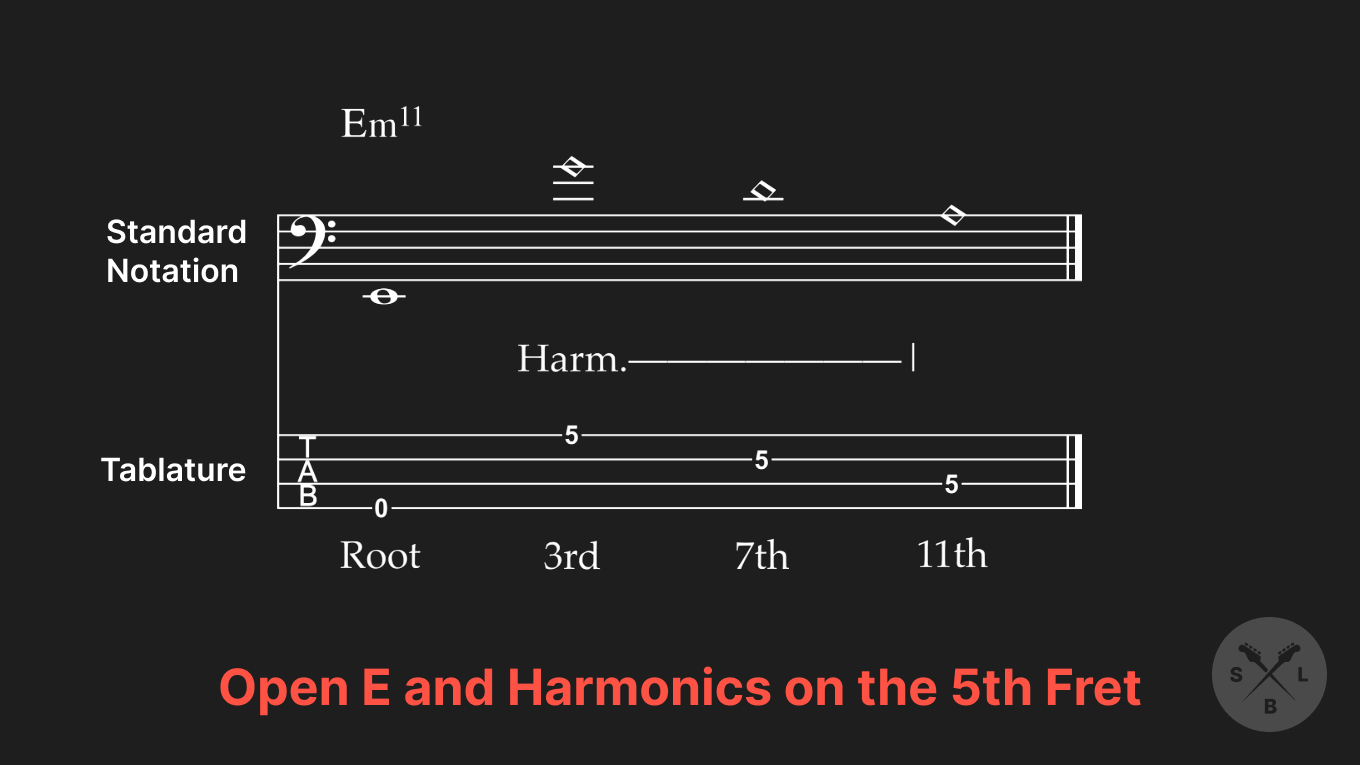
Pretty cool right?
Besides being a technique you can use to elevate your playing, you can also tune your guitar with them.
They ring out without needing to be fretted, so it’s a very convenient way to tune. Especially if you want to develop your ear.
Harmonics are high-pitched and delicate, so if you’re going to use them, choose where in the song to use them carefully. Because there’s always the risk that no one will hear them!
You can learn more about how to play harmonics here.
10. Tapping
Okay, with tapping we’re turning the complexity up a notch!
With this technique you use both hands to tap the strings against the fretboard, creating melodies and harmonies that would be impossible with traditional techniques.
It's about precision, rhythm, and exploring the full melodic potential of your bass.
Just like harmonics, tapping can make your bass playing stand out and impress your fellow musicians. But it’s something you’ll play sparingly.
The key to tapping is to know what notes you’re actually playing. It removes the guesswork and gives you a guideline for notes that sound good together.
One of the best ways to do that is to brush up on your music theory and practice your scales.
When you’re ready to incorporate this technique into your arsenal, think about tapping like a hammer-on. The only difference is that you use your picking hand instead of your fretting hand.
This means you have to put some force behind your tap.
However, try not to pull your fingers too high off the fretboard to do that.
If that sounds like an impossible thing to do, just think about Bruce Lee’s ‘One-Inch Punch’ and channel that energy into your fingertips.
11. Ghost Notes
When I was a kid, this technique used to drive me mad because I couldn’t figure out how to do it!
The art of ghost notes lies in their subtlety. It's not about the notes themselves, but about the space and rhythm they create.
To play ghost notes you need to lightly touch the string with your fretting hand without pressing them down to the fretboard.
It’s just like playing harmonics.
That’s why, instead of using just one finger, lay all your fingers on the string. This way it ‘deadens’ the note and prevents a harmonic from playing.
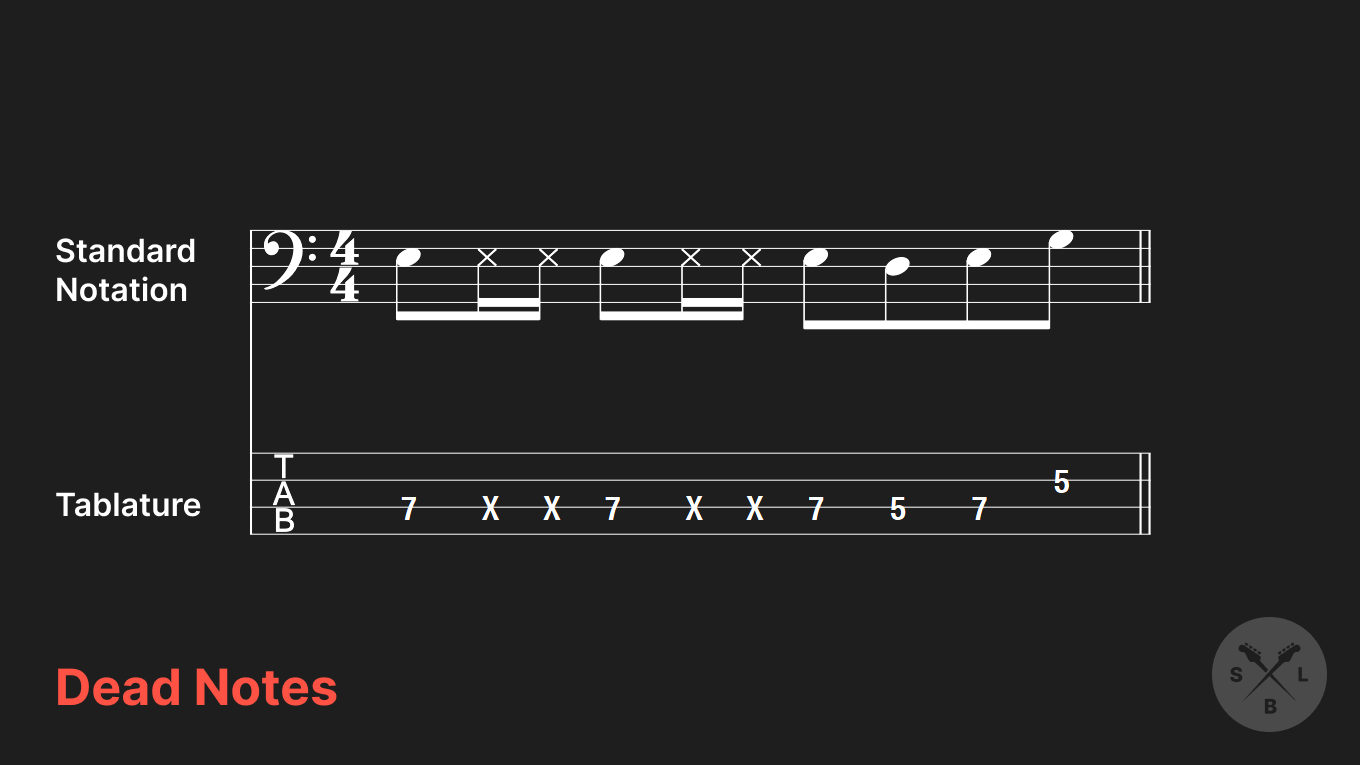
Practice This Exercise
Pluck the A string and play a C note (3rd fret).
Then, release the pressure from the string and lightly rest all your fingers on it.
Now pluck.
It should be a ghost note.
Practice alternating between C notes, and then ghost notes to experiment with how they change the groove.
From GarageBand to the Main Stage
Let's face it, diving into the world of bass techniques can feel like stepping into an ocean of possibilities and even a tad overwhelming.
It's cool, we've all been there—staring at our instruments, dreaming of making them sing in ways we've only heard in our favorite songs.
That’s why I created the SBL Academy.
It’s got step-by-step courses by some of the most talented bass players on the planet, and it gives you a customized path to follow for your skill level.
So you always know with certainty that what you’re working on is exactly what you need to get your bass playing to the next level.
To get started with the SBL Academy, click here for a free 14-day trial!