
NEW Program Alert: The Groove Accelerator is OPEN for enrollment! Limited Time Only —Join Now
How to Play Harmonics on Bass (8 Must-Know Shapes)
When you’re first learning about bass harmonics it's normal to feel like you’re stepping into a musical Narnia—a magical, mysterious place waiting to be explored.
After all, what are these hidden notes? And better yet, how can you use them in your grooves?
Well, besides being a helpful tool for tuning your bass, they offer a fresh palette of sounds that can elevate your bass lines and solos.
Whether you're playing jazz, rock, funk, or any other genre, harmonics can be the secret sauce that sets you apart. They add texture, depth, and a touch of magic to your playing!
Today I’ll guide you through the world of bass harmonics and introduce you to eight must-know shapes that can transform your playing.
Originally published on May 23rd, 2020, this article was updated and republished on November 3rd, 2023.
What Are Bass Harmonics?
They’re a set of overtones that can be created by lightly touching specific points on your bass strings.
Unlike fretted notes, harmonics produce ethereal, bell-like sounds that add a unique sonic dimension to your playing.
These points, or "nodes," are located at precise divisions of your strings. Specifically, at the 12th, 9th, 7th, 5th, and 4th frets.
Why Bass Harmonics Matter
Imagine you're laying down a smooth walking bass line in a jazz trio.
Suddenly, you switch to harmonics during a bridge, and it's as if a sparkling light has been turned on in the song.
Or, if you're more into rock and metal, harmonics can add an electrifying edge to your groove. A well-timed harmonic squeal can cut through the mix like a thunderbolt, adding a punch to your bass lines.
Put simply—harmonics offer expressive possibilities that can transform your bass playing.
Tuning Your Bass With Harmonics
Playing in tune is the bedrock of great music, and harmonics can be your best friend when it comes to tuning.
Since bass strings sound so low, the higher harmonics are much easier to hear and tune with.
But to use them, you’ll have to develop a solid technique for playing them.
How to Play Harmonics
The easiest ones to play are the 12th, 7th, and 5th fret harmonics.
It’s important to remember that when you’re playing a harmonic, you’re not pressing the string down onto the fretboard.
Instead:
- Place your finger on the string directly over the 12th, 7th, or 5th fret
- Position your other hand close to the bridge and pluck the string
- Release your finger off the string (it should continue ringing out)
Make sure you crank up your bridge pickup so you get a nice and tight sound. It may take a couple of tries to get a clear, consistent harmonic, so make sure it's a part of your practice routine to really nail it.
How to Tune Your Bass Using Harmonics
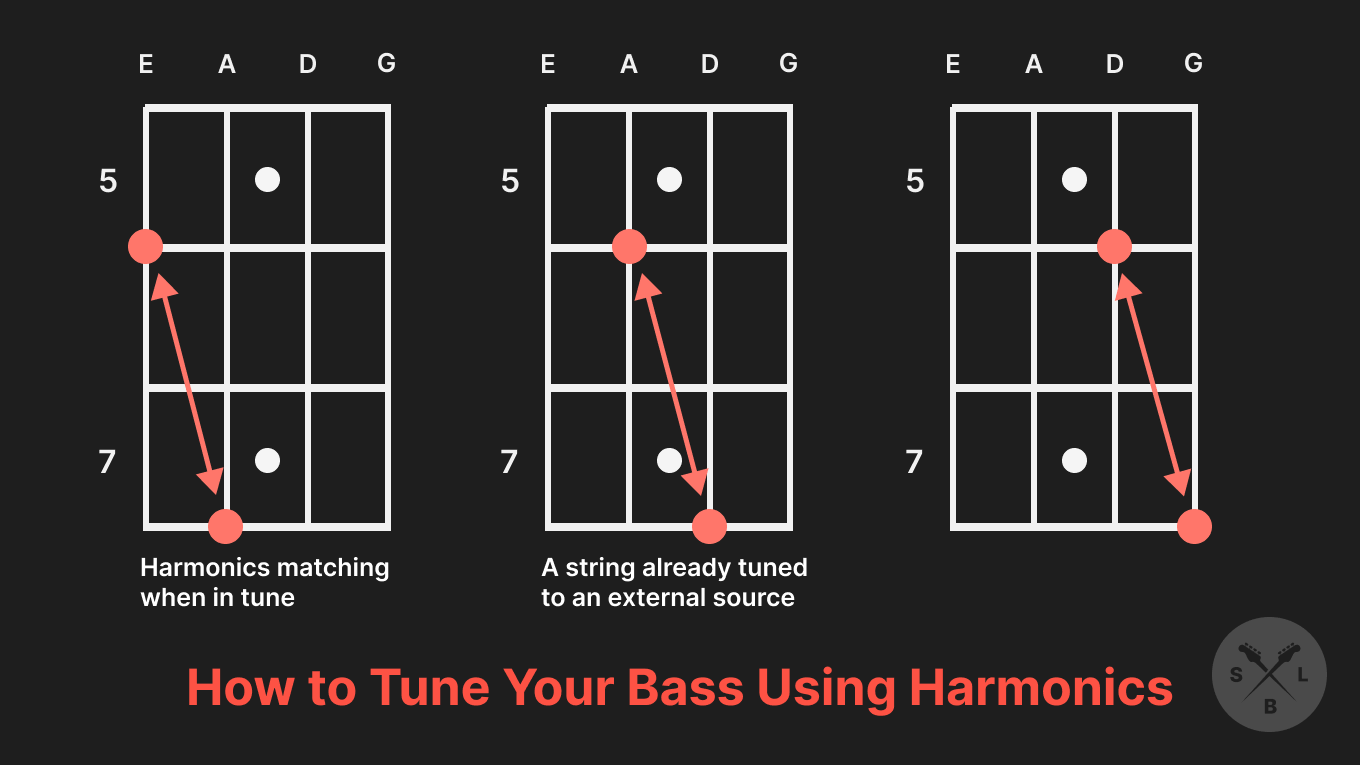
Because of the relationships of bass guitar harmonics, you’ll use the harmonics on the 5th and 7th frets.
However, to tune your guitar using harmonics, one of your strings needs to already be properly tuned. Specifically, your A string.
If you need a tuner, try our Groove Trainer.
Once your A string is in tune, you’re ready to start.
Tune Your E String
Start with your thickest string.
1. Play the 7th-fret harmonic on the A string
2. Play the 5th-fret harmonic on the E string
3. Match the two pitches by adjusting your E string
How to Tell if a String Is in Tune
When you play two harmonics that aren’t in perfect tune, you can hear a pulsating or wavering sound.
This sound takes some getting used to, but the more you develop your ear, the easier it becomes to notice.
Turn the tuning peg of your E string until the pulsating stops. When the tone is even, your string is in tune.
Tune Your D String
The process is the same for tuning the D string:
1. Play the 5th-fret harmonic on the A string
2. Play the 7th-fret harmonic on the D string
3. Match the two pitches by adjusting your D string
Tune Your G String
Last up is the G string, the thinnest string:
1. Play the 5th-fret harmonic on the D string
2. Play the 7th-fret harmonic on the G string
3. Match the two pitches by adjusting your G string
Congrats, you just tuned your bass using harmonics!
8 Essential Harmonic Shapes
Now that the technical stuff is out of the way, let’s start building your creative library of sounds. You can add the following harmonic shapes to your bass lines and solos.
To master harmonics, it's important to have an understanding of chord tones. They play a big part in music theory and will help you play harmonics effortlessly.
Harmonics With E as the Root Note
If you’re in the key of E, or playing an E tonality, these harmonics will add that special something to your bassline.
This first shape uses an open E string and harmonics on the 5th fret.
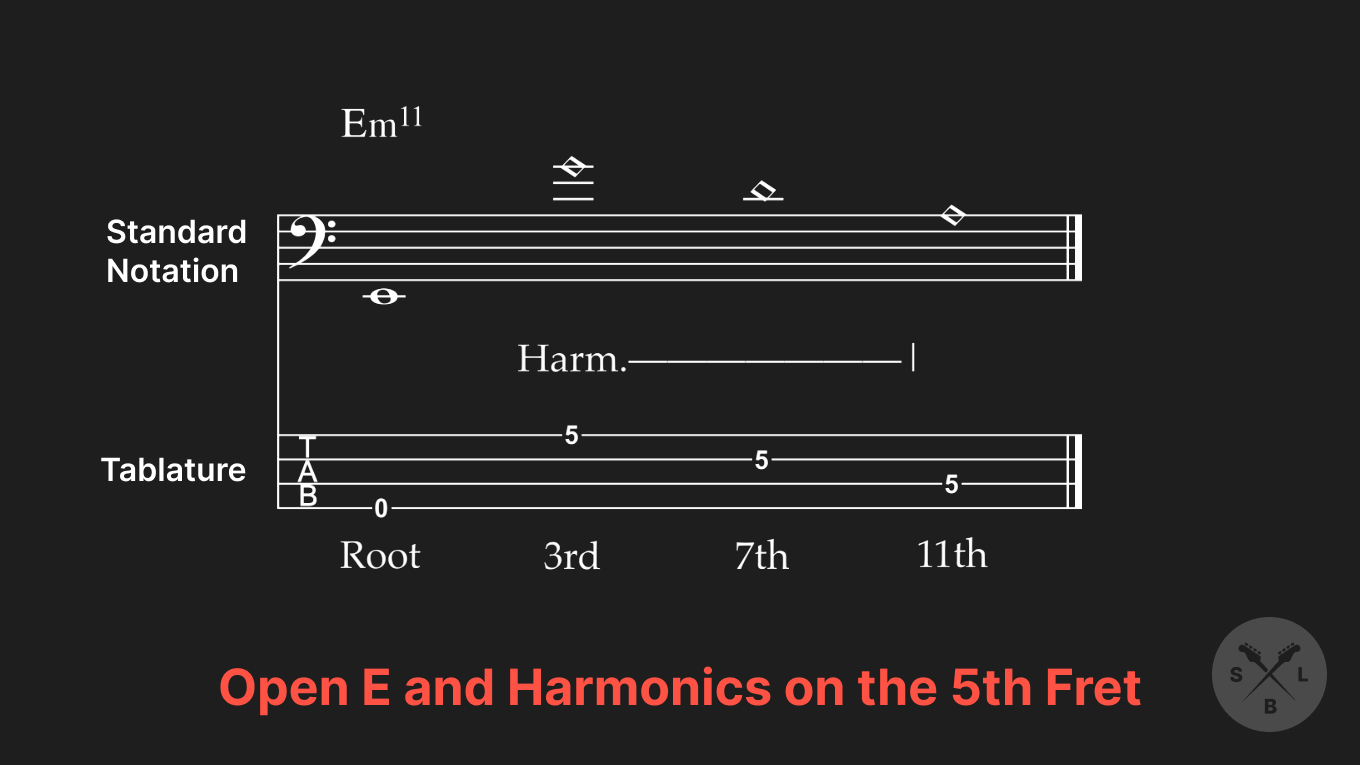
For the next shape, slide down to the harmonics on the 4th fret.
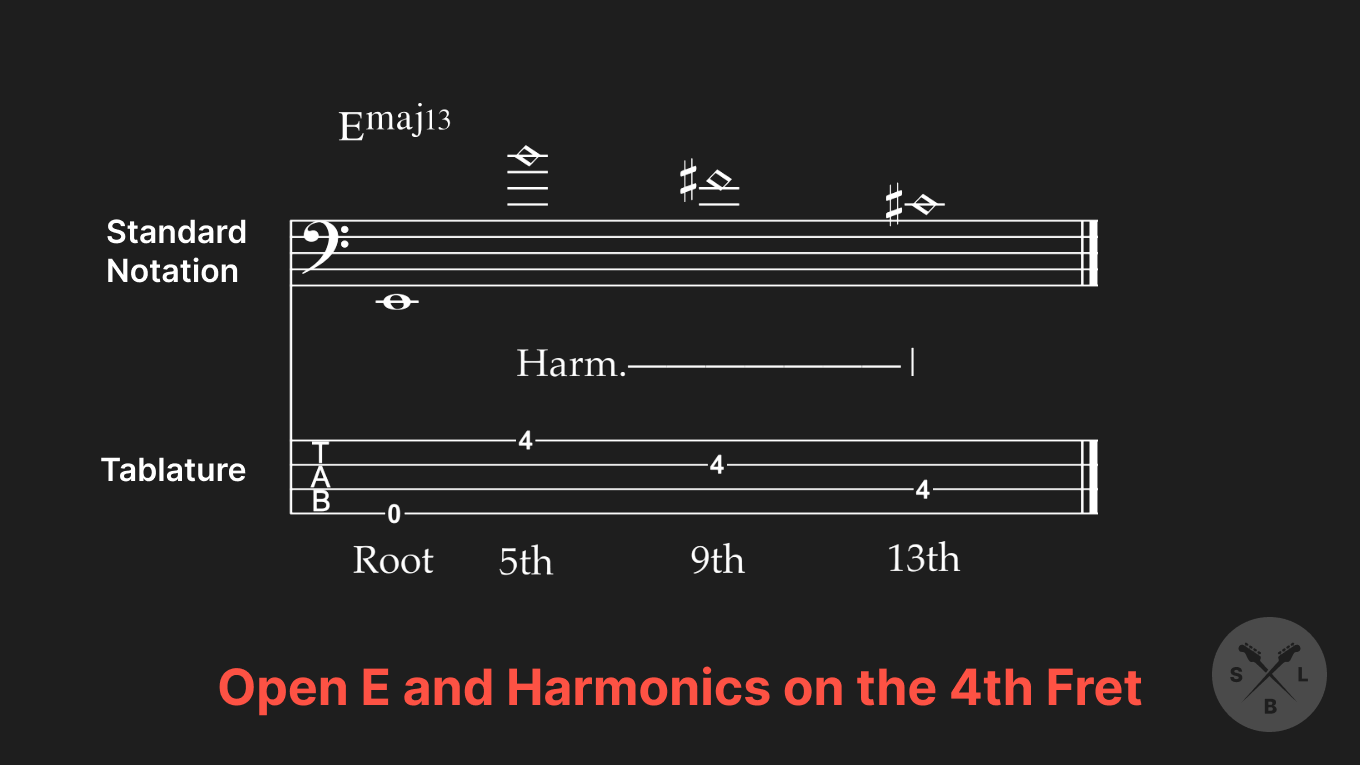
What’s great about this one is that you can play it over a major or minor chord. So try both and see what you create!
Harmonics With C as the Root Note
These harmonics sound great when you’re in the key of C or have a C tonality. This first one uses the 5th fret harmonics.
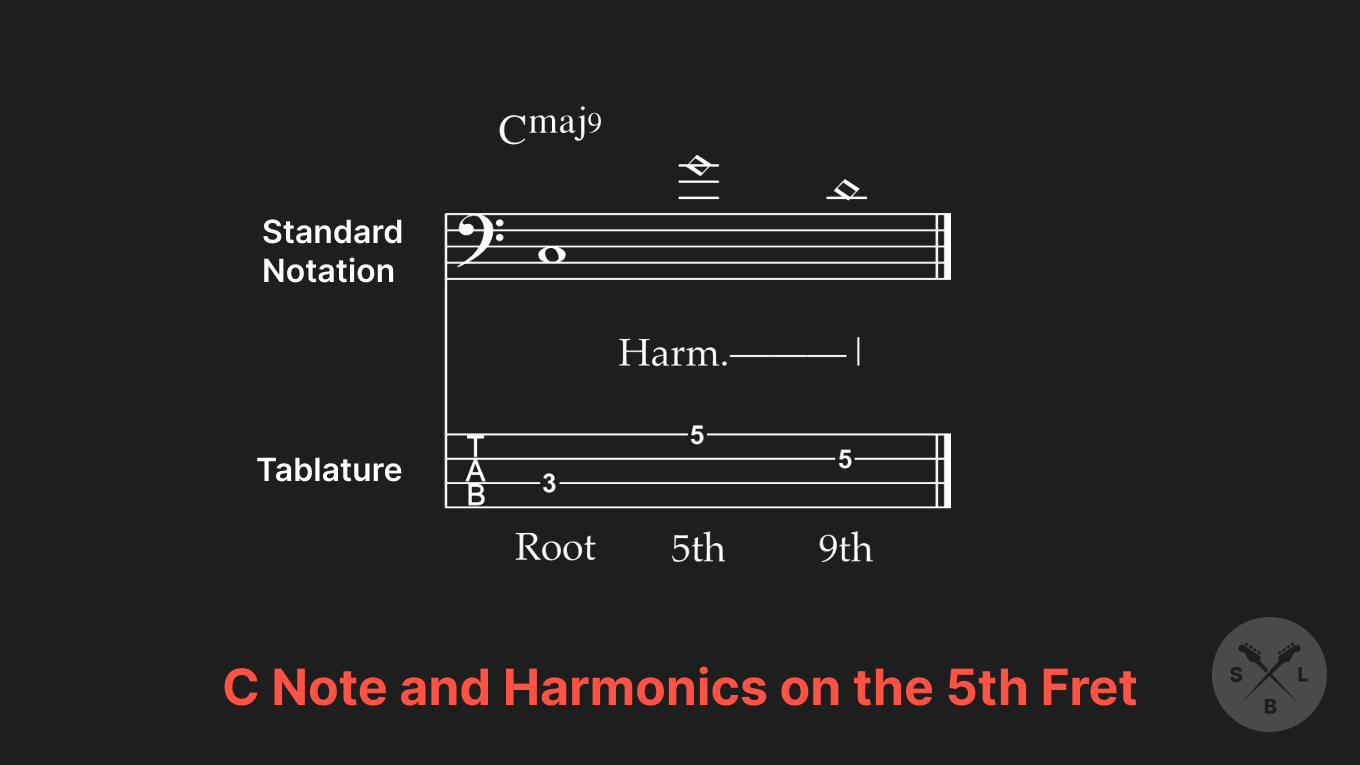
And because there’s no third being played, you can play over either a major or minor chord.
As a general rule of thumb, every time you play this C note on the 3rd fret, you can use these harmonics.
Keeping that C note fretted, slide down to the harmonics on the 4th fret and you get a major sound.
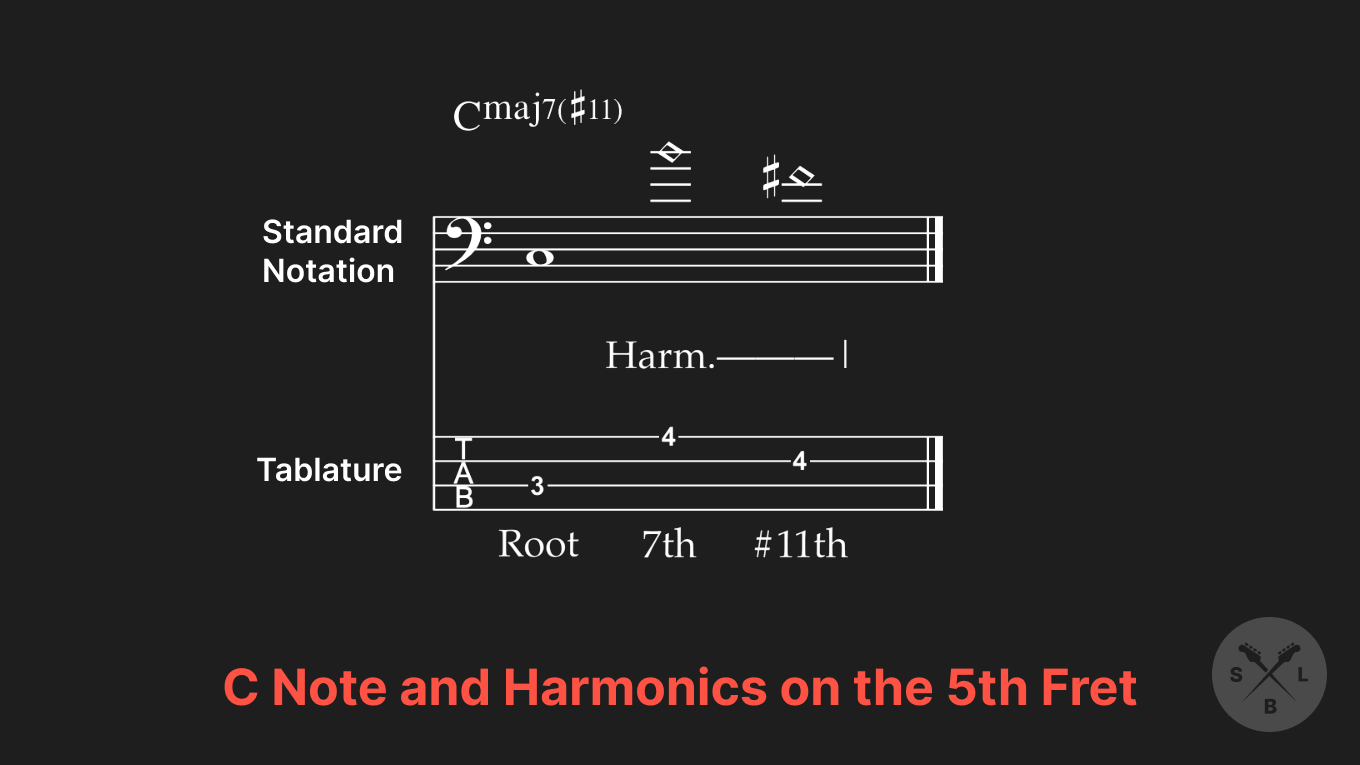
If you’re playing something major(ish) in the key of C, try these harmonics out.
Harmonics With G as the Root Note
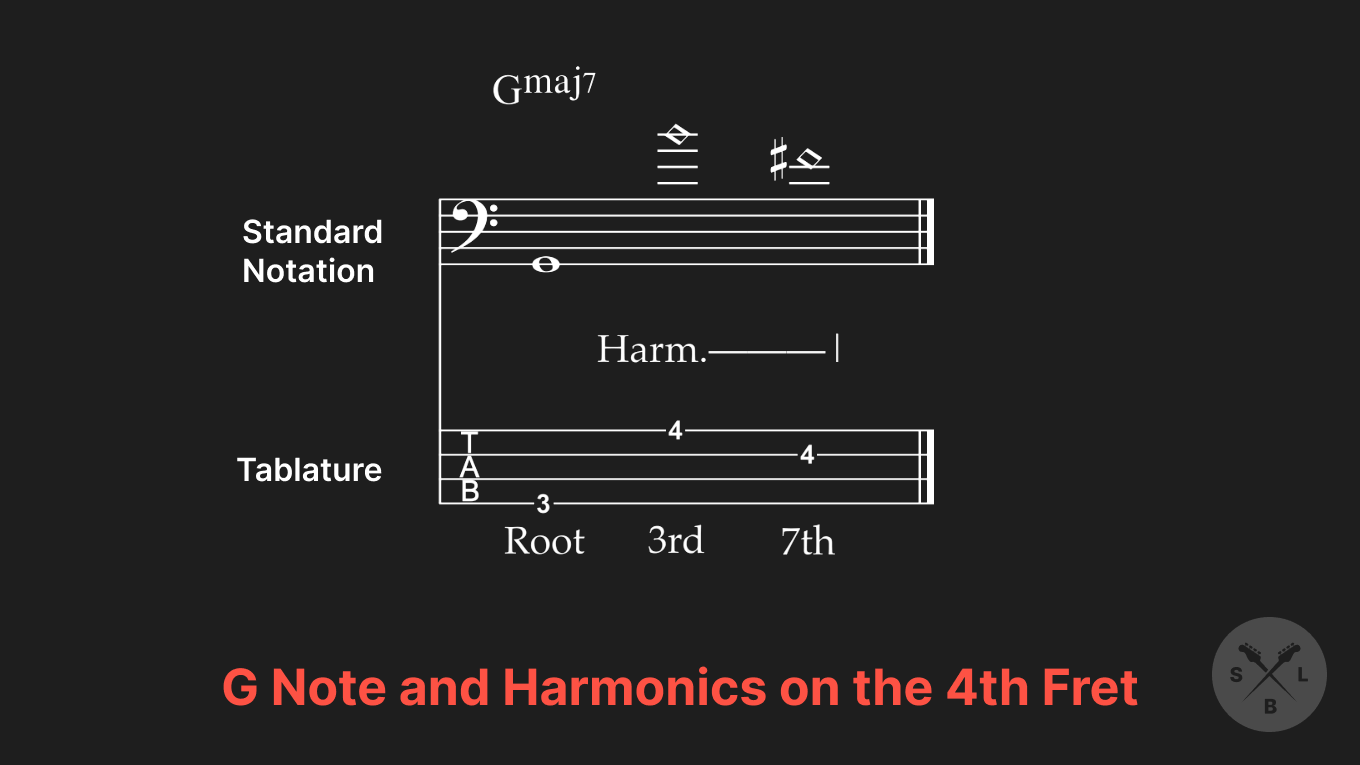
Staying on the 4th fret harmonics, but using a G major tonality instead, gives you this shape:
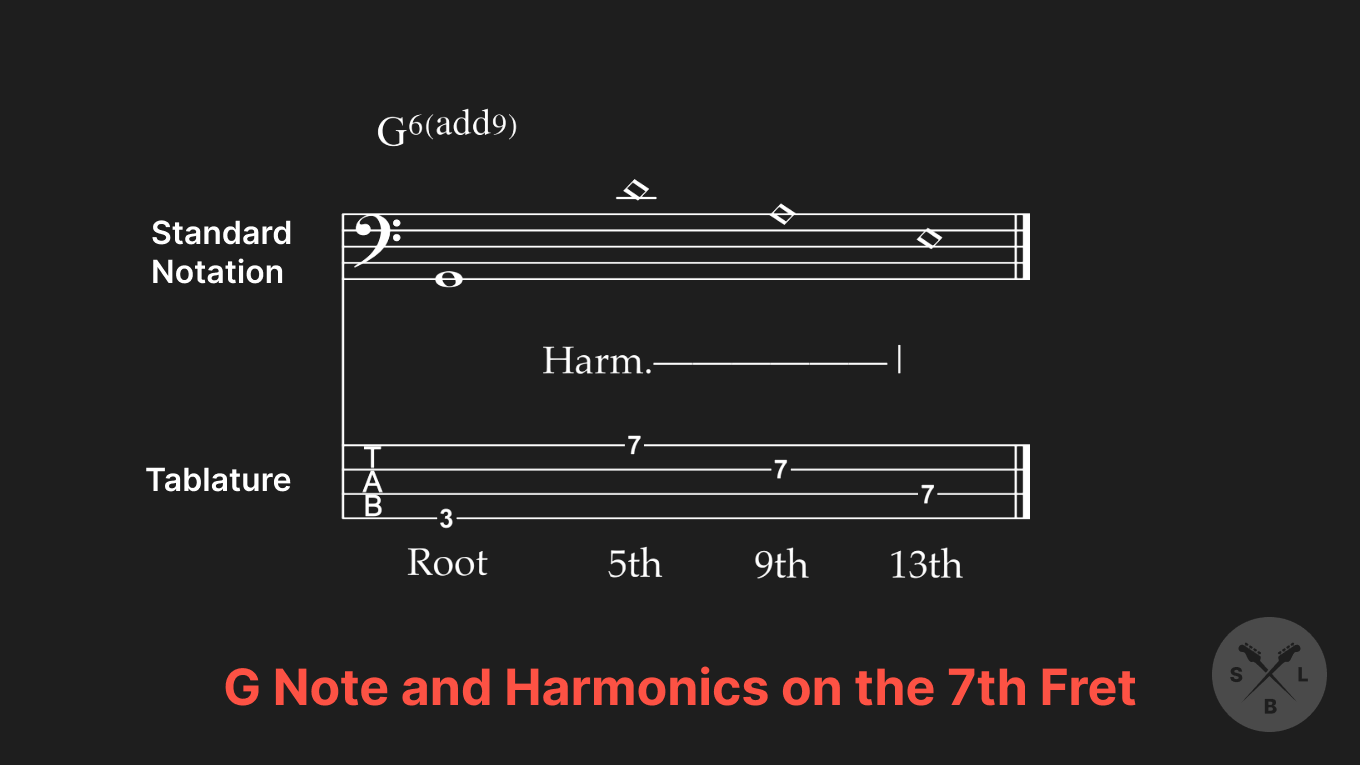
And this next one is a personal favorite of mine because it just feels like a warm hug. Slide up to the harmonics on the 7th fret to give it a try:
Harmonics With Ab as the Root Note
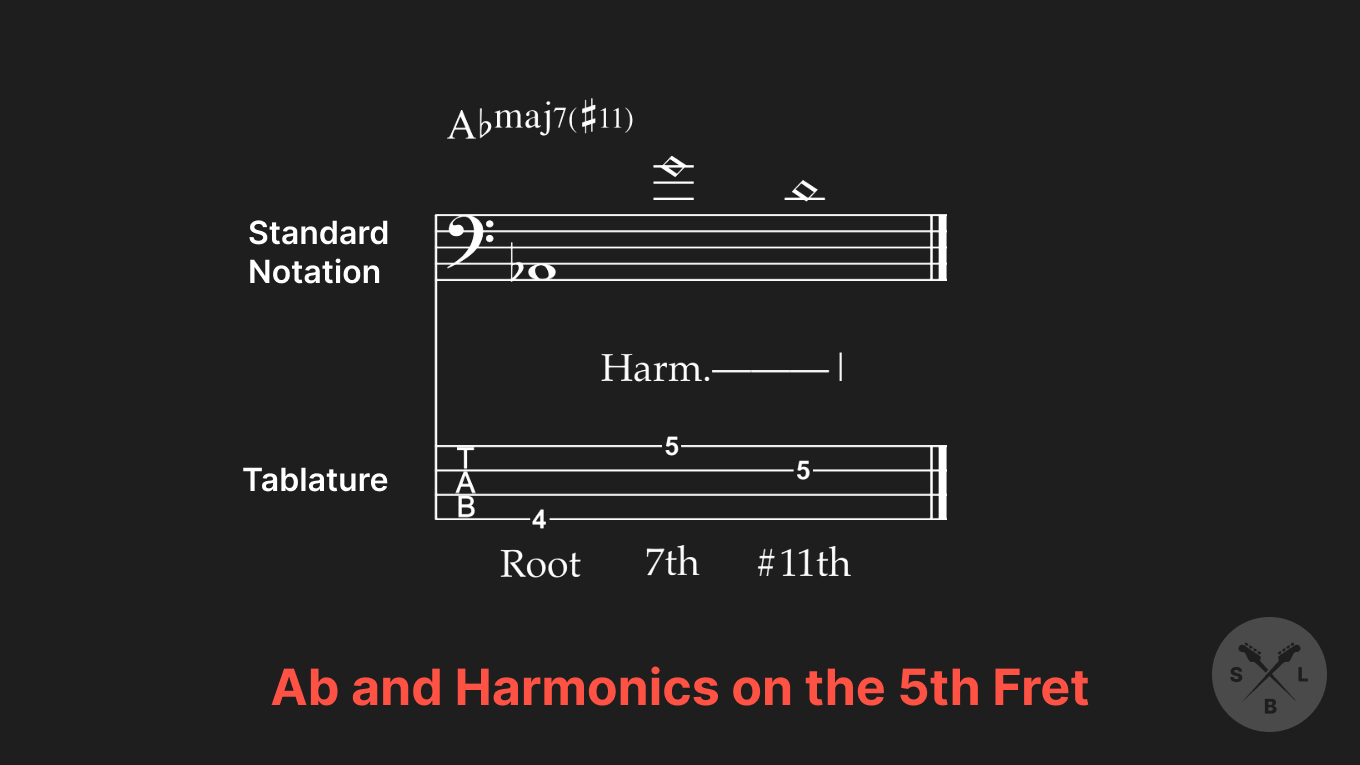
The harmonics on the 5th fret combined with Ab as the root sounds major. Give these a try next time you’re playing in Ab.
Harmonics With Bb as the Root Note
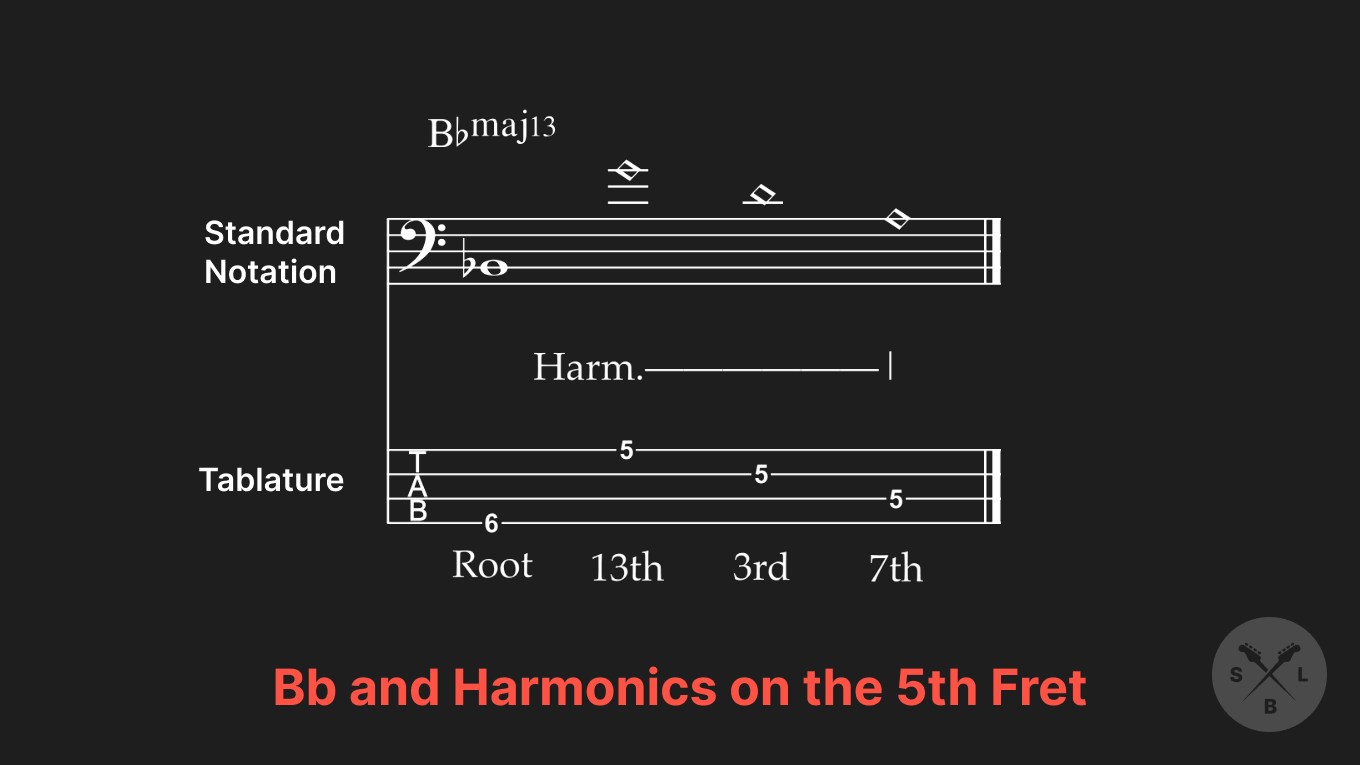
Next time you’re in Bb major, try adding in harmonics on the 5th fret with this shape:
Bonus: Jaco's Signature Chord
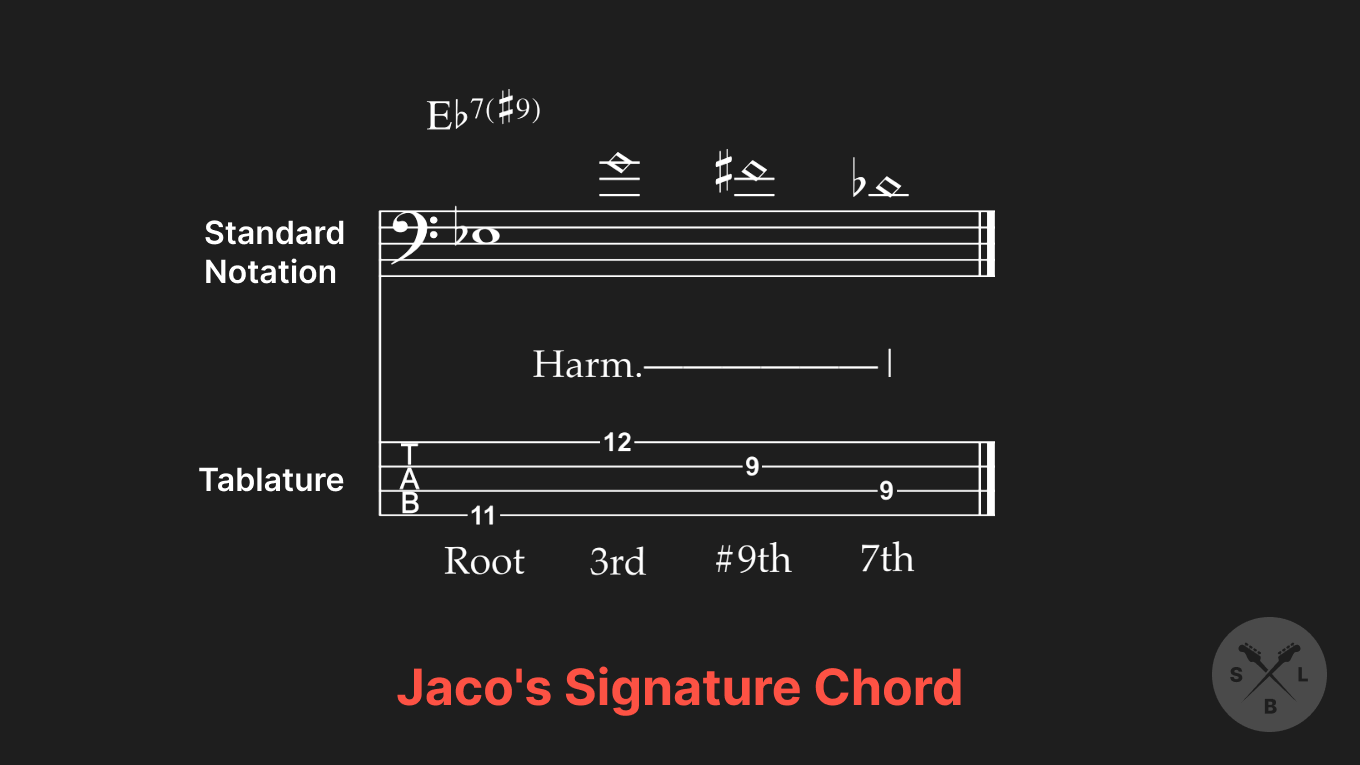
Try not to let that 12th-fret harmonic ring out super loud. Practice playing it softly.
Harmonics: Check. What’s Next?
If you want to perform with these harmonics and add them to your bass lines, then you’ll need to practice.
The more you play, the more intuitive it becomes!
But it’s easy to get overwhelmed if you aren’t getting the right instructions, at the right time.
This can lead you to procrastinate, and before you know it, you’ve stopped playing altogether.
That’s why being part of a community of bass players like you, having an instructional path to follow, and access to the best bassists in the world can keep you accountable and take your bass playing to the next level.
Join the SBL Academy and get started with a 14-day free trial!