
This Simple Bass Triad Exercise Will Help You Learn the Fretboard
Understanding the neck of your bass guitar is crucial for every bassist. Whether you're jamming with friends, playing in a band, or just practicing at home, having a solid grasp of the fretboard board can elevate your playing to new heights.
However, if you’re a beginner, mastering the bass fretboard can sometimes feel like an impossible task.
So today, I'm going to show you a simple bass triad exercise that will transform the way you view and play on the fretboard.
Originally published on June 5th, 2021, this article was updated and republished on October 23rd, 2023.
The Circle of Fifths: Bass Triad Exercise Cheat Code
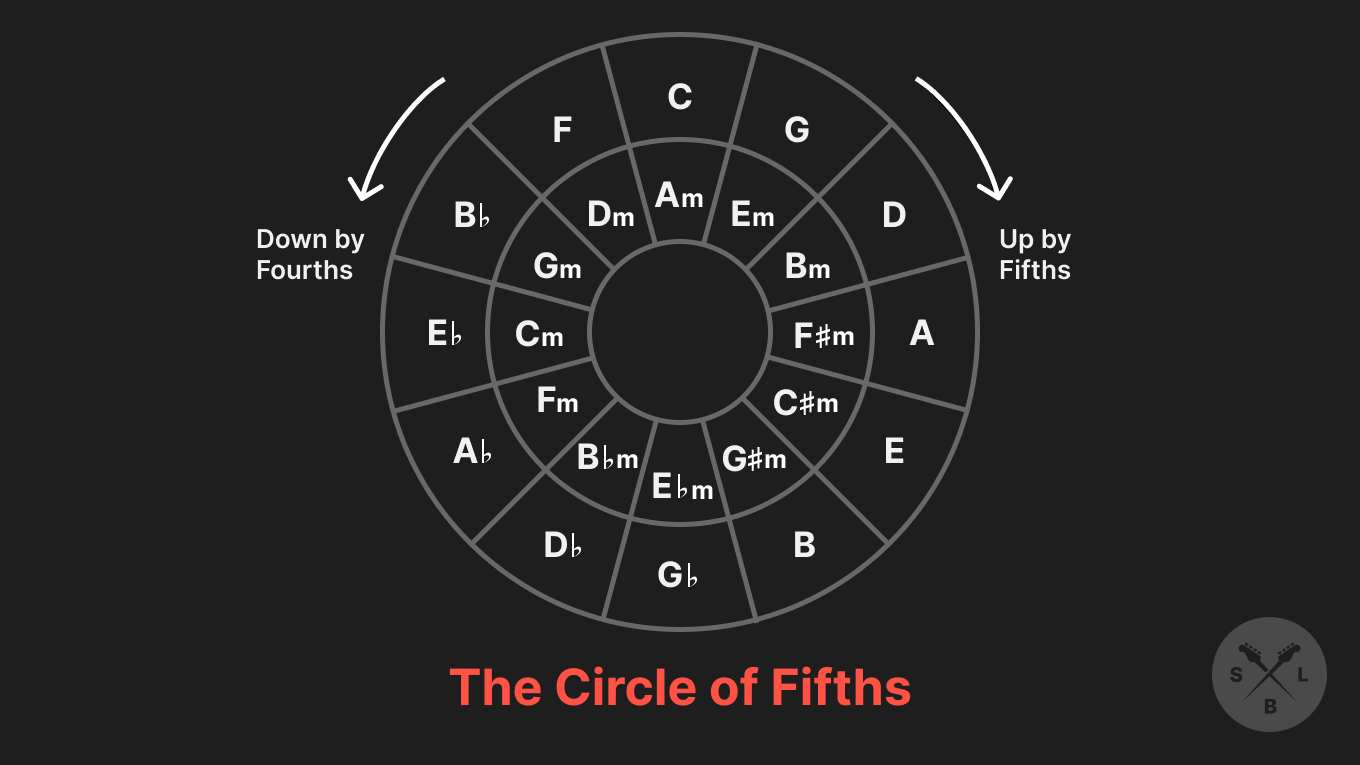
The Circle of Fifths is a visual representation of the relationships between the 12 tones of the chromatic scale. It’s a tool in music theory that shows the connections between different musical keys—basically a circular map that helps musicians understand how keys are related and how they change.
For the bass triad exercise we’re about to discuss, the Circle of Fifths is a wonderful way of understanding the structure of triads (the root, third, and fifth notes) in different keys. It shows which notes are part of the triad in each key, making it easier to build and improvise bass lines using triads.
Think of it like a cheat code that shows you which notes make the triad in any given key. It also provides some structure for the exercise and allows you to systematically master triads over the entire fretboard in every possible key.
Representing the Circle of Fifths Visually
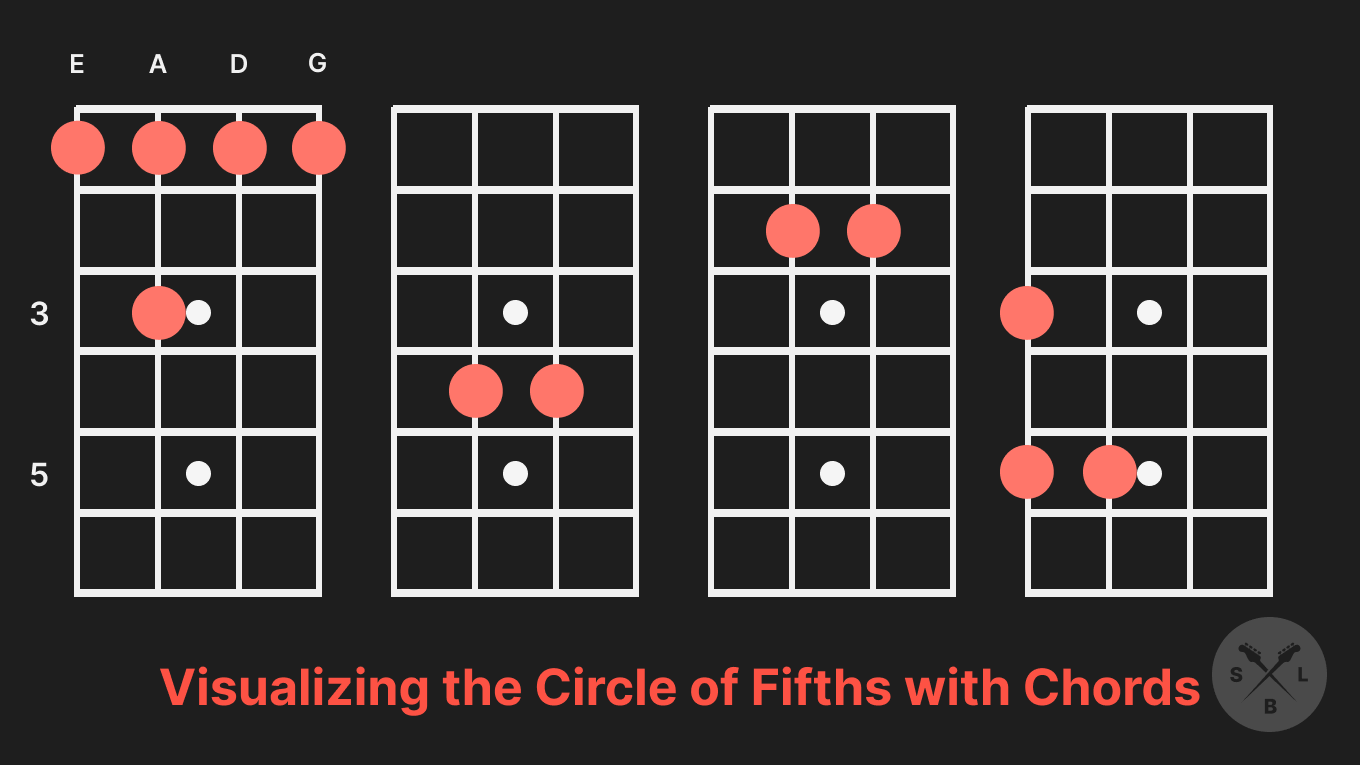
Now, while the Circle of Fifths is a really useful tool, the chart itself can be pretty difficult to remember.
A more practical way to make use of it is by seeing it visually represented on the bass fretboard:
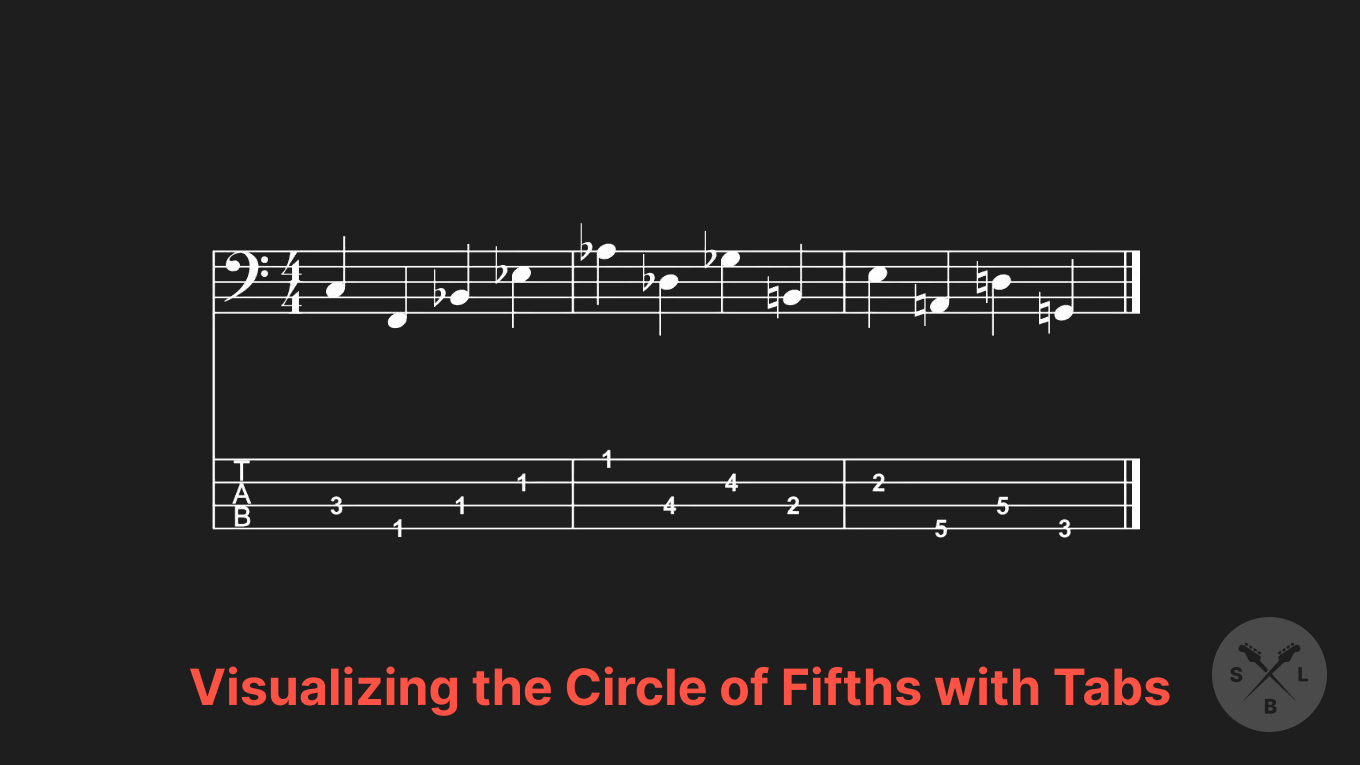
Using bass tabs, this is how you would play it:
Understanding Bass Triads With a 3-Step Exercise
Now that we’ve looked at the Circle of Fifths, let’s look at an exercise for understanding bass triads.
For this exercise, you’re going to be playing major triads.
A triad is just a three-note chord.
Major triads consist of the root, third, and fifth notes of a major scale.
So for example, take the C major triad. It consists of the notes C, E, and G.
All you’re going to do for this exercise is play triads around the Circle of Fifths.
Make sure you download the FREE 3-Step Triad Formula Workbook, so you get all the tabs.
Why This Matters
By focusing on triads and the Circle of Fifths, you'll gain a deeper understanding of the fretboard's layout. This allows you to move seamlessly across the neck, enhancing your versatility and confidence.
Plus, triads are the building blocks of chords, and mastering them can significantly improve your walking bass line skills.
Step 1: Play Each Triad From the Lowest Note to the Highest
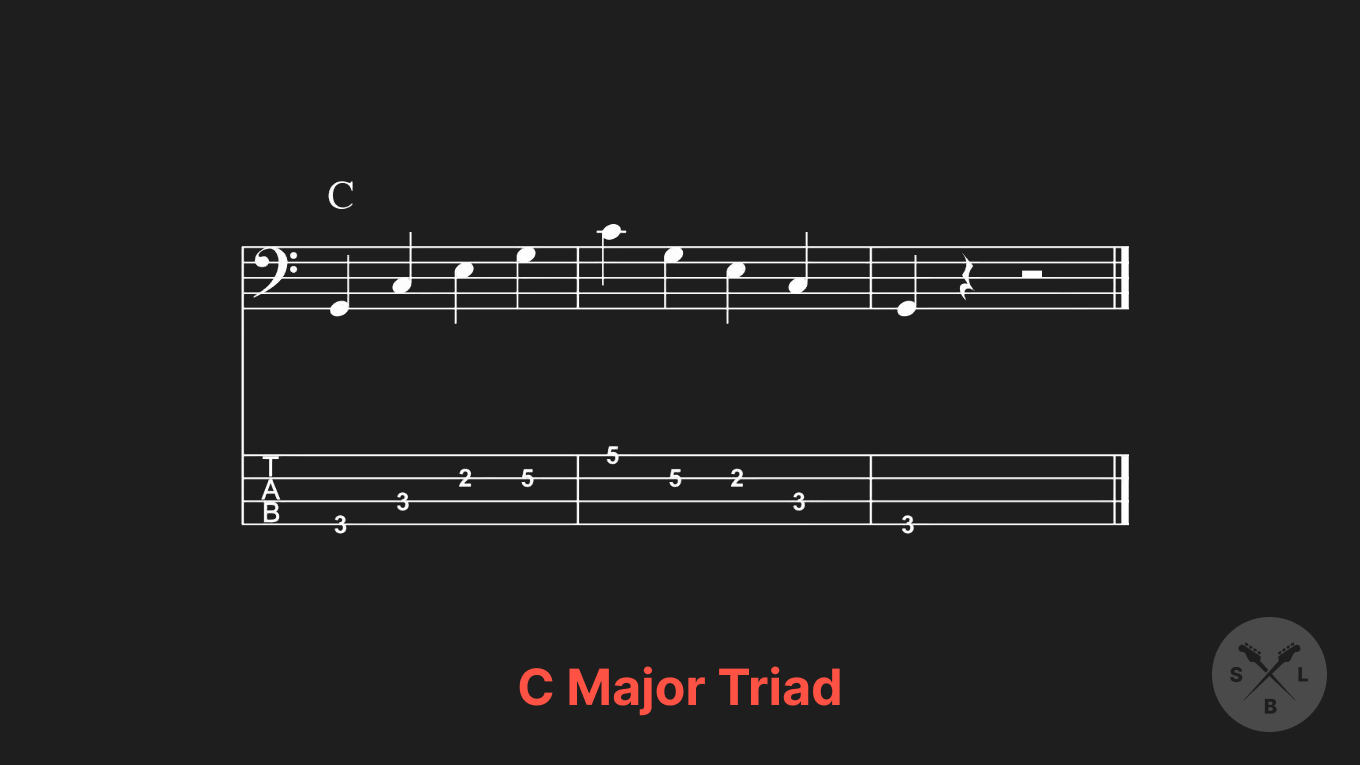
Starting with the C Major Triad, play the notes C, E, and G wherever they appear on the first 5 frets. Go from the thickest string to the thinnest.
For this exercise, you won't be using any open strings. This ensures you're actively using the fretboard and not relying on open notes.
For the C Major triad, it looks like this:
Then move on to the F Major triad, followed by Bb. Work your way through the Circle of Fifths.
Once you start getting more comfortable, develop your rhythm by playing along with a metronome.
Step 2: Play Each Triad From the Highest Note to the Lowest
Bassists tend to have a bad habit of thinking of everything from the bottom up. So once you’ve done step one, reverse it.
This can offer a fresh perspective and challenge your usual playing habits.
Play triads starting on the thinnest string, and working your way to the thickest. So starting on the C Major Triad, you would play the notes C, E, and G in this order:
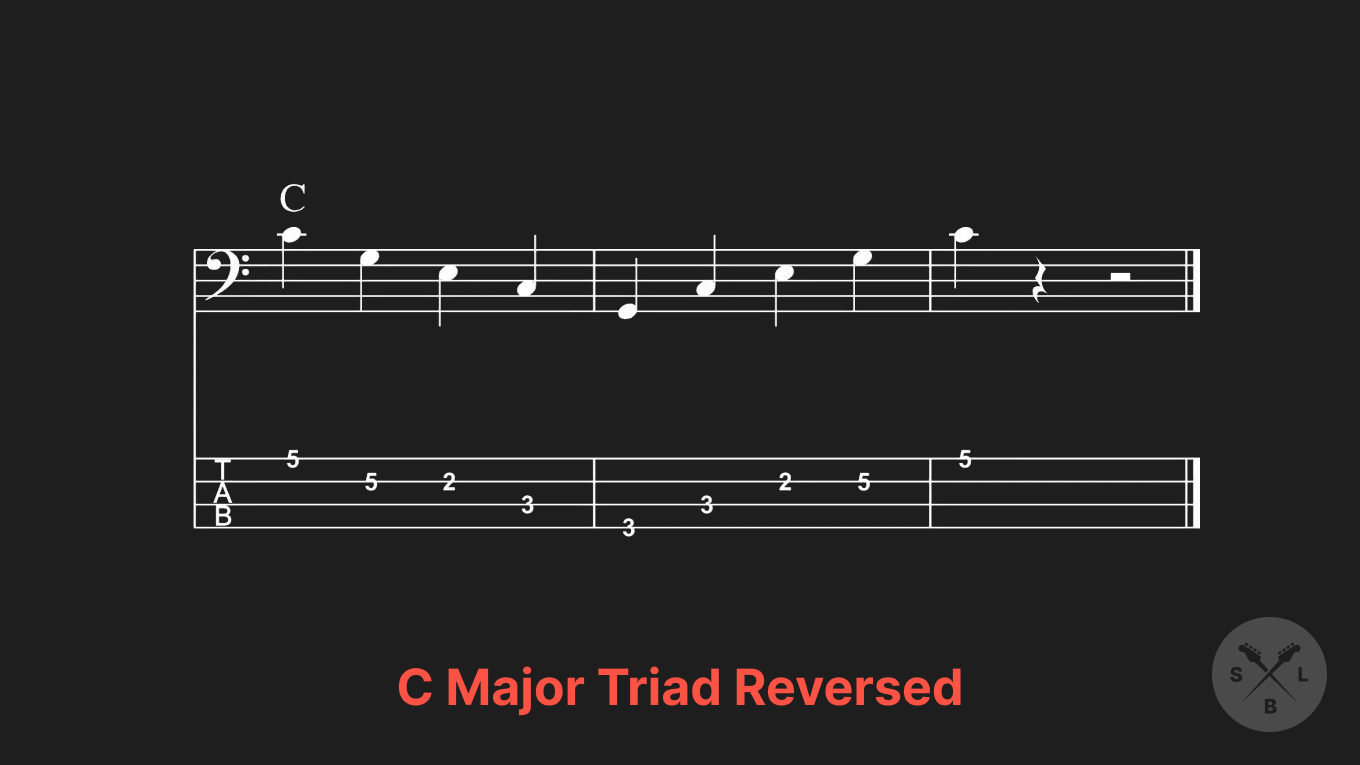
Then continue working your way through the circle of fourths. Playing the triad for each key.
Step 3: Continuous Triadic Exercise
The last step in this exercise is a combination of the first two. You’ll still be playing triads, and you’ll play up and down the neck.
However, instead of starting and stopping on the lowest or the highest notes of a triad, you play four notes and then move on to the nearest available triadic note, working your way through the Circle of Fifths.
For example:
Start by playing four notes from the C Major triad. Then, play four notes from the F major triad. Then move on to Bb major.
Like this:
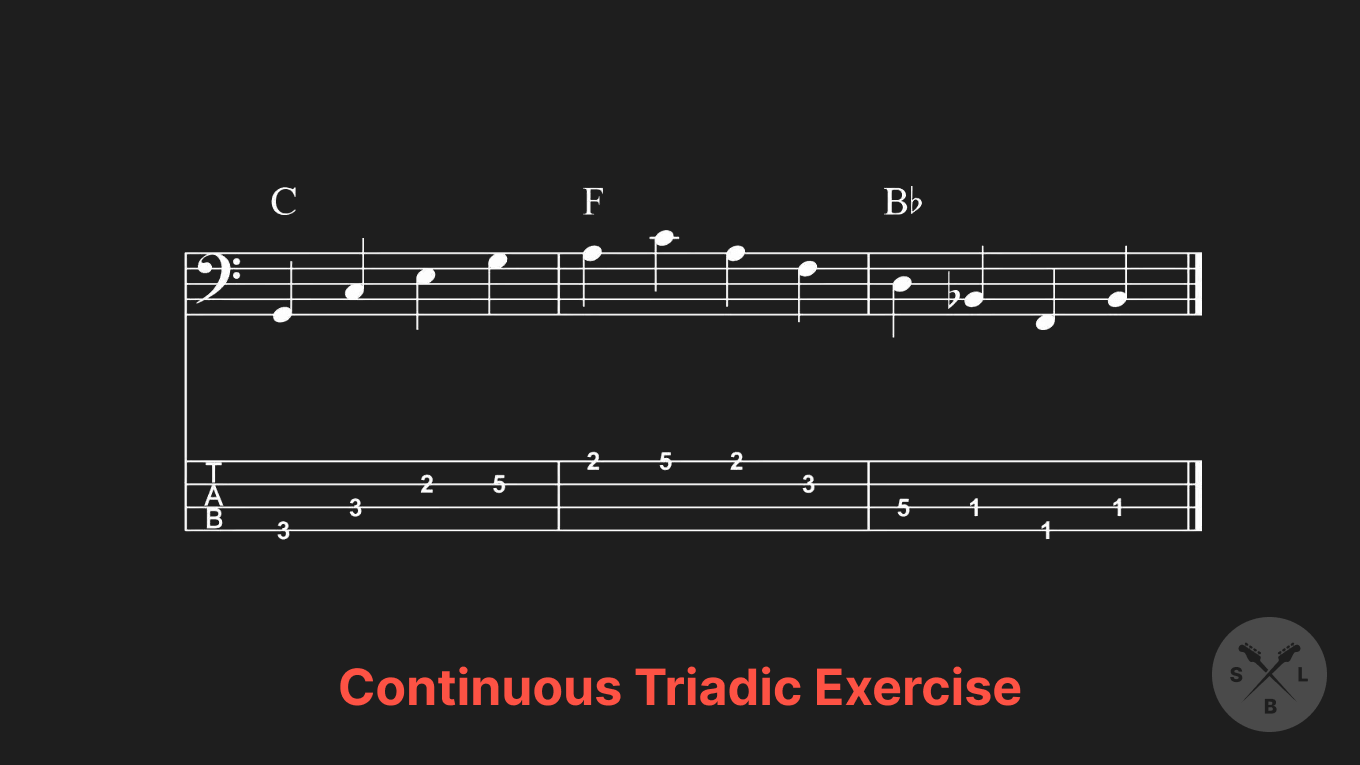
Move from the thickest string to the highest string like we’ve been doing, and stay within the first five frets.
I know this looks challenging, but it’s incredibly beneficial for mastering the bass!
It forces you to actively seek out the right notes while learning triads. Before long you’ll know the fretboard like the back of your hand!
Develop Your Technique Fast and Consistently
Once you feel more comfortable with this exercise, move up to the next five frets. Or try using minor triads instead. That’s how you can use this exercise to start mastering the fretboard.
If you notice your fretting fingers can't keep up, try these beginner bass finger exercises to build speed and accuracy.
If you found this exercise helpful and you want even more lessons tailored to your level of playing, just us at the SBL Academy. We’ll show you exactly what to focus on to make fast, meaningful progress.
Get started today with a 14-day free trial!